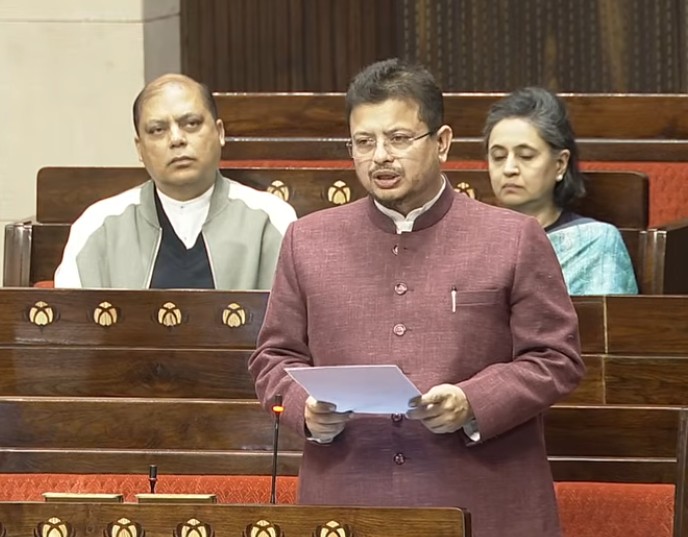
Trinamool Congress Rajya Sabha member Ritabrata Banerjee on Wednesday drew parliamentary attention to what he described as the overlooked legacy of 12 freedom fighters from West Bengal who were deported to the Cellular Jail in the Andaman Islands following the Alipore Bomb Case of 1908–1909. Speaking during Zero Hour, he stressed the need for greater recognition of their role in India’s freedom struggle.
Banerjee highlighted the cases of Barindrakumar Ghosh, Ullaskar Dutt, and Hem Chandra Kanungo among those transported for life after the trial linked to revolutionary activities against British colonial rule. He described them as uncompromising figures who resisted colonial authority and endured severe punishment for their involvement in the nationalist movement.
Barindrakumar Ghosh, also known as Barin Ghosh, was associated with underground revolutionary networks in West Bengal and played a role in establishing bomb-making units linked to organisations such as Jugantar and Anushilan Samiti. Ullaskar Dutt was identified as a key bomb-maker connected to the movement, while Hem Chandra Kanungo reportedly acquired expertise in explosives and revolutionary organisation during a stay in Paris before returning to India.

According to the MP, these revolutionaries were subjected to harsh conditions in the Cellular Jail, widely referred to as ‘Kala Pani’, known for solitary confinement, rigorous labour including oil extraction, and strict custodial practices. He argued that despite such conditions, they remained steadfast in their commitment to the independence movement.
Banerjee further stated that many of these individuals have faded from mainstream historical recognition. He contrasted their stance with others who sought clemency during the colonial period, asserting that the revolutionaries he referenced did not submit mercy petitions. He urged Parliament and the broader public to acknowledge their contributions more prominently within the national narrative of India’s independence struggle.
The Alipore Bomb Case, tried in Calcutta’s Sessions Court between 1908 and 1909, involved charges related to alleged attempts to wage war against British rule through revolutionary activities, including bomb-making operations and assassination attempts. One of the incidents connected to the case was the Muzaffarpur bombing aimed at a British magistrate.

The trial resulted in varying outcomes. Sri Aurobindo Ghosh was acquitted, while Barindrakumar Ghosh and Ullaskar Dutt were initially sentenced to death before the sentences were commuted to transportation for life. Several others were also deported to the Andaman penal settlement as part of the punitive measures imposed by colonial authorities.
Banerjee’s intervention came amid broader discussions on recognising the contributions of Bengal’s revolutionary movements to India’s independence history. He noted that a significant number of early inmates at the Cellular Jail included Bengalis, citing estimates that around 46 prisoners from Bengal were among those transported between 1909 and 1921.
The MP called for sustained acknowledgement of these figures to ensure their role in the anti-colonial struggle remains part of the country’s historical memory.



