The Taliban’s newly issued domestic violence code permitting the beating of women provided no bones are broken has triggered strong condemnation from political leaders in India, who termed it a grave violation of women’s rights and human dignity.
The 90-page penal code, signed by Taliban Supreme Leader Hibatullah Akhundzada, also repeals the 2009 law on the Elimination of Violence Against Women (EVAW) and introduces punishments that vary according to social status, with lighter penalties for elites and stricter measures for lower-class individuals.
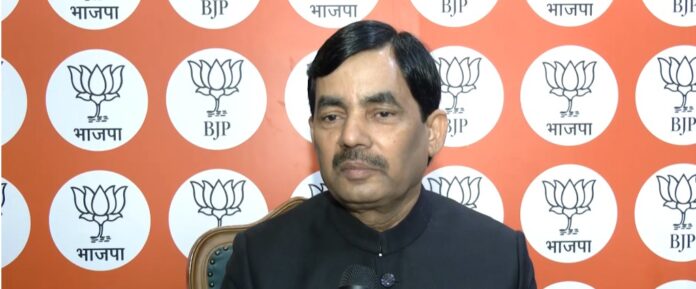
Political leaders across party lines criticised the development, calling it an affront to justice and democratic principles. Speaking to IANS, BJP national spokesperson Syed Shahnawaz Hussain said the Taliban’s return to power had created an environment in which such actions were being formalised. He described the law as permitting severe physical punishment of women and said those responsible should be held accountable.

From the Janata Dal United, spokesperson Neeraj Kumar termed the code a clear violation of democratic and human rights norms. He argued that when governance becomes religion-driven and democratic safeguards weaken, injustice becomes inevitable. He added that no religion justifies discrimination against women, denial of education, or mistreatment under religious pretexts.
Congress MP Imran Masood questioned the religious justification cited by the Taliban. He said he could not understand which Islamic reference had been invoked to frame such provisions, asserting that the status accorded to women in Islam does not justify such measures.
JD(U) national spokesperson Rajeev Ranjan Prasad emphasised the diplomatic dimension of the issue. He said the development concerns inter-country relations and expressed support for the central government’s policy decisions in responding to international developments of this nature.

The code has drawn criticism beyond India. Human rights organisations, including the UN Special Rapporteur on violence against women, have urged immediate international intervention to halt its implementation, describing it as a significant rollback of protections for women.
Critics argue that institutionalising corporal punishment under a legal framework signals a deepening of restrictive policies against women. They view the repeal of the EVAW law as dismantling a previous legal safeguard and replacing it with measures that embed inequality within the justice system.
The controversy underscores renewed global scrutiny of governance practices under Taliban rule, particularly in relation to women’s rights and legal protections. Political leaders in India said the measure stands in direct contradiction to internationally recognised human rights standards and democratic values.


