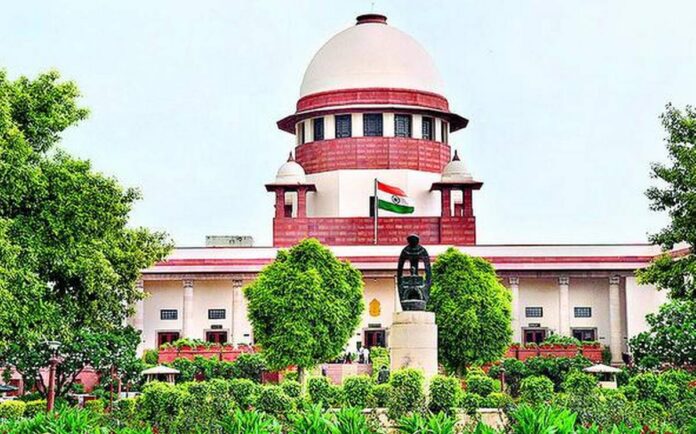
New Delhi, July 27: The Supreme Court on Monday underscored that the constitutional right to peaceful protest must remain protected while signalling the need for a uniform nationwide protocol to regulate the handling of public demonstrations, amid petitions arising from the nationwide student protests over the alleged NEET-UG 2026 paper leak.
Hearing a batch of petitions linked to the protests, a Bench comprising Chief Justice of India Surya Kant and Justices Joymalya Bagchi and V. Mohana observed that neither allegations of excessive police force nor claims of violence against security personnel could be ignored. The court stressed that both sets of allegations require an impartial examination and indicated that consistent guidelines across the country may be necessary to ensure lawful protest while maintaining public order.
The Bench observed that peaceful and lawful protest is fully protected under the Constitution and said the existence of an agitation alone cannot justify the use of excessive force by police. At the same time, it emphasised that attacks on police personnel during demonstrations also warrant scrutiny.

The court further observed that if police excesses had occurred, they should be independently examined, adding that the issue extended beyond Delhi. It noted that a uniform protocol governing police response to protests was required and remarked that discipline remained an essential part of the democratic process.
Justice Joymalya Bagchi observed that injuries suffered by protesters and police personnel were equally concerning. He said the State could be asked to explain whether adequate protective equipment had been provided to police officers deployed to manage demonstrations.
The Bench also said an appropriate protocol should ensure that peaceful demonstrations can take place without unnecessary restrictions while enabling authorities to deal with anti-social elements, if present.
During the hearing, advocate-on-record Fauzia Shakil informed the court that Rajya Sabha MP Manoj Jha had filed a fresh writ petition containing additional material, including allegations relating to recent police firing in Bihar.
Senior advocate Gopal Sankaranarayanan submitted that two petitions concerning violence during student protests should be heard together because allegations of police excesses had emerged from multiple states. Senior advocate Vikas Singh also sought nationwide directions, arguing that the issue was not confined to Delhi and required an all-India framework.
Another counsel, representing families of injured police personnel, sought permission to participate in the proceedings, alleging that several police personnel had been assaulted during the protests.
Responding to the submissions, the Bench reiterated that while peaceful protest is a constitutional right, allegations of violence by protesters also require examination.
Appearing for the Union government, Solicitor General Tushar Mehta told the court that the Centre would assist the proceedings “dispassionately” and suggested that all related petitions be heard together. Accepting the proposal, the Bench directed that all pending petitions be listed together on Tuesday for further hearing.

The petitions concern allegations of excessive force against students participating in nationwide protests over the alleged NEET-UG 2026 paper leak and related examination issues.
Earlier, Chief Justice Surya Kant had clarified that the Supreme Court had never refused to hear the matter. He explained that only a one-page representation had initially been submitted rather than a properly instituted writ petition and stated that once valid petitions were filed, the court agreed to hear them.
The developments come days after the Delhi High Court issued notices to the Centre and Delhi Police on petitions alleging excessive force during the July 20 ‘Sansad Chalo’ march over the alleged NEET paper leak. The High Court directed authorities to preserve CCTV footage, videography and other electronic records connected with the protest while seeking responses within four weeks. The matter is scheduled for further hearing on September 11.