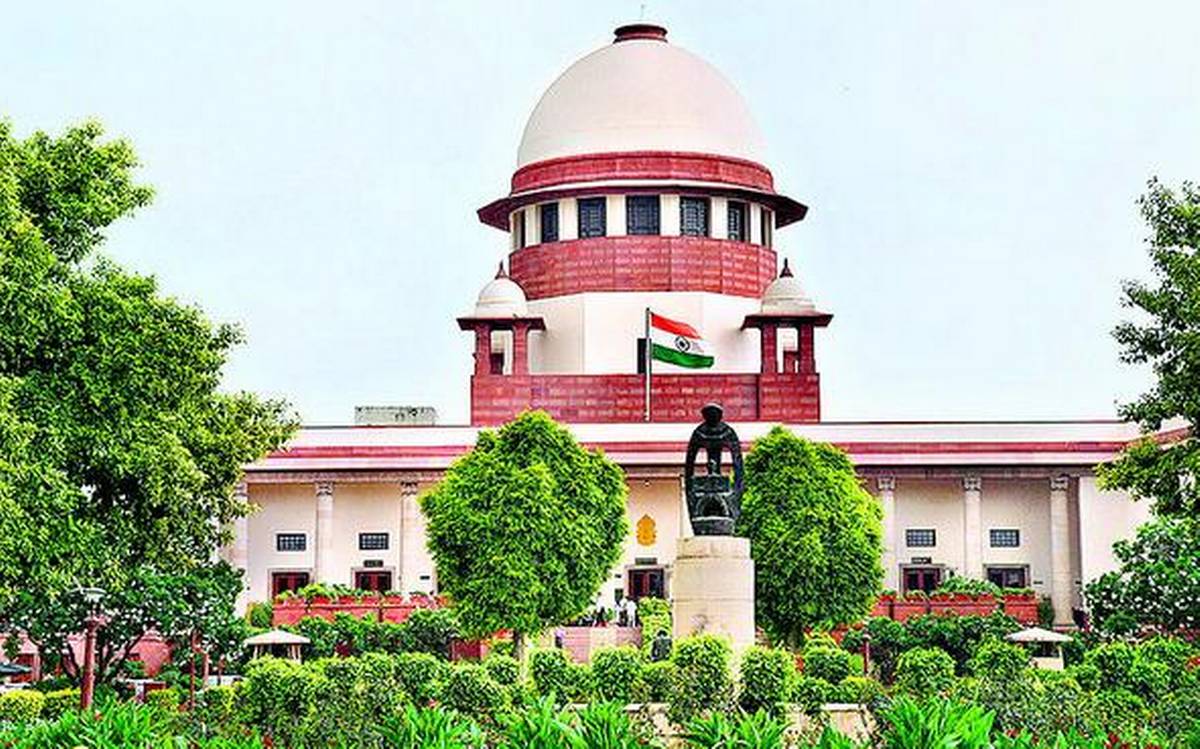
The Supreme Court of India on Tuesday called on the Union government to introduce a legal framework recognising paternity leave as a social security benefit, while invalidating a provision that restricted maternity benefits for adoptive mothers based on the age of the child.
A bench comprising Justices J.B. Pardiwala and R. Mahadevan made the observations while delivering its verdict on a public interest litigation that challenged the constitutional validity of provisions governing maternity leave for adoptive mothers.
The court stated that while the issue of granting paternity leave, including its duration and eligibility conditions, falls within the policy domain of the Union government, there is a clear need to recognise fathers as equal caregivers within the legal framework. It urged the Centre to frame provisions that respond to the needs of both parents and children.

In its judgment, the apex court struck down Section 60(4) of the Social Security Code, 2020, which limited maternity leave benefits for adoptive mothers to cases where the adopted child was below three months of age. The bench held that the provision created an unreasonable classification and violated the right to equality under Article 14 of the Constitution.
The court observed that the needs of an adoptive child are comparable to those of a biological child and cannot be differentiated solely on the basis of age at the time of adoption. It noted that adoption is an equally valid form of family-building and that biological factors alone do not define familial relationships.
The litigation had originally challenged Section 5(4) of the Maternity Benefit Act, 1961, which was amended in 2017 to grant 12 weeks of maternity leave to adoptive mothers only if the child was below three months old. During the course of the proceedings, a similar provision was incorporated into the Social Security Code, 2020.
Declaring the restriction unconstitutional, the bench ruled that maternity leave benefits must be extended uniformly to all adoptive mothers, irrespective of the child’s age at the time of adoption. The court emphasised that the early phase of integration into a new family environment requires equal care and support for adoptive children.

The judgment also highlighted the broader importance of shared parenting and the role of fathers in early childcare. The bench noted that recognising paternity leave could contribute to improved developmental outcomes for children and promote greater gender equality in caregiving responsibilities.
At present, Indian law provides for paid maternity leave of up to 26 weeks for eligible women under the Maternity Benefit Act. However, there is no comprehensive statutory framework governing paternity leave, leaving the matter largely unregulated.
By urging legislative action and removing restrictive provisions affecting adoptive mothers, the Supreme Court has underscored the need to align labour laws with evolving family structures and caregiving roles. The ruling places emphasis on equality, child welfare and shared parental responsibility, while leaving the formulation of paternity leave policy to the Union government.