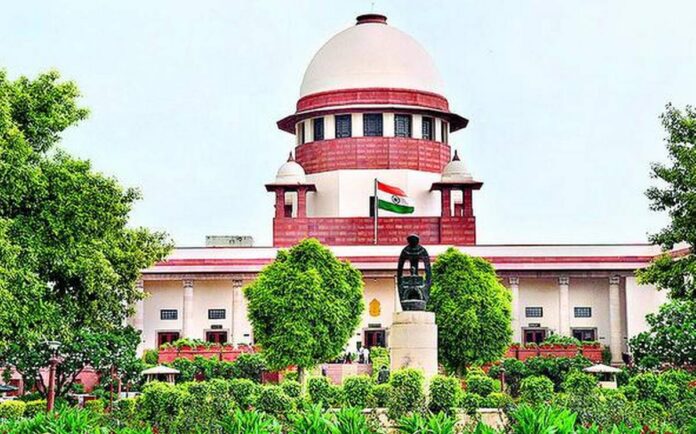
The Supreme Court has declared that access to menstrual hygiene is a constitutional right, tied directly to a girl child’s right to life, dignity, health and education, and has issued sweeping and time-bound directions to all states and Union Territories that could significantly reshape school infrastructure and health policy across India. In a detailed 127-page judgment, a Bench of Justices J.B. Pardiwala and R. Mahadevan held that menstrual health cannot be treated as a private or optional matter but must be addressed as a public health and education obligation of the State under Article 21 of the Constitution.
Observing that “a period should end a sentence, not a girl’s education,” the court said that governments carry a positive duty to ensure girls are not pushed out of classrooms because of biological realities combined with systemic neglect. The judgment underlined that the absence of menstrual hygiene management (MHM) facilities forces many girls to rely on unsafe alternatives such as cloth or rags, or to use sanitary material for prolonged durations, exposing them to infections and long-term health complications.

The Bench stressed that dignity includes the right to live without humiliation, exclusion, or avoidable suffering, adding that the denial of menstrual hygiene measures directly undermines this dignity. The court also connected the issue to learning outcomes, noting that participation in education goes beyond mere attendance and includes the ability to concentrate, engage, and participate equally. Lack of clean toilets, water supply, and safe disposal systems often compels girls to miss classes or drop out altogether.
Among the mandatory directions, all schools, government and private, must ensure functional, gender-segregated toilets with water connectivity, soap for hand-washing, and accessible facilities for children with disabilities. States and UTs have been directed to provide Oxo-biodegradable sanitary napkins free of cost in every school, preferably through vending machines inside toilet premises. Schools must also create Menstrual Hygiene Management corners stocked with spare uniforms, innerwear, and essential materials to handle emergencies discreetly.
The ruling further requires environmentally compliant systems for the safe disposal of sanitary waste in line with the Solid Waste Management Rules, with each toilet unit equipped with covered bins and subject to regular maintenance. On the education front, NCERT and State Councils of Educational Research and Training must incorporate gender-responsive curricula on menstruation, puberty, and related health issues to break stigma. All teachers, regardless of gender, must be trained and sensitised.

District Education Officers will conduct annual infrastructure inspections and gather anonymous student feedback. Oversight responsibilities have been assigned to the National Commission for Protection of Child Rights and State Commissions, which must act on non-compliance. Issuing a continuing mandamus, the apex court ordered full compliance within three months and scheduled monitoring through status reports.
In an emotional closing note, the Bench said the judgment speaks to girls hesitant to seek help, teachers constrained by limited resources, parents unaware of the silence’s impact, and society at large, asserting that true progress lies in protecting the most vulnerable.