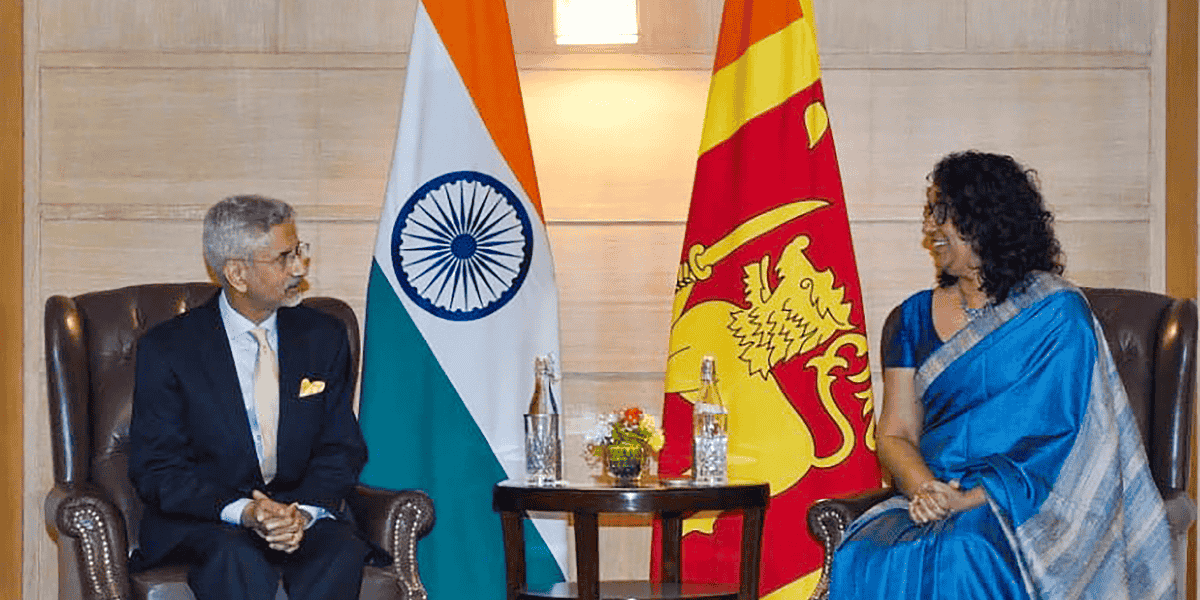
In a visit aimed at strengthening bilateral cooperation and sharing knowledge on developmental policy, Sri Lankan Prime Minister Harini Amarasuriya on Friday visited NITI Aayog, India’s apex public policy institution, to gain firsthand insights into the country’s transformative initiatives in governance, infrastructure, education, tourism, skill development, and artificial intelligence.
The engagement marked an important step in deepening collaboration between India and Sri Lanka, reflecting their shared goal of building a knowledge-driven, technology-enabled, and sustainable regional partnership. The discussions were held under the frameworks of ‘Neighbourhood First’ and MAHASAGAR, both of which emphasise regional cooperation through inclusive growth and innovation.
According to an official statement, the Sri Lankan Prime Minister lauded NITI Aayog’s role as a policy think tank and coordination platform, highlighting its unique capacity to connect long-term policy planning with ground-level execution. She expressed interest in learning how NITI Aayog integrates data analysis, citizen feedback, and inter-ministerial collaboration into policy design and implementation.
Amarasuriya also drew parallels with Sri Lanka’s own reform process, emphasising the need for institutional structures that ensure policy coherence, evidence-based decision-making, and continuity beyond electoral cycles. Her visit is seen as part of Colombo’s efforts to learn from India’s policy innovation and apply similar models to accelerate national reforms in education, public service delivery, and technology adoption.
The discussions were chaired by NITI Aayog Vice Chairman Suman K. Bery, who led a series of presentations on India’s flagship policy frameworks. These included PM Gati Shakti, which integrates multimodal transport and logistics infrastructure across sectors; the National Education Policy (NEP) 2020, which promotes holistic, inclusive, and digitally integrated learning; and emerging opportunities in tourism, cultural heritage, and frontier technologies such as artificial intelligence and digital governance.
One of the key presentations showcased PM Gati Shakti’s integrated infrastructure model, which brings together data from multiple ministries to streamline planning and reduce logistical inefficiencies. Officials highlighted how this approach could inspire similar initiatives in Sri Lanka, particularly in the urban development of Kandy City, where integrated logistics and multimodal transport remain key priorities.
Under education reforms, NITI Aayog’s officials detailed India’s experience in implementing NEP 2020, which focuses on flexible curricula, skill-based learning, and technology adoption to make education more responsive to societal and economic needs. Sri Lanka, currently reviewing its education policy, expressed interest in adapting India’s digital and vocational education strategies.
In the area of tourism and cultural cooperation, the session emphasised expanding collaboration in heritage, wellness, and eco-tourism, building on the two countries’ shared cultural links. Both sides acknowledged that tourism could serve as a major driver of employment and cultural exchange, fostering stronger people-to-people ties across the region.

Another major focus was frontier technologies and artificial intelligence, with NITI Aayog presenting India’s efforts in developing AI governance frameworks, promoting startups, and integrating digital solutions into public services. Amarasuriya expressed keen interest in these initiatives, noting their potential relevance to Sri Lanka’s plans for digital transformation and public service innovation.
The meeting concluded with both sides reaffirming their commitment to sustained collaboration across policy, innovation, and capacity-building domains. Amarasuriya’s visit to NITI Aayog not only showcased Sri Lanka’s intent to align with India’s development journey but also reflected the growing importance of regional policy dialogues in shaping South Asia’s collective future.
Through this visit, India and Sri Lanka have reinforced the view that strategic partnerships rooted in knowledge-sharing and innovation can play a transformative role in addressing common regional challenges, from economic recovery to climate resilience and technological advancement.