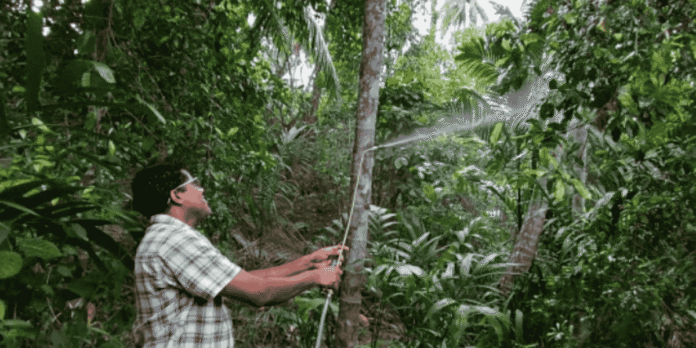
A training programme on induced and spray-based harvesting techniques of clove was conducted under the SPICE PRAVAH initiative to create awareness among farmers on scientific methods aimed at reducing labour dependency and improving harvesting efficiency. The programme was organised on January 20 at the Organic Horticulture Farm in Sippighat and at a farmer’s field in New Bimblitan, South Andaman.
The demonstration was carried out in collaboration with the Indian Institute of Spices Research, Kozhikode, with technical support provided by a principal scientist from the institute. The programme focused on introducing farmers to modern harvesting techniques that can help address challenges associated with traditional manual harvesting of clove.
Clove is a high-value spice crop cultivated primarily for its aromatic unopened flower buds, which are harvested at a specific stage of maturity to ensure quality and market value. Traditionally, harvesting is carried out by hand, a process that is labour-intensive and often risky, particularly when clove trees are tall and densely grown. During the training, farmers were informed about how induced or spray-based harvesting methods can help synchronise bud maturity and significantly reduce the time and effort required for harvesting.

The expert explained that induced harvesting techniques can help minimise drudgery, lower labour costs and improve overall efficiency in clove plantations. Such methods are considered especially beneficial in situations where labour availability is limited or where plantation structure makes manual harvesting difficult.
Farmers from nearby villages attended the training programme, along with officers and staff from the Department associated with horticulture and agriculture activities. The presence of departmental officials was intended to facilitate coordination and provide farmers with access to institutional support for adopting new technologies.
Participants actively took part in interactive sessions during the programme, using the opportunity to clarify doubts related to clove crop management, harvesting practices and the practical application of induced harvesting techniques. The demonstrations provided farmers with a firsthand understanding of how the methods can be implemented under field conditions.
Around 50 participants attended the programme, reflecting growing interest among spice growers in adopting scientific and labour-efficient practices. Organisers noted that the training also served as a platform for direct interaction between farmers and scientists, helping bridge the gap between research and field-level application.

The SPICE PRAVAH initiative aims to promote improved cultivation and harvesting practices among spice growers by facilitating access to technical knowledge and scientific innovations. By focusing on crops such as clove, which play an important role in the Islands’ horticultural economy, the initiative seeks to enhance productivity and sustainability.
Officials associated with the programme indicated that similar training and demonstration activities may be conducted in the future to further support spice growers in the region. The department has positioned the initiative as part of broader efforts to encourage the adoption of modern agricultural practices while addressing labour-related challenges faced by farmers.
The training programme concluded with farmers expressing interest in adopting the demonstrated techniques after observing their potential benefits. The department has stated that continued engagement and follow-up will be important to ensure effective adoption of the practices introduced under the SPICE PRAVAH initiative.