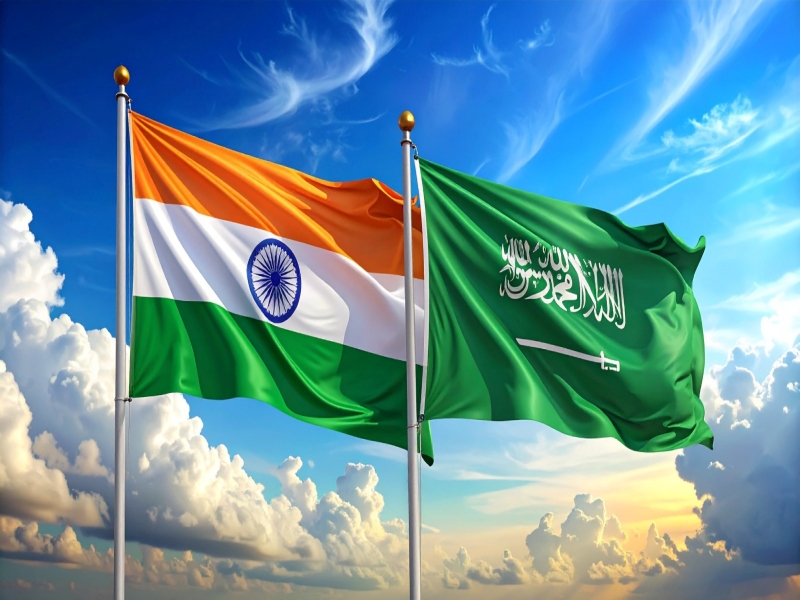
India is closely following developments after Pakistan and Saudi Arabia signed a Strategic Mutual Agreement pledging that any act of aggression against one will be treated as an act of aggression against both. While Pakistan has hailed the pact as a diplomatic breakthrough, experts caution that the deal is unlikely to alter Riyadh’s longstanding and robust ties with New Delhi.
The wording of the agreement, “attack on one equals attack on both”, has been celebrated in Islamabad as a potential security umbrella, with some suggesting that Saudi Arabia could intervene militarily if Pakistan is targeted. Analysts, however, point out that the pact does not name any country, leaving it open to interpretation and far from the sweeping guarantees Pakistan may imply.
Observers note that India has historically acted in retaliation, not aggression, citing surgical strikes after the Uri attack, air strikes in Balakot following the Pulwama terror incident, and Operation Sindoor carried out in response to terrorism. From New Delhi’s perspective, any such agreement cannot be construed as a deterrent against India, as its security operations have been responses to cross-border attacks.
Saudi Arabia, meanwhile, has sought to delink the new pact from its relationship with India. Riyadh has emphasized that its bilateral ties with New Delhi remain strong and will continue to grow. Experts underline that Riyadh has too much at stake to jeopardize its relationship with India, which is among its top trading partners.
Economic data underscores this point. India is Saudi Arabia’s second-largest trading partner, while Riyadh is the fourth-largest partner for New Delhi. Bilateral trade in FY 2024-25 stood at $41.88 billion, covering sectors from energy and space to healthcare and sports. Saudi Arabia also has plans to establish two oil refineries in India, further cementing economic cooperation. By contrast, Pakistan’s trade with Saudi Arabia is valued at just $3-4 billion.
Beyond economics, diplomatic ties between India and Saudi Arabia have deepened in recent years. Prime Minister Narendra Modi’s April 2025 visit saw agreements across multiple fields, strengthening the partnership beyond energy into technology and cultural cooperation. Officials describe this as evidence that the relationship is broad-based and resilient, unlikely to be overshadowed by new pacts Riyadh may sign with other nations.
For Pakistan, the agreement may represent a partial diplomatic reset after years of strained ties with Saudi Arabia. Islamabad may also view the pact as symbolic reassurance amid regional uncertainty, particularly after Israel’s recent strike in Doha that targeted Hamas leadership. Analysts suggest that the timing reflects broader Arab concerns about instability in Gaza and a desire among Islamic nations to regroup, rather than a move aimed at India.
India’s response has been measured. Officials noted that the agreement merely formalises aspects of a long-standing security understanding between Saudi Arabia and Pakistan. New Delhi has refrained from direct comment, preferring instead to highlight its own close ties with Riyadh, which have steadily expanded over the past decade.
Experts say the situation highlights a recurring pattern: Pakistan presenting bilateral agreements as strategic wins against India, while the actual content and context tell a different story. In this case, the deal’s real purpose may lie in Arab regional politics rather than South Asian rivalries.
For India, the key takeaway is that its relationship with Saudi Arabia remains on firm ground, backed by trade, diplomacy, and shared strategic interests. With Riyadh making clear that its cooperation with New Delhi is separate and unaffected by the new agreement, Pakistan’s celebratory spin appears more symbolic than substantive.