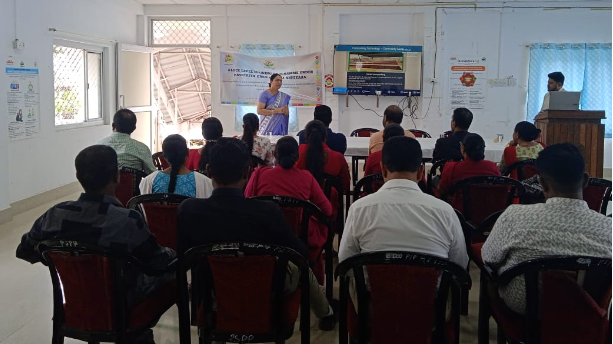
A block-level training programme focusing on effective waste management and the importance of household-level waste segregation was conducted at CD Block Prothrapur under the Rashtriya Gram Swaraj Abhiyan. The programme was organised with the objective of promoting sustainable sanitation practices and strengthening Panchayat-led initiatives aimed at developing Clean and Green Villages.
The training brought together elected representatives and officials from various gram panchayats, including Pradhans and Panchayat Secretaries, creating a platform for collective discussion on local waste management challenges. The sessions focused on practical approaches to segregation of waste at the household level, proper methods of waste disposal and the institutional responsibilities of Panchayats in ensuring clean and healthy living environments.
The concept of Clean and Green Villages was explained in detail, with emphasis on translating policy goals into ground-level action. Participants were guided on simple, cost-effective methods that households can adopt to segregate biodegradable and non-biodegradable waste, reducing the burden on local waste disposal systems. The training highlighted that consistent segregation at source is a critical step in achieving sustainable waste management.
The programme also examined the broader role of Panchayats in coordinating waste management activities, including awareness generation, monitoring and community mobilisation. Panchayat Secretaries were encouraged to work closely with elected representatives to ensure that waste management initiatives are effectively implemented and sustained over time.
The importance of community participation emerged as a central theme during the training. Participants discussed the need to engage residents through regular awareness campaigns, door-to-door outreach and village-level meetings. Emphasis was placed on the idea that clean village outcomes depend not only on infrastructure and systems, but also on behavioural change at the household and community levels.
The training further underlined the need for Panchayat-led initiatives to address waste disposal in an environmentally responsible manner. Discussions covered issues such as open dumping, improper disposal of household waste and their impact on public health and local ecosystems. Participants were encouraged to adopt locally appropriate solutions that align with sustainable practices.
The programme also focused on strengthening the capacity of Panchayats to plan and execute cleanliness initiatives under the RGSA framework. By equipping local representatives with knowledge and practical tools, the training aimed to enhance grassroots governance and improve service delivery related to sanitation and waste management.
Officials highlighted that Clean and Green Village initiatives are closely linked to overall quality of life in rural areas. Effective waste management contributes to improved public health, cleaner surroundings and greater community well-being. Panchayats were urged to take proactive steps in leading sanitation drives and ensuring that waste segregation becomes a routine practice at the household level.
The training concluded with a reaffirmation of the role of Panchayati Raj institutions in driving sustainable development at the village level. The RGSA programme continues to focus on capacity-building initiatives that empower local bodies to address environmental challenges through informed decision-making and community engagement.