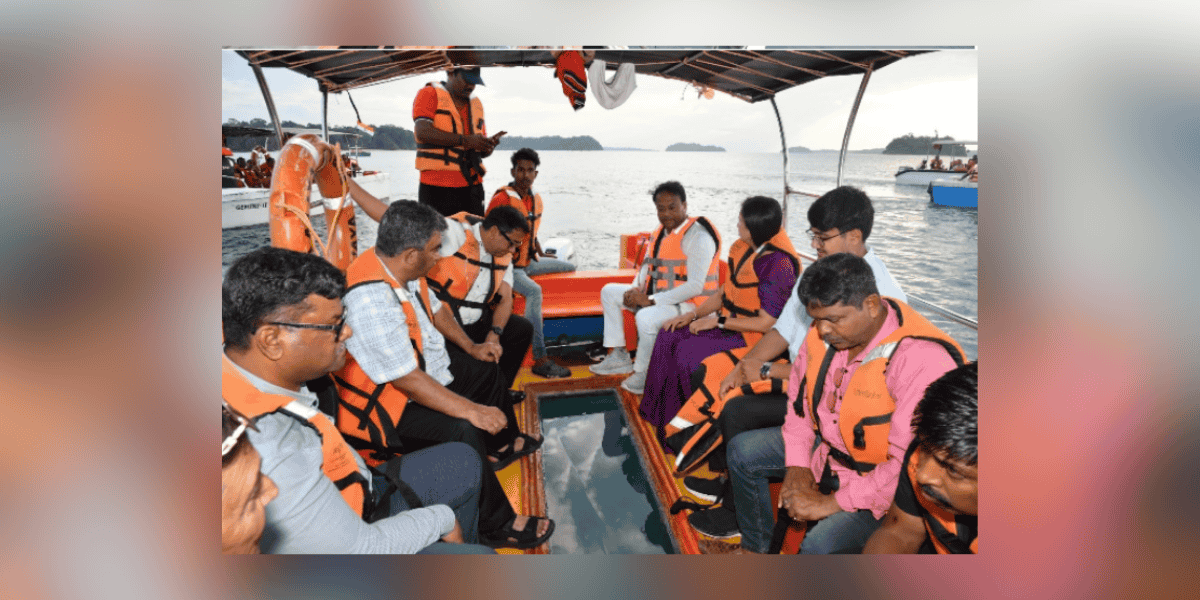
Regulated watersports activities were formally introduced at Wandoor in South Andaman on Monday, marking a significant step towards structured and sustainable tourism development in the area. The initiative, facilitated by the Directorate of Information, Publicity and Tourism under the Andaman and Nicobar Administration, seeks to enhance visitor experiences while addressing long-standing demands from local stakeholders for regulated recreational opportunities.
The launch follows a comprehensive risk assessment study conducted by the National Institute of Water Sports, Goa, under the Ministry of Tourism, Government of India. Based on the findings of the study, specific watersports activities, including glass bottom boat rides and parasailing, have been approved for operation within clearly demarcated zones at Wandoor. The assessment examined safety parameters, environmental sensitivity and operational feasibility before recommending the activities.
Officials indicated that all permissions for operating watersports at Wandoor will be issued strictly in accordance with sustainability norms and environmental protection guidelines. The emphasis remains on regulated operations that minimise ecological impact while allowing controlled tourism activities in designated areas.

The formal flag-off of the regulated watersports activities was carried out in the presence of senior officials of the Andaman and Nicobar Administration, representatives of Panchayati Raj Institutions, tourism stakeholders and local boat operators. The event marked the culmination of coordinated efforts between the administration and stakeholders to reintroduce watersports in a manner aligned with safety and conservation standards.
Wandoor, located near the Mahatma Gandhi Marine National Park, has long been considered a sensitive tourism zone due to its ecological significance. The introduction of regulated watersports is therefore being positioned as a balanced approach that combines tourism promotion with environmental responsibility. By restricting activities to approved zones and enforcing operational guidelines, the administration aims to prevent unregulated practices that could harm marine ecosystems.
The initiative is also expected to generate livelihood opportunities for local residents, particularly boat operators and those associated with tourism services. By formalising operations, the administration intends to bring greater predictability and transparency to tourism-related employment while ensuring compliance with safety protocols.
Officials described the introduction of regulated watersports at Wandoor as part of a broader strategy to promote responsible tourism across the Andaman and Nicobar Islands. The Directorate of Information, Publicity and Tourism has been working on initiatives that align tourism growth with conservation objectives, recognising the Islands’ dependence on fragile coastal and marine environments.

With controlled watersports now in place, Wandoor is expected to see renewed tourist interest, particularly among visitors seeking experiential and nature-based activities. The availability of glass bottom boat rides offers opportunities for marine viewing without direct interaction with sensitive habitats, while parasailing provides a regulated adventure option within approved safety limits.
The administration expects the initiative to strengthen the Islands’ positioning as an eco-tourism destination, where tourism development is guided by scientific assessment and regulatory oversight. The emphasis on risk assessment-backed planning is intended to set a precedent for future tourism projects in environmentally sensitive locations.
By addressing safety, sustainability and livelihood concerns in a single framework, the regulated watersports launch at Wandoor represents a shift towards more structured tourism governance. The administration has indicated that continued monitoring and adherence to prescribed norms will be central to ensuring the long-term success of the initiative and its acceptance among both visitors and local communities.