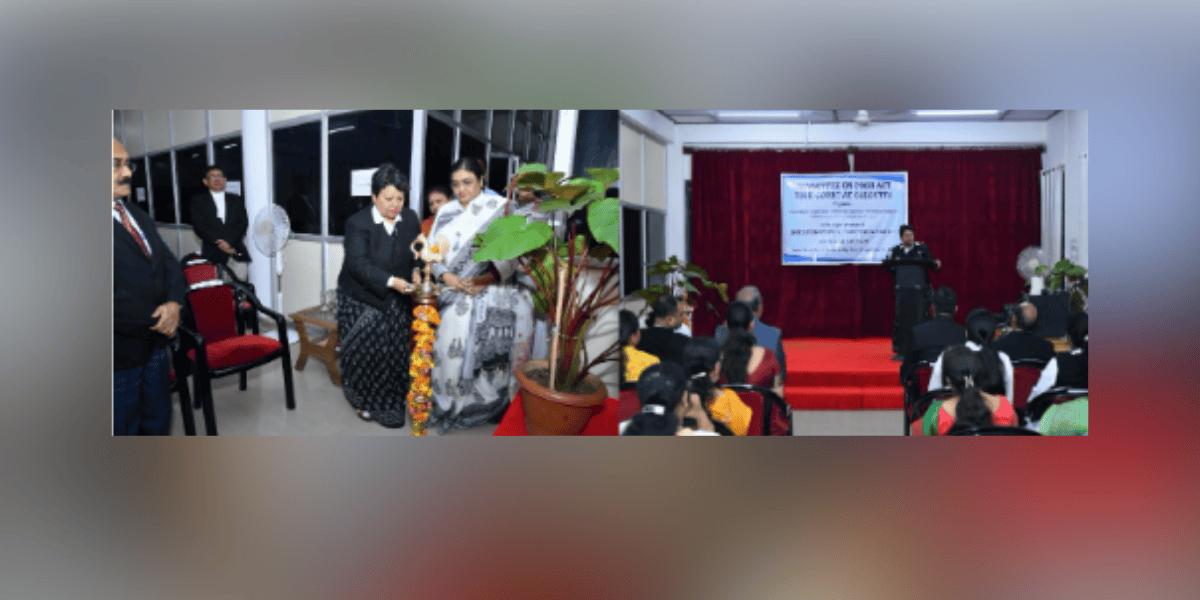
A sensitization programme on the provisions of the Sexual Harassment of Women at Workplace (Prevention, Prohibition and Redressal) Act, 2013, widely known as the POSH Act, was organized at the Circuit Bench of the Calcutta High Court in Sri Vijaya Puram. The session, conducted by the Committee on the POSH Act, High Court at Calcutta, brought together members of the legal community, administrators, and representatives from various sectors to strengthen awareness and enforcement of workplace safety laws for women.
The event began with the ceremonial lighting of the lamp by Justice Shampa Sarkar, Judge of the Calcutta High Court and Chairperson of the Committee on POSH Act, along with Justice Ananya Bandyopadhyay, also of the Calcutta High Court. The session aimed to create better understanding of the legal framework that ensures dignity, equality, and protection for women employees across sectors, public, private, and unorganized.
In his welcome address, Registrar Rashid Alam of the Circuit Bench highlighted the significance of the POSH Act in the present-day professional environment. The gathering featured key speakers including Senior Advocate Anjili Nag, Government Pleader Babita Das, Public Prosecutor Zahida Bibi, Administrator of Women’s Help Line Shanti Murugeshan, and educator Shweta Kishen. Their collective insights focused on making workplaces inclusive, equitable, and free from gender-based harassment.
Justice Shampa Sarkar, addressing the audience, emphasized the growing representation of women in the workforce, now estimated at over one-third of total employees nationwide. She underlined that a safe and supportive workplace is a basic right, not a privilege, and urged employers to adopt proactive measures to comply with the POSH Act’s provisions. She also stressed the importance of establishing visible and accessible grievance redressal systems, including helplines, complaint boxes, and designated email addresses to ensure confidentiality and prompt action.

Justice Ananya Bandyopadhyay, in her remarks, summarized the deliberations and called for continuous awareness-building among organizations. She advised employers to circulate pamphlets in regional languages explaining the rights, penalties, and procedures under the POSH Act. She also encouraged regular in-house training and visible display of information on workplace rights to ensure that both employers and employees remain informed about their obligations.
The discussions also delved into the key operational aspects of the Act, such as the formation and functioning of Internal Committees (ICs), procedures for conducting time-bound inquiries, maintaining confidentiality of complainants, and ensuring protection from retaliation. Speakers underlined that strict compliance with these provisions is essential to uphold trust and accountability within institutions. Participants were reminded that employers who fail to implement the mandated provisions risk legal consequences, while false complaints are also addressed under the law to maintain fairness.
Throughout the session, speakers reiterated that effective prevention and redressal of sexual harassment are crucial to achieving gender justice. The programme’s inclusive participation from both judicial officers and civil representatives reflected the judiciary’s role in promoting awareness and setting standards for institutional conduct.
The event concluded with a vote of thanks delivered by District and Sessions Judge Sudhir Kumar, who appreciated the coordinated effort in building an informed and responsible workforce in the Islands. The sensitization drive in Sri Vijaya Puram served as a reminder that laws like the POSH Act not only protect but also empower, by encouraging workplaces to evolve into spaces of mutual respect, equality, and safety.
The High Court’s initiative stands as a model for other institutions across the Islands to follow, marking a significant step toward ensuring gender-sensitive work environments that align with the constitutional promise of dignity and equality for all.