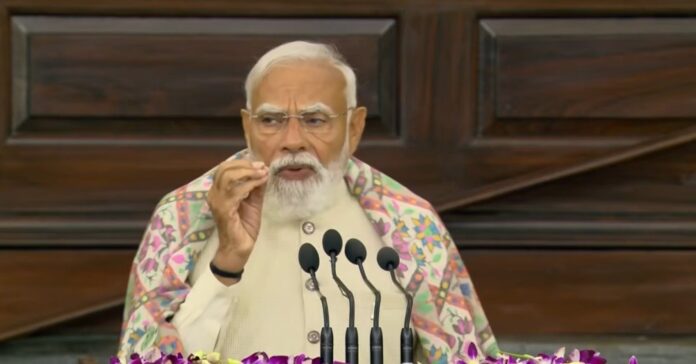
New Delhi, July 23: Escalating its response to the ongoing controversy over examination paper leaks, the Centre on Thursday announced the establishment of fast-track courts to ensure swift prosecution of those involved, with Prime Minister Narendra Modi asserting that protecting the future of students remains the government’s highest priority.
In a post on X, Modi said the government had decided to establish fast-track courts to deliver speedy and stringent punishment in paper leak cases. He said the concerned authorities and officials had been directed to take all necessary steps to implement the decision.
“Nothing is more important than the welfare and future of our youth. We have decided to set up fast-track courts to ensure swift and stringent punishment for those involved in paper leaks. Have directed the concerned authorities and officials to take all necessary steps in this regard,” the Prime Minister said.

He described the move as part of a broader series of measures aimed at safeguarding the interests of students and warned that those attempting to undermine the future of young people would face strict action.
“Those who try to harm the future of our youth will not be spared. The welfare and future of the country’s youth is our topmost priority,” Modi said.
The announcement comes amid continuing protests over examination paper leaks and follows the Centre’s indication that it is willing to engage with stakeholders on the issue.
A day earlier, Union Health Minister J.P. Nadda said the government remained open to discussions with all stakeholders regarding examination paper leaks. He also said the Centre had held talks with representatives of the protesting CJP and had appealed to activist Sonam Wangchuk to end his hunger strike and participate in the mainstream dialogue process.
Addressing a press conference, Nadda said the meeting with CJP representatives took place in a cordial atmosphere, during which the government heard their concerns and requested them to submit their demands in writing.

“The discussion took place in a very cordial atmosphere. We listened to their views very calmly. I told them it would be better if they submitted their points in writing, and they have done so. We are ready for discussions whenever they ask,” Nadda said, while clarifying that no fresh meeting was held on Wednesday.
He reiterated that the government favoured a comprehensive discussion on the issue of examination paper leaks and said Parliament remained the most appropriate forum for developing a long-term policy framework to address the problem.
The twin developments signal the Centre’s approach of combining stricter legal action against those responsible for paper leaks with continued engagement through dialogue on policy reforms. While the government has announced judicial measures aimed at ensuring quicker punishment in such cases, it has also maintained that consultations with stakeholders will continue as part of efforts to evolve a long-term response to the recurring issue of examination paper leaks.