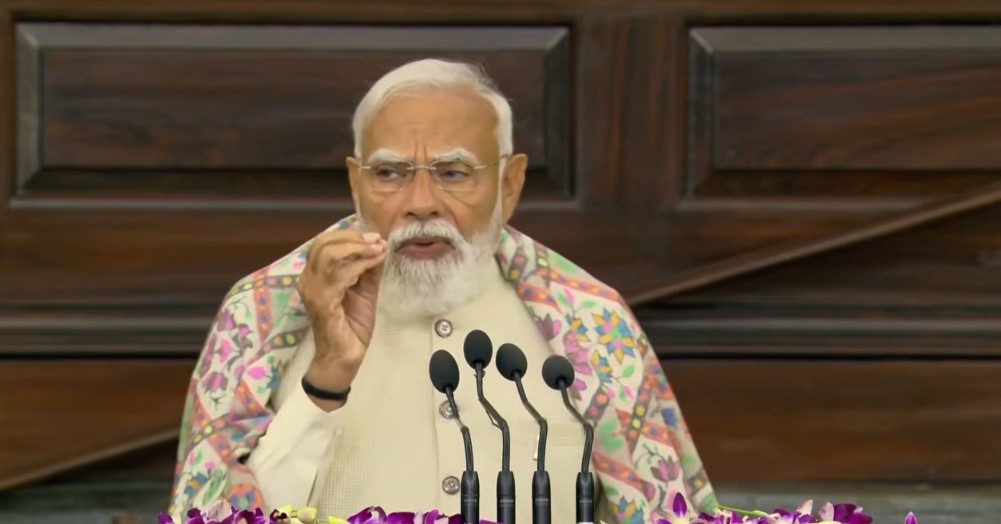
Prime Minister Narendra Modi on Friday said the effectiveness of the Union Budget must be measured through tangible outcomes such as infrastructure expansion, smoother credit flow, improved ease of doing business and greater transparency, while ensuring that citizens’ lives become easier and new opportunities are created.
Addressing the first post-Budget webinar of the 2026–27 series, Modi described the national Budget as a long-term policy blueprint rather than a short-term financial exercise. He asserted that no Budget should be treated as an isolated event, as nation-building remains a continuous process requiring sustained reform and execution.
He stated that each annual Budget represents a step toward a broader objective, building a Developed India, or Viksit Bharat, by 2047. Every reform measure, allocation decision and structural change must be viewed as part of this extended journey, he said.

Modi underlined the importance of the annual post-Budget webinars, calling them critical platforms for structured engagement. He said the sessions should move beyond routine discussions and evolve into focused brainstorming exercises aimed at refining implementation strategies. Inputs rooted in stakeholder experience and practical challenges, he added, would help sharpen economic policies and resolve bottlenecks.
Highlighting the broader context, Modi noted that a quarter of the 21st century has elapsed, marking a defining period for those currently in public service. He said India stands at a pivotal juncture in its development trajectory, with the economy advancing at a rapid pace.
He attributed India’s resilience over the past decades to conviction-driven reforms rather than chance. Structural changes undertaken in recent years, he indicated, have strengthened the country’s economic foundations and positioned it for sustained growth.
Emphasising governance standards, Modi said that while policy intent lays the groundwork, the present phase of development demands consistent delivery excellence. He called for close monitoring of outcomes through grievance redressal mechanisms to ensure that policy benefits translate effectively at the ground level.

The Prime Minister also announced further simplification of the foreign investment framework to attract sustained overseas capital and facilitate long-term financing. He said that although policy design creates the structural framework, its success ultimately depends on active participation from all stakeholders, including industry, institutions and implementing agencies.
Modi’s remarks framed the Budget as a strategic instrument aligned with the long-term national vision of Viksit Bharat 2047. He reiterated that reforms, fiscal allocations and administrative measures must collectively strengthen infrastructure, streamline financial access and improve governance standards.
The address set the tone for the post-Budget consultation process, signalling a continued focus on implementation efficiency, regulatory simplification and stakeholder-driven refinement of economic policy as India advances toward its long-term development goals.