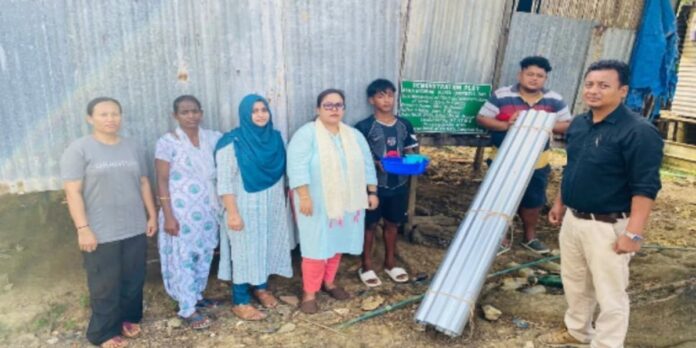
Two practical demonstration programmes on piglet management and teeth cutting techniques were conducted in Rajiv Nagar village of Great Nicobar Island, aimed at improving livestock practices and reducing losses among local pig rearers.
The programmes were organised by the Department of Animal Husbandry and Veterinary Services (AH&VS) in collaboration with UT-ATMA, focusing on the scientific management of piglets and preventive care practices. The sessions were held at agricultural fields owned by Nathaniel, son of S. Moses, and Geeta Flourance, daughter of Late Marcus, where farmers gathered for hands-on learning.
Officials said the demonstrations addressed key challenges faced in pig rearing, particularly injuries and health risks among piglets and mother pigs. The training included practical guidance on teeth cutting in piglets, a technique used to prevent damage to the sow’s teats during feeding. The process also helps reduce the risk of mastitis in mother pigs and limits injuries caused by fighting among piglets.

Participants were introduced to structured approaches to piglet care, including the importance of timely intervention and consistent monitoring. The sessions emphasised that proper management practices can significantly improve the health and survival rates of piglets while enhancing overall productivity in pig farming.
The demonstrations were designed to provide farmers with direct exposure to scientific techniques that can be implemented at the household level. Officials noted that such practices are critical in remote island regions, where access to veterinary support and modern training remains limited.
Local pig rearers attended the programmes and engaged actively during the demonstrations. Farmers observed the techniques being carried out in real-time and were given the opportunity to understand the practical application of the methods discussed. Participants indicated that the knowledge gained could help address common issues faced in pig rearing, particularly those linked to animal health and management.
The initiative forms part of ongoing efforts to extend agricultural and livestock training to remote areas such as Great Nicobar Island. Officials stated that introducing improved management practices is essential to strengthening rural livelihoods, especially in regions where livestock plays a significant role in household income.

The programmes also focused on reducing economic losses caused by preventable health issues in pig farming. By promoting early-stage care and scientific handling methods, authorities aim to support farmers in achieving more consistent output and better returns from livestock activities.
The Department, in collaboration with UT-ATMA, continues to conduct field-level demonstrations to bridge knowledge gaps and encourage the adoption of modern techniques among farmers. The emphasis remains on practical training that can be directly applied in local conditions, ensuring that interventions remain relevant to the needs of island communities.
The demonstrations concluded with farmers gaining exposure to improved piglet management methods, with officials reiterating the importance of adopting scientific practices to sustain and enhance livestock productivity in the region.