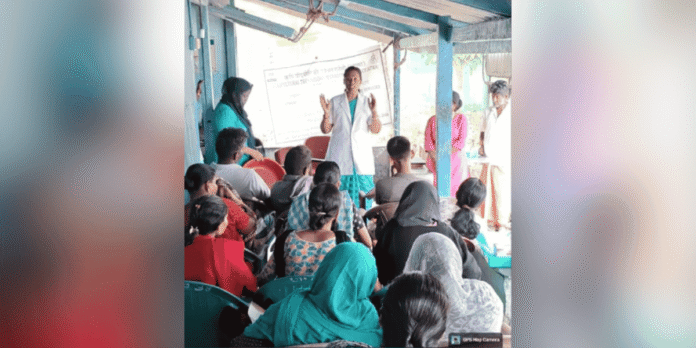
A Pashu Camp aimed at providing immediate veterinary healthcare support to Self-Help Group members was conducted on February 20 by the CD Block Mayabunder under the DAY-NRLM scheme, as part of efforts to strengthen livestock-based livelihoods in rural areas.
The camp focused on delivering essential veterinary services to SHG members and local livestock farmers, with activities including health check-ups, vaccination, deworming, treatment of sick animals and advisory support on scientific livestock management practices. The initiative was intended to address routine animal health needs while also promoting preventive care and improved husbandry techniques among beneficiaries.

During the camp, the Senior Veterinary Officer from Billiground highlighted the role of such outreach programmes in supporting income-generating activities linked to livestock rearing. Emphasis was placed on the importance of timely veterinary intervention, disease prevention and the adoption of improved animal husbandry practices to enhance productivity and ensure better economic returns for rural households.
A veterinary team was deployed at the camp to provide on-the-spot treatment to animals brought by SHG members and farmers. Medicines were distributed as required, and cows were tagged as part of livestock management and identification efforts. Livestock owners were also guided on routine healthcare practices, feeding management and disease control measures relevant to local conditions.
The camp witnessed the participation of 29 SHG members and farmers, indicating steady interest among beneficiaries in improving livestock health and strengthening livelihood activities linked to animal husbandry. Officials noted that such participation reflects growing awareness about the benefits of scientific veterinary care and structured livestock management.

The Pashu Camp formed part of efforts to integrate veterinary support services with rural development programmes, particularly those targeting women-led Self-Help Groups. By linking animal healthcare with livelihood schemes, the initiative sought to enhance the sustainability of income-generating activities in rural and remote areas.
Officials associated with the programme indicated that similar camps would continue to be organised to ensure wider outreach and access to veterinary services for SHG members and small-scale livestock farmers. The approach aims to reduce animal morbidity, improve productivity and support the economic resilience of rural households dependent on livestock rearing.