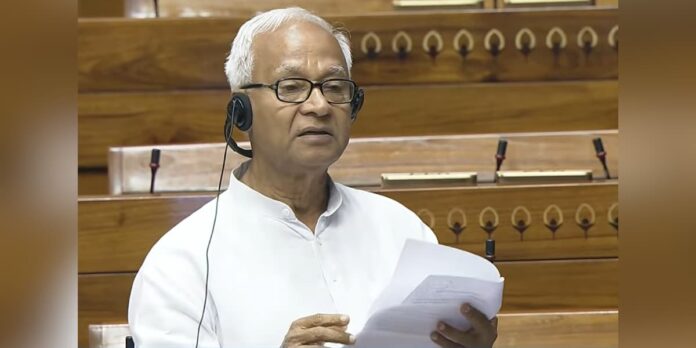
The appointment of Dr Utpal Sharma as Officer on Special Duty (OSD) at the Netaji Subhas Chandra Bose Institute of Higher Learning has been cancelled following a complaint made by the Member of Parliament on February 19, 2026, according to official communication and subsequent discussions between the university leadership and the MP.
The decision was confirmed by the Secretary in the Ministry of Education and was later reaffirmed by the Vice-Chancellor of the deemed university during discussions with the MP, sources said.
Dr Sharma, a retired principal under the Andaman and Nicobar Administration, had been appointed as OSD through an order issued on November 28, 2025 by then Vice-Chancellor Sunil Kumar Khare. The appointment letter cited Clause 23, Sub-Clause C(2) of the University Grants Commission Regulations, 2023, and said he was being engaged for one year from the date of assuming charge to assist in the university’s establishment-related processes.

The cancellation has brought focus on the interpretation of the Vice-Chancellor’s powers under the UGC Regulations, 2023. Clause 23 defines the Vice-Chancellor as the chief executive authority of a university, while Sub-Clause C(2) empowers the Vice-Chancellor to take urgent decisions in emergent situations where waiting for approval from statutory bodies could affect essential functioning.
While the earlier administration appears to have relied on this provision to justify the appointment, the present leadership has taken the view that such powers cannot be used to create or fill a post that does not exist within the sanctioned statutory structure of the institution.

Vice-Chancellor Alok Rai has held that the post of Officer on Special Duty was not a recognised or sanctioned position under the university’s approved framework. According to the current administration, the university has no formal provision for such a role in a legally valid or legitimised manner, and the appointment therefore could not continue.
The move effectively sets aside the decision taken by the previous Vice-Chancellor and signals a stricter interpretation of administrative powers within the institution. It also raises wider questions over how far discretionary authority can extend in a university that is still in the process of institutional development.
With the appointment now terminated, the episode is likely to be seen as an important test case in the governance of newly evolving higher educational institutions, particularly on whether emergency powers can be invoked for temporary administrative arrangements without prior statutory sanction.