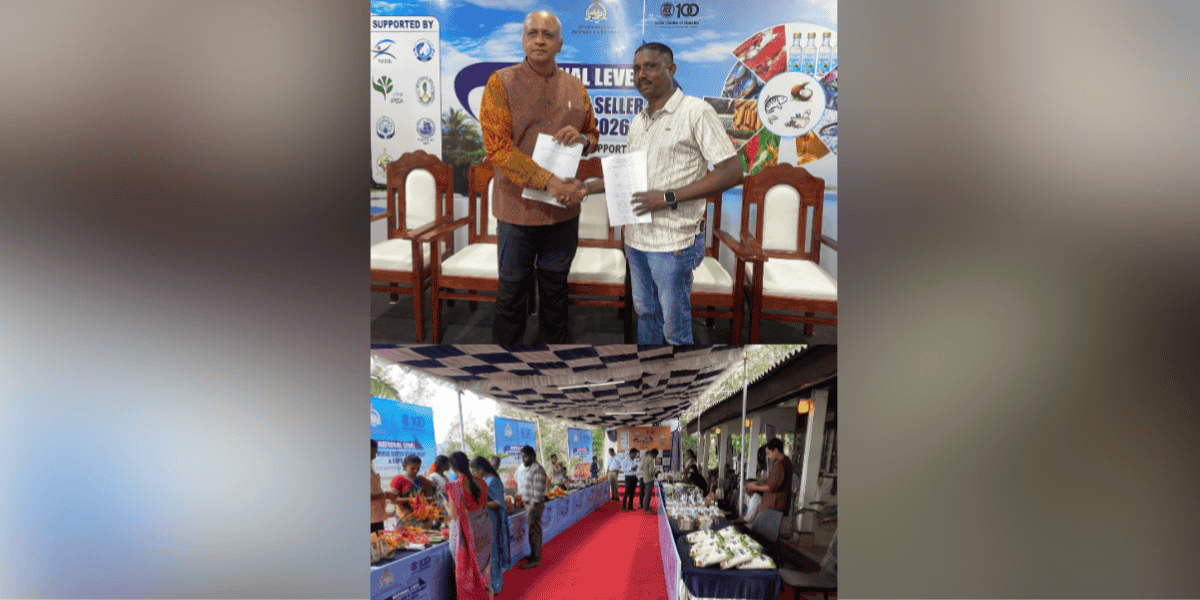
Efforts to integrate the Andaman and Nicobar Islands’ agriculture, fisheries and allied sectors with mainland markets received a significant boost with the successful conclusion of the two-day National Reverse Buyer Seller Meet held in Sri Vijaya Puram. Organised by the Departments of Agriculture, Fisheries and Industries of the Andaman and Nicobar Administration in association with the Indian Chamber of Commerce, the event brought together buyers from across mainland India and sellers from the islands, creating a platform for direct trade engagement.
Held at Megapode Resort at Haddo on February 23 and 24, the meet witnessed participation from island entrepreneurs representing seafood, coconut and coconut-based products, indigenous spices, tropical flowers and value-added food products. Buyers from multiple states explored sourcing opportunities, signalling growing interest in the islands’ natural produce and processing potential.
The second day of the event focused on structured business-to-business interactions, allowing buyers and sellers to engage in detailed discussions on pricing, volumes, logistics and quality requirements. Feedback sessions held during the meet indicated a strong inclination among visiting buyers to initiate and expand procurement of seafood, spices and coconut-based products from the islands on a regular basis.

Officials from the Administration assured stakeholders of continued institutional support to address operational challenges. Emphasis was placed on strengthening infrastructure, facilitating certifications, improving cold chain logistics and resolving trade bottlenecks to ensure sustained mainland–island trade linkages. The interaction highlighted the importance of coordinated efforts to convert initial interest into long-term commercial relationships.
As part of the programme, visiting buyers were taken on exposure visits to key production and marketing hubs across South Andaman. These included the Fish Landing Centre at Junglighat, the Spice Garden at Beodnabad, a fish processing unit at the Dollygunj Industrial Estate and the government emporium Sagarika. The visits offered buyers firsthand insight into production practices, hygiene standards, raw material availability and processing capabilities in the islands.
The field visits also served as a practical demonstration of the islands’ readiness to scale up supply, with several buyers engaging in on-site discussions with producers and processors. Officials from the Marine Products Export Development Authority inspected land identified for a proposed seafood processing cluster or aquapark, indicating movement towards strengthening export-oriented infrastructure.
A key outcome of the meet was the exchange of agreements formalising new trade partnerships. An agreement was exchanged between Raja Rao Seafoods and Blue Ocean Exports of Kolkata for the commencement of chilled Yellowfin Tuna exports from the islands to mainland markets. Another agreement between Versandi Marine Foods, Sri Vijaya Puram, and N S Seafoods marked the start of mackerel trade, reflecting tangible business outcomes from the event.

The Administration acknowledged the role of the Indian Chamber of Commerce and the Andaman Nicobar Chamber of Commerce and Industry in mobilising buyers and facilitating interactions. Support from agencies including the National Fisheries Development Board, Marine Products Export Development Authority, Agricultural and Processed Food Products Export Development Authority, Spices Board India, Coconut Development Board and RAMP was also noted as critical to the successful conduct of the meet.
The conclusion of the NRBSM is being viewed as a milestone in efforts to position the Andaman and Nicobar Islands as a reliable sourcing destination for high-quality agricultural and marine products. By enabling direct engagement between producers and buyers, the meet has laid the groundwork for expanded market access, value addition and improved income opportunities for farmers, fishermen and local entrepreneurs.
Officials indicated that follow-up actions would focus on converting expressions of interest into sustained trade relationships, with continued support to address logistical and regulatory challenges. The event has underscored the potential of structured market linkage initiatives in unlocking economic opportunities for the islands within the national supply chain.