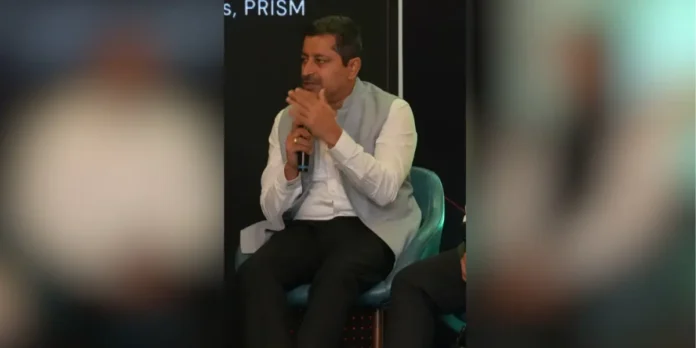
Sri Vijaya Puram, June 24: The Andaman and Nicobar Islands should prioritize high-value, sustainable tourism over mass visitor growth if they are to achieve long-term economic success while preserving their fragile environment, tourism industry leader Nitin Thakur said at the Andaman Ideas Summit 2026.
Speaking during a session on tourism opportunities and hospitality-led growth, Thakur argued that the islands possess unique strengths that position them differently from mainstream tourism destinations. Rather than competing solely on visitor numbers, he suggested that policymakers and stakeholders should focus on attracting travellers who generate greater economic value while exerting less pressure on infrastructure and natural resources.
Thakur highlighted a recurring challenge faced by the islands’ tourism sector: the perception among many travellers from mainland India that international destinations such as Bali are often easier and more convenient to access than the Andaman and Nicobar Islands.

According to him, this perception should serve as an important lesson for the islands as they seek to strengthen their competitiveness in the tourism market. He said improving visitor experience and strategically positioning the destination could help overcome such challenges and attract a larger share of premium travellers.
The tourism leader also pointed to the growing role of local entrepreneurship in shaping the future of the sector. Referring to the rise of homestays, boutique resorts and staycation facilities across the islands, particularly in the years following the COVID-19 pandemic, he noted that many residents have begun transforming small parcels of land into tourism-related ventures.
He said this trend has created new economic opportunities for local communities and could become a significant pillar of the islands’ tourism economy in the coming years.
Drawing on his experience in the international hospitality industry, Thakur said his company operates in more than 35 countries and manages thousands of hotels and vacation homes across diverse tourism markets. He cited experience in coastal and island destinations spanning Europe, Southeast Asia, Australia, the Middle East and North America.
Based on these experiences, he observed that the Andaman and Nicobar Islands have substantial untapped potential in the vacation-home and homestay segment. He suggested that successful models from global island destinations could offer valuable lessons for developing tourism infrastructure and services in the archipelago.
However, he cautioned that tourism growth should not come at the expense of local communities. Any expansion strategy, he said, must ensure that economic benefits flow directly to island entrepreneurs and residents.
Thakur emphasized that island economies operate under unique constraints, including higher operational costs, limited carrying capacity and environmental sensitivities. These realities, he said, require careful planning and a balanced development approach.

“Quality over quantity” should be the guiding principle for tourism policy in the islands, he argued. By targeting visitors who spend more and stay longer, the territory can maximize economic returns while minimizing stress on public infrastructure and ecological resources.
He further noted that islands cannot be treated simply as beach destinations, as their economic and environmental circumstances differ significantly from those of mainland urban centres. Sustainable planning, he said, remains essential to safeguarding the long-term viability of tourism-led growth.
Thakur’s remarks formed part of wider discussions at the Andaman Ideas Summit 2026, where policymakers, industry leaders and stakeholders explored strategies for entrepreneurship, hospitality development and sustainable economic growth across the Andaman and Nicobar Islands. The deliberations underscored the growing consensus that tourism expansion must be carefully aligned with environmental protection and community participation to ensure lasting benefits for the archipelago.