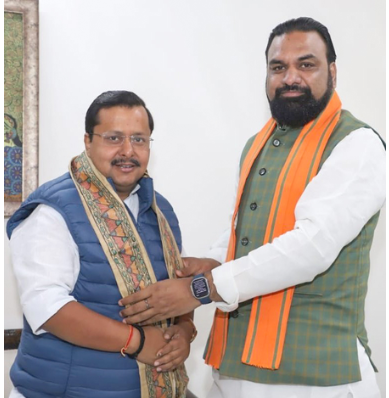
Bharatiya Janata Party leader Nitin Nabin formally assumed charge as the party’s new national president on Tuesday, marking a key organisational transition for the ruling party. His elevation to the top post followed an unopposed election process and was accompanied by the Centre’s decision to provide him Z-category security, reflecting his heightened public and political profile.
The swearing-in ceremony was held in New Delhi and was attended by Prime Minister Narendra Modi along with several senior party leaders. The event saw the participation of BJP Chief Ministers, national office bearers, state unit presidents and members of the party’s national executive, signalling broad organisational backing for the leadership change.
The BJP had declared Nabin as the sole candidate for the post of national president on Monday after the nomination and scrutiny process concluded without any other contenders. This paved the way for his unopposed election as the party’s 12th national chief. An official announcement issued by the party’s National Returning Officer confirmed that only Nabin’s name remained in the fray after the nomination process and withdrawal window closed.
According to the Returning Officer, 37 sets of nomination papers were submitted in support of Nabin within the stipulated time, all of which were found valid upon scrutiny. No withdrawals were recorded and no other nominations were filed, clearing the path for his formal election. The process gathered momentum after 30 out of the BJP’s 36 state unit presidents were elected, crossing the minimum threshold of 50 per cent required under the party’s Constitution to proceed with the national president’s election.
The election schedule had been notified earlier on January 16, with the publication of the electoral roll. Nominations opened and closed on Monday, followed by scrutiny shortly thereafter. As the sole candidate, Nabin was elected by the party’s electoral college comprising members of the BJP’s national council and state councils. Party rules require a candidate to be proposed by at least 20 electoral college members from a state and to have completed a minimum of 15 years of party membership.
Nabin, who was appointed national working president in December 2025, has received consistent backing from the party’s top leadership. Senior leaders, Chief Ministers and representatives from multiple states submitted nomination papers in his favour, reflecting a broad consensus within the organisation. At 45, he becomes the youngest leader to assume the post, with the party indicating that his elevation balances organisational continuity with a focus on generational leadership.
Shortly after he assumed charge, the Central government accorded Z-category security cover to the new BJP president. The decision was taken by the Union Ministry of Home Affairs based on a threat perception assessment carried out by the Intelligence Bureau. Officials confirmed that the VIP security wing of the Central Reserve Police Force has been assigned to provide the protection.
Under the arrangement, armed CRPF personnel will accompany Nabin during public engagements, nationwide travel and at his residence, providing round-the-clock security. Z-category protection is among the highest levels of central security cover and is typically extended to senior political leaders and high-profile individuals assessed to face potential risks. The security protocol mirrors the arrangement earlier provided to his predecessor, reflecting standard practice for the party chief.
The enhanced security had been initiated following Nabin’s appointment as national working president and was intensified after his formal election as full-time president. The move comes at a time when the party is preparing for upcoming Assembly elections in several states and outlining its organisational strategy for the next general election cycle.
Nabin’s leadership tenure is expected to involve extensive organisational touring and coordination across states, as the BJP focuses on electoral preparedness and internal consolidation. Party leaders have indicated that the transition aims to ensure stability at the top while strengthening organisational outreach in the run-up to future electoral contests.