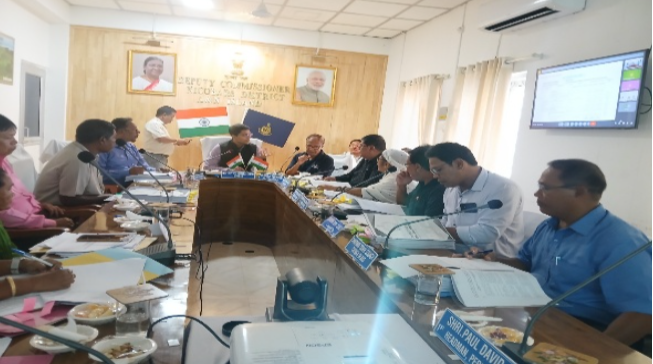
The District Planning Committee of Nicobar concluded a two-day meeting on September 30 and October 1, focusing on the future developmental roadmap for the district. Chaired by the Deputy Commissioner of Nicobar District, the session was attended by the Member of Parliament from Andaman and Nicobar Islands and the Chairmen of various Tribal Councils, highlighting a participatory approach to regional planning.
The agenda centred around three-year action plans spanning from 2026 to 2029, presented by different line departments. Each department outlined proposed projects and sectoral priorities, placing emphasis on inclusive growth, infrastructural upgrades, and socio-economic advancement. The presentations sought to balance tribal welfare with broader district-level needs, aiming to strengthen both the immediate and long-term developmental framework of Nicobar.
One of the core themes of the discussions was sustainable and people-centric planning. Given the fragile ecology and unique cultural setting of Nicobar, the committee reviewed proposals that included infrastructure improvement, livelihood support, healthcare initiatives, and educational expansion. The need to balance growth with environmental conservation was underscored by several members, ensuring that development strategies respect the distinctiveness of the tribal communities while aligning with broader administrative goals.

The Member of Parliament for the islands expressed appreciation for the administration’s effort in shaping a comprehensive vision. Alongside, representatives of the Tribal Councils actively engaged with the departments, providing on-ground perspectives and feedback. Their inputs ranged from the need for better connectivity within the district to welfare measures that directly address tribal needs. This exchange ensured that the planning process was not merely a top-down approach but included voices of local leadership and traditional governance structures.
According to officials, the three-year plans are expected to cover diverse sectors such as infrastructure, agriculture, fisheries, healthcare, education, and renewable energy. Priority is being given to areas that can directly uplift tribal households while also improving access to basic services. Infrastructure strengthening, including roads, ports, and housing, was identified as a critical driver for equitable growth. Alongside, investments in education and healthcare aim to improve human development indicators across the district.
The Deputy Commissioner, in closing remarks, thanked participants for their constructive contributions and stressed that the recommendations of the DPC would be carefully incorporated into the finalised action plan. The assurance reflected the administration’s commitment to participatory planning and collaborative decision-making. The meeting also reaffirmed the role of District Planning Committees as forums where elected representatives, local institutions, and the administration converge to design development strategies.
The outcomes of the meeting are expected to pave the way for a more coordinated and transparent approach to district governance. By incorporating tribal perspectives, the planning process seeks to align district-level goals with the aspirations of indigenous communities. This is particularly significant in Nicobar, where tribal traditions form an integral part of the social fabric and developmental efforts require sensitivity to local contexts.

The successful conduct of the two-day deliberations has been important step toward strengthening planning institutions in remote island districts. The emphasis on action plans covering multiple years signals an intent to move beyond short-term interventions and instead focus on sustained, measurable development. If implemented as discussed, the proposals could mark a shift toward long-term resilience, improved livelihoods, and stronger public infrastructure for Nicobar’s residents.
The District Planning Committee meeting not only provided a platform for reviewing department proposals but also reinforced the importance of inclusive and sustainable planning in shaping the islands’ future. With final action plans set to incorporate the committee’s recommendations, the district is expected to enter a new phase of coordinated growth, with an emphasis on balancing modernisation with cultural and ecological preservation.