A multi-pronged outreach by the district administration in Nicobar has brought focus on local markets, entrepreneurship, and grassroots service delivery, with a series of coordinated initiatives aimed at strengthening livelihoods and public infrastructure across the region.
The programme, led by senior officials from the administration and the MSME sector, covered a wide range of activities including the launch of a weekend farmers’ market, review of development programmes, awareness campaigns on central schemes, and inspections of village-level institutions. The exercise is being seen as part of a broader effort to enhance economic activity and improve service delivery mechanisms in the island district.
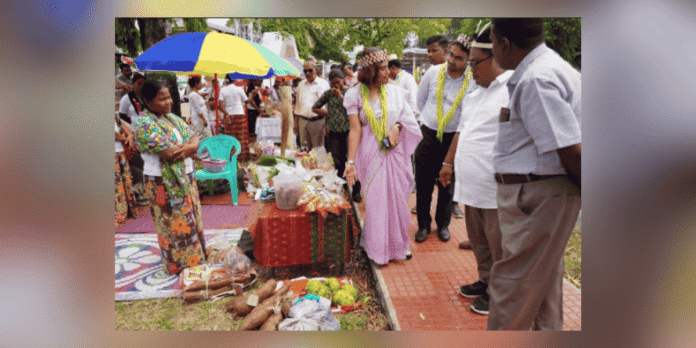
One of the key highlights of the visit was the inauguration of a weekend farmers’ market at Edward Kutchat Park in Perka. The market showcased produce and handicrafts from local self-help groups and farmers, providing them with a direct platform to connect with consumers. The initiative also marked the market debut of virgin coconut oil producers supported under NABARD-ITDP funding, reflecting an attempt to promote value-added products from the region.

Officials indicated that the strong public response to the market has led to plans for making it a regular feature, with operations scheduled every Saturday evening. The move is expected to boost local commerce and provide sustained income opportunities for small producers and community groups.
The outreach also included a review of the Aspirational Block Programme covering Car Nicobar and Nancowrie blocks. Discussions focused on the progress of Sampoornata Abhiyan 2.0 and strategies to improve socio-economic indicators in the region. The review aimed to identify gaps and streamline implementation of development schemes at the block level.
An awareness camp on MSME schemes and the PM Vishwakarma initiative was organised at Perka Community Hall. The session targeted local youth and women, encouraging them to explore opportunities in entrepreneurship and move towards self-employment. Information was shared on credit-linked subsidies, Udyam registration, and various support mechanisms available under central government programmes.
Officials highlighted that improving awareness about such schemes is critical for enabling local businesses to scale up operations and access institutional support. The camp also aimed to address information gaps that often limit participation in government initiatives.
The visit extended to Kinyuka village, where inspections were carried out at key public institutions. The Anganwadi centre was assessed for kitchen hygiene and nutritional standards, while the health sub-centre and government primary school were reviewed to evaluate availability of essential services and infrastructure.
These inspections were aimed at ensuring that welfare schemes and basic services are effectively reaching the grassroots level. Officials noted that such field-level assessments are essential for identifying operational challenges and improving accountability in service delivery.
The combined set of activities reflects an integrated approach to development, linking economic initiatives with social welfare and infrastructure monitoring. By focusing on both market access and institutional performance, the administration is attempting to create a balanced framework for growth in the island district.

Nicobar, with its unique geographic and socio-economic context, requires tailored interventions that address both livelihood generation and access to essential services. The initiatives undertaken during the visit are aligned with this approach, targeting multiple sectors simultaneously.
Officials indicated that sustained engagement and follow-up actions will be necessary to translate these efforts into long-term outcomes. Strengthening local entrepreneurship, improving scheme implementation, and ensuring effective delivery of public services remain key priorities for the administration.
The outreach concluded with an emphasis on promoting self-reliance and community participation, with the expectation that such initiatives will contribute to building a more resilient and inclusive local economy in Nicobar.