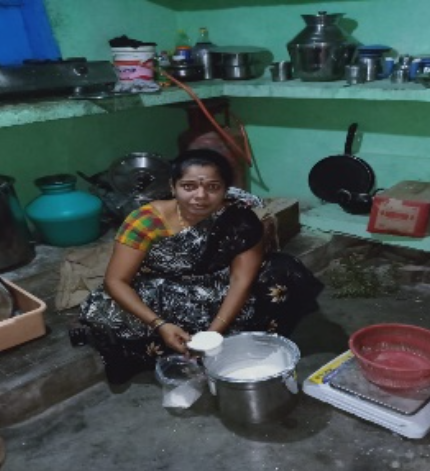
A small food-processing enterprise in Campbell Bay has emerged as a notable example of how targeted institutional support can strengthen livelihoods in the remote Nicobar district. A member of the Neela Self Help Group from C.D Block, Campbell Bay, has achieved an annual income exceeding ₹1 lakh, earning recognition as a “Lakhpati Didi” after expanding her micro-enterprise with assistance under the PMFME scheme.
The Neela Self Help Group was established in October 2017 as part of efforts to promote collective entrepreneurship among women in the area. The entrepreneur later became associated with the group and began working towards building a sustainable source of income through food processing activities. Like many small enterprises in island regions, the unit initially faced limitations related to working capital and access to basic machinery, which restricted its ability to scale production and improve efficiency.
Support extended through the Department of Rural Development addressed these constraints by providing seed capital assistance of ₹40,000 under the PMFME scheme. The financial support was used to procure a grinder, a key addition that strengthened the operational capacity of the enterprise. Following the installation of the machinery, the daily production capacity increased from 10 kg or litres to 12 kg or litres, allowing the unit to better meet demand in local markets.
The increase in production translated into a gradual improvement in earnings. Daily profits rose from approximately ₹450 to ₹500, while a portion of the seed capital continued to be used to meet ongoing working capital requirements such as procurement of raw materials and routine operational expenses. The steady improvement in output and efficiency enabled the enterprise to maintain consistent production levels over time.
Through regular production cycles, improved efficiency and access to local market channels, the enterprise recorded an annual income exceeding ₹1 lakh, qualifying the entrepreneur for recognition as a Lakhpati Didi. For the financial year 2025-26, the Neela Self Help Group reported a financial turnover of ₹1.40 lakh, reflecting sustained activity and incremental growth rather than one-time gains.
Products manufactured by the group are marketed through local outlets, ensuring that economic benefits remain within the community. The enterprise operates within the constraints of a small island economy, where transportation costs and limited market size often pose challenges for micro-entrepreneurs. Despite these factors, the unit has been able to stabilise its income through improved productivity and efficient use of resources.
Officials associated with rural development initiatives view such outcomes as reinforcing the objectives of women-led entrepreneurship and livelihood generation in rural and island areas. The Campbell Bay case demonstrates how relatively modest financial interventions, when combined with institutional support and collective effort, can help Self Help Group members move beyond subsistence-level activities.
The experience also highlights the role of Self-Help Groups in strengthening local economies by creating income opportunities that are aligned with local demand and resources. As similar groups across the Nicobar district seek to enhance incomes and scale operations, the Campbell Bay enterprise is being cited as an example of how structured schemes like PMFME can contribute to sustainable livelihood outcomes in geographically isolated regions.



