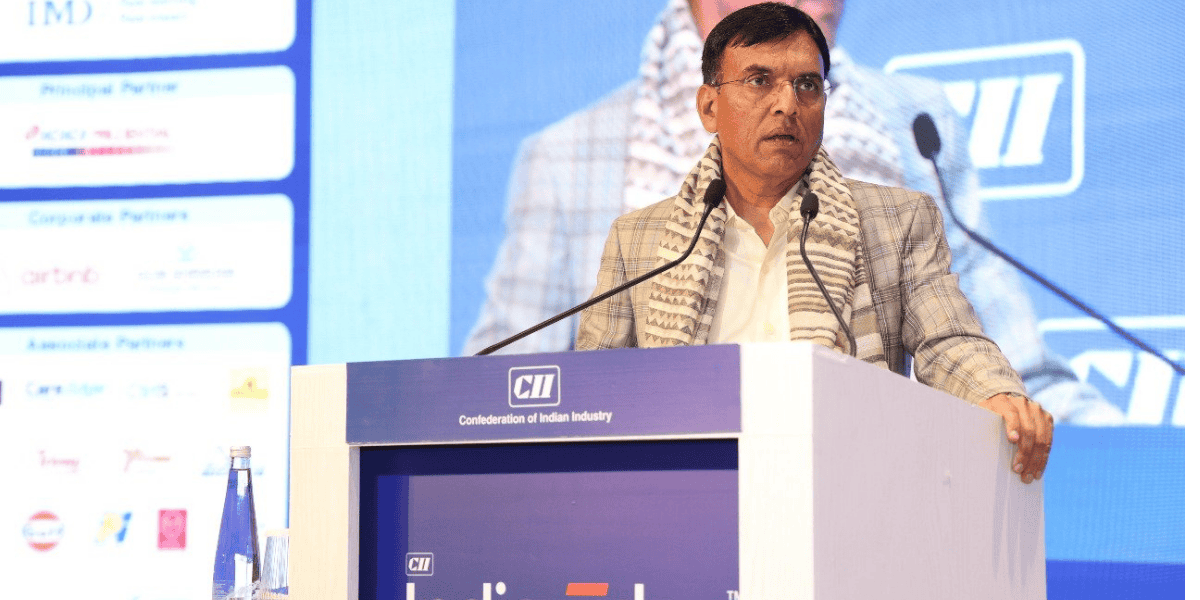
The Centre is set to notify the new Labour Codes in the near future, describing them as the backbone of a stronger, fairer and more inclusive workforce, Union Minister of Labour and Employment Mansukh Mandaviya informed on Wednesday.
Addressing a session on labour reforms for Viksit Bharat at a Confederation of Indian Industry (CII) event, Mandaviya said the Labour Ministry has initiated the process of enforcing rules under the recently notified laws and will shortly place draft rules in the public domain for feedback.
The four Labour Codes, the Code on Wages, 2019; the Industrial Relations Code, 2020; the Code on Social Security, 2020; and the Occupational Safety, Health and Working Conditions Code, 2020, were notified on November 21. Together, they consolidate and replace several existing labour laws with the stated aim of simplifying compliance while strengthening worker welfare.

Highlighting the importance of labour reforms, Mandaviya said the government views workers as the foundation of national development and stressed that securing their welfare and social security remains a priority. He noted that entrepreneurs, workers and industries each play a vital role in economic growth and that the new framework seeks to balance these interests.
According to the minister, the reforms go beyond the merger of laws and focus on improving dignity, safety and financial security for workers. He pointed out that the Labour Codes enhance occupational health and safety standards, particularly in hazardous sectors, by mandating annual health check-ups and introducing stronger protective measures.
One of the significant provisions under the new framework is the expansion of gratuity eligibility to workers who have completed at least one year of service. Additionally, the codes extend social security coverage to gig and platform workers, a segment that was largely outside the formal protection system earlier.

Mandaviya cited data from the International Labour Organization (ILO), stating that nearly 64 per cent of India’s population now receives at least one form of social security, placing the country among leading nations in terms of social protection coverage.
The minister also emphasised the need to align India’s talent and skills ecosystem with global requirements, noting the growing international demand for skilled Indian professionals. He said structured skill mapping and development would be critical in meeting global workforce needs.
CII President Rajiv Memani said the Labour Codes represent a major reform from an industry perspective. He added that by simplifying procedures, lowering transaction costs and improving ease of doing business, the reforms would support investment and enhance India’s global competitiveness as the country moves towards the goal of Viksit Bharat.