Methamphetamine use is rising across the Andaman and Nicobar Islands, moving through informal social networks and increasingly reaching younger age groups, according to a Wave Andaman investigation.
A Wave Andaman investigation, based on interviews with enforcement sources and a review of seizure patterns, indicates that what appears as scattered instances of use may be linked to a more structured and layered distribution system operating across the islands. Sources across enforcement and local networks said meth is now accessible in multiple locations, particularly within youth circles, including college-going groups.
The dealers next door
The shift is not just in consumption, but in how the drug is believed to be moving. According to sources familiar with local enforcement patterns, meth distribution in the islands does not always follow the visible structure associated with conventional narcotics markets. Instead, supply is said to move through informal social circles, where buyers, users and suspected facilitators often already know one another.
Sources said that in many instances, the seller is part of the same social circle as the user, an acquaintance, a friend, or a regular presence at gatherings. This proximity allows transactions to take place discreetly and without raising suspicion.
Weekend gatherings have emerged in multiple source accounts as key access points. Sources said suppliers or intermediaries are able to reach users directly in these settings, where transactions are embedded within routine social interactions. The result is a low-visibility network that is difficult to track and disrupt.

The investigation also points to what sources described as a layer of local facilitation. Sources alleged that individuals within these circles are acting as intermediaries, connecting suppliers with buyers in exchange for money. The same individual can move between roles, user, facilitator, and, at times, seller, making the network fluid and adaptive.
At the higher end, sources describe suppliers managing bulk movement and coordinating distribution across locations. These suppliers are said to rely on intermediaries to maintain connections and arrange delivery, while street-level vendors operate on demand, often without any fixed base of operation.
Sources said one of the more worrying trends is the reported spread of methamphetamine use into younger age groups. Sources added that access to the drug has become easier over time, with distribution networks now more accessible than before.
Tools of use

Alongside the spread of the substance itself, sources pointed to the increasing availability of devices commonly associated with its consumption. One such device is an “oil meth pipe,” often referred to in retail contexts as an “oil burner” or by various street names. These are glass devices typically used for vaporizing substances.
While such items are often sold under the guise of aromatherapy or for burning essential oils, sources said they are widely understood to be associated with the consumption of illicit stimulants such as methamphetamine. The design allows a substance to be heated from outside a glass bulb until it vaporises, enabling the user to inhale the fumes.
Health experts have long warned that the use of such devices for illicit substances carries significant health risks, including dependency, respiratory damage and long-term neurological impact, apart from potential legal consequences.
From spillover to system
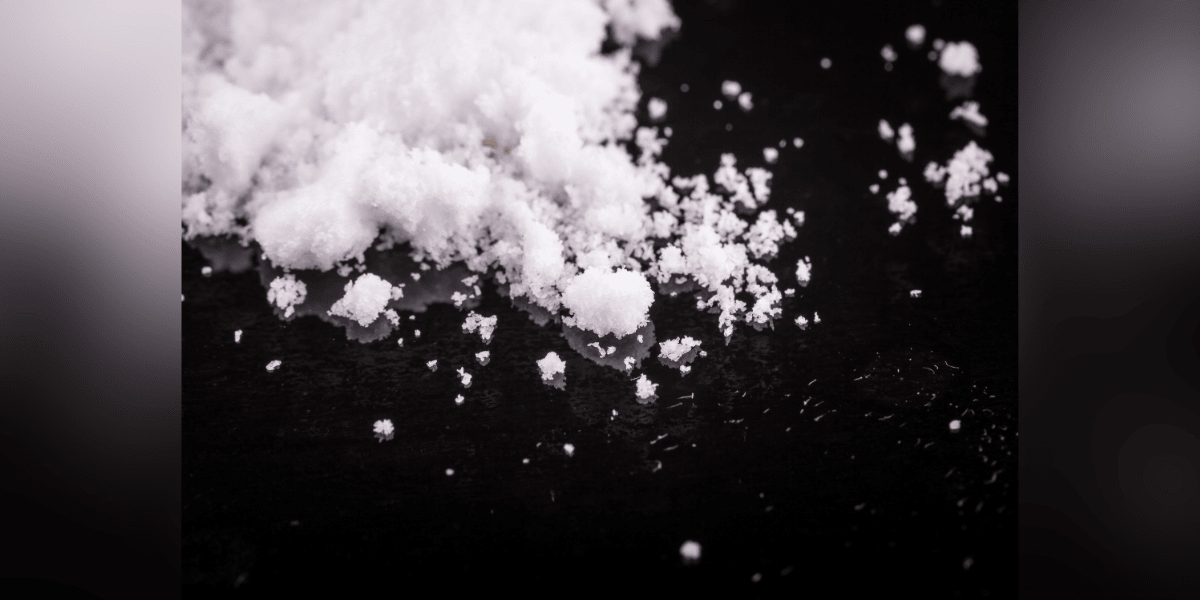
Crystal meth, a highly potent and addictive stimulant, is typically produced in clandestine laboratories using chemical precursors rather than plant-based inputs. It is known for its intense, long-lasting effects, including heightened alertness and euphoria, but also carries severe risks, ranging from dependency and behavioural changes to long-term neurological damage.
Much of the global supply of methamphetamine is linked to the “Golden Triangle”, the border region spanning Myanmar, Laos, and Thailand, which has become a major hub for synthetic drug production. In recent years, large quantities of crystal meth have been trafficked from this region across Asia through land and maritime routes.
Until recently, authorities largely believed that the methamphetamine surfacing in the islands was incidental, spillover from international consignments dumped at sea by traffickers attempting to evade naval and coast guard surveillance in Indian and neighbouring waters. That assessment is now shifting. Officials and sources familiar with the matter said investigators are increasingly examining the possibility of more structured supply lines, including links to networks operating across Southeast Asia. The focus is moving from accidental inflow to the likelihood of deliberate, sustained supply into the islands.
Given the islands’ relatively small population and tightly knit communities, insiders said it should, in theory, be possible to identify and dismantle key nodes in the supply chain. But the trend on the ground suggests otherwise. Despite periodic crackdowns by the Andaman and Nicobar Police, methamphetamine seizures have risen in recent years, indicating that enforcement actions have yet to disrupt the underlying network in a sustained manner.
Sources also claimed that certain individuals previously arrested in narcotics-related cases have resumed activity after securing bail. While these claims could not be independently verified in each instance, multiple sources said such patterns remain a concern within enforcement circles.

The scale of movement becomes visible only in isolated enforcement actions. On January 16, nearly 7 kilograms of methamphetamine (6.979 kg) was recovered during a forest patrol near Pagla Mundi under Hut Bay in South Andaman. The contraband had been concealed beneath sand and dry foliage in a forested area, suggesting deliberate storage away from populated zones.
Inputs gathered during the investigation also point to possible maritime routes being used for movement of the drug. Sources referred to a 2019 Coast Guard interception involving a Myanmar-linked vessel, during which narcotics consignments were reportedly discarded at sea. Some of these materials are believed to have later surfaced along the shores of Car Nicobar and Little Andaman, with portions allegedly entering local circulation through informal channels.
These local patterns align with broader enforcement findings across India’s narcotics trade. Agencies have identified links to networks operating out of Southeast Asia, particularly Thailand. The Andaman and Nicobar Islands, given their location, are increasingly being viewed as a transit point along maritime routes, with onward movement towards coastal entry points such as Kerala and further distribution across southern India.
Taken together, the findings point to a system that is evolving quietly but steadily. The network does not rely on visibility or concentration in a single location, but on repetition across many small, low-profile transactions embedded within everyday social spaces. For enforcement agencies, the challenge is no longer just interception, but tracking a supply chain that has begun to blend into the social fabric of the islands.