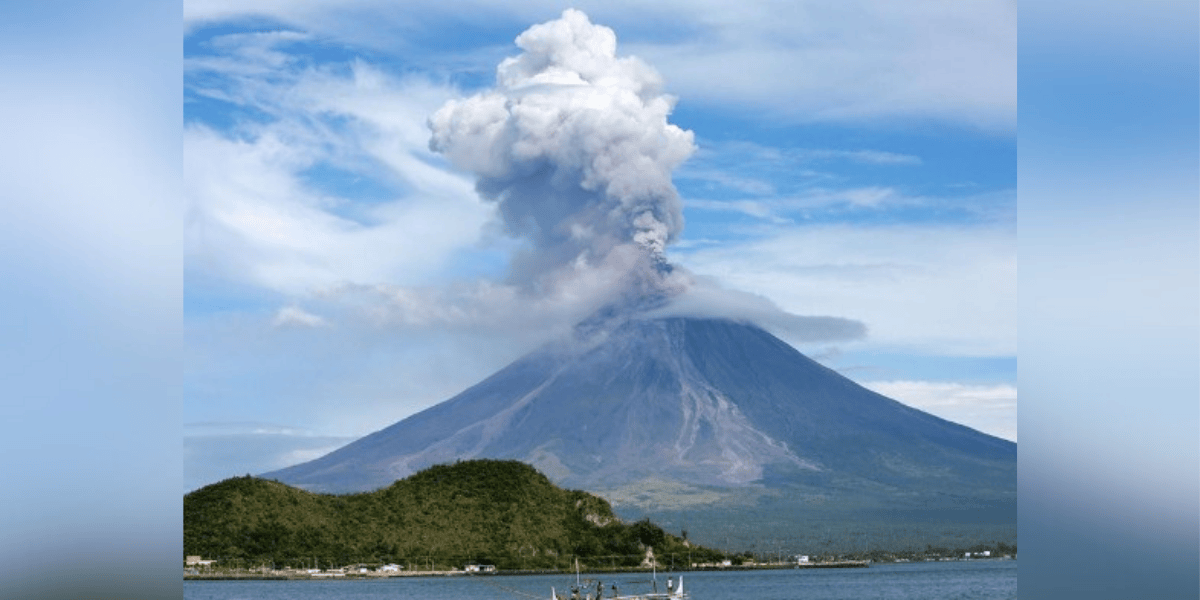
Philippine volcanologists raised the alert level of Mayon Volcano in Albay province on Luzon island to Alert Level 3 on Tuesday, citing the “onset of dome collapse pyroclastic density currents” (PDCs), according to the Philippine Institute of Volcanology and Seismology (PHIVOLCS). The escalation signals a magmatic eruption from the summit lava dome with heightened chances of lava flows, rockfalls, and potentially explosive activity in the coming days or weeks.
PHIVOLCS noted that repeated collapses of Mayon’s unstable summit dome have triggered an increasing number of rockfall events. Since January 1, 2026, the volcano has recorded 346 rockfall events and four volcanic earthquakes, compared to 599 rockfalls between November and December 2025. The agency warned that the growing activity could affect the upper to middle slopes of the volcano and pose significant risks to nearby communities.
Authorities have recommended the evacuation of residents within the six-kilometre permanent danger zone around Mayon due to the threat of PDCs, lava flows, rockfalls, and other volcanic hazards. PHIVOLCS emphasized that conditions could escalate rapidly, and residents should closely follow guidance from local government units and disaster risk reduction officials.

The agency also urged vigilance against lahars and sediment-laden streamflows along channels draining from the volcano. “Increased vigilance against pyroclastic density currents, lahars, and sediment-laden streamflows along channels draining the edifice is advised,” PHIVOLCS said in its advisory.
The alert follows an earlier increase to Alert Level 2 on January 1, when volcanologists noted signs of increased activity beneath Mayon. The move from Alert Level 1 (low-level unrest) to Level 2 (moderate unrest) indicated magma movement beneath the volcano, raising the probability of sudden explosive eruptions. PHIVOLCS had warned that shallow magmatic processes could trigger hazardous eruptions and urged the public to avoid the six-kilometre radius permanent danger zone to minimize risks.
Mayon, the Philippines’ most active volcano, has a long history of eruptive activity and is closely monitored due to its potential impact on nearby communities. The latest dome collapse and lava activity underscore the need for heightened caution, particularly in surrounding towns and barangays within Albay province.

Local authorities continue to coordinate with disaster risk reduction teams to ensure residents are safely evacuated and emergency measures are in place. The PHIVOLCS advisory highlights the importance of adhering to evacuation orders and remaining alert to evolving volcanic conditions.
With increased dome collapse activity and ongoing lava extrusion, Mayon’s situation remains volatile. Experts caution that pyroclastic density currents can travel rapidly down slopes, while lahars may inundate river channels during heavy rains. PHIVOLCS will continue monitoring the volcano in real time and provide updates to guide public safety measures.
Residents and visitors are advised to avoid entering restricted zones and to follow official advisories from disaster authorities to prevent casualties in the event of an explosive eruption.