Passenger ship travel between mainland India and the Andaman and Nicobar Islands has declined sharply over the past decade, according to data shared by the Chennai Port Authority, prompting tourism experts to call for the route to be repositioned as a leisure cruise experience rather than being treated merely as an alternative mode of transport.
According to the port data, passenger traffic through the Chennai Cruise Terminal connecting the mainland with the islands stood at more than 34,000 travellers in the financial year 2016–17. Over the years, however, the numbers have fallen significantly.
By 2019–20, passenger movement had reduced to around 10,000 travellers, indicating a sharp shift in travel preferences. The disruption caused by the COVID-19 pandemic further accelerated the decline, with passenger movement dropping to only a few hundred travellers during 2020–21 when global travel restrictions severely impacted maritime tourism.
Although services gradually resumed after the pandemic, passenger volumes have yet to return to pre-2017 levels. Between 2022 and 2024, the terminal recorded an average annual passenger traffic of roughly 6,000 travellers moving between the mainland and the Andaman and Nicobar Islands.

For the financial year 2024–25, the Chennai Cruise Terminal handled 7,721 passengers travelling to and from the islands.
The fall in passenger traffic has also been accompanied by a decline in the number of vessels operating on the route. According to the data shared during a media interaction in Chennai, vessel calls that once stood at around 35 ships in 2016–17 have gradually reduced to about 10 vessels in 2024–25.
The figures were presented by Kirubanand Swami, Port Traffic Manager of the Chennai Port Authority, during an interaction with a media delegation from the Andaman and Nicobar Islands visiting Chennai.
For decades, shipping served as the principal lifeline between the islands and the Indian mainland. Passenger vessels from Chennai and Kolkata once carried government employees taking up postings, traders transporting goods, families relocating to the islands and students travelling home.
The journey itself was part of the experience. Travelling by sea from the mainland to the islands typically took around three to four days, offering passengers an extended voyage across the Bay of Bengal. Even today, the Andaman route remains one of the few places in India where travellers can undertake a multi-day journey across the open sea.
However, changing travel patterns have steadily reduced the importance of sea travel for passengers.
The expansion of air connectivity between mainland cities and (Sri Vijaya Puram) Port Blair has dramatically shortened travel time to the islands. What once required several days at sea can now be completed within a few hours by flight. For tourists in particular, shorter holidays and tighter travel schedules have increasingly made air travel the preferred option.
Speaking to The Wave Andaman, Mohan Vinod, President of the Andaman Association of Tour Operators (AATO), said the decline is also linked to the absence of a fixed sailing schedule between the island and the mainland. “Passenger ships usually take about three days to reach the destination, and both tourists and the general public increasingly prefer faster modes of travel. If a cruise vessel with quicker travel time and regular sailings is introduced, passenger numbers could grow significantly,” he said.
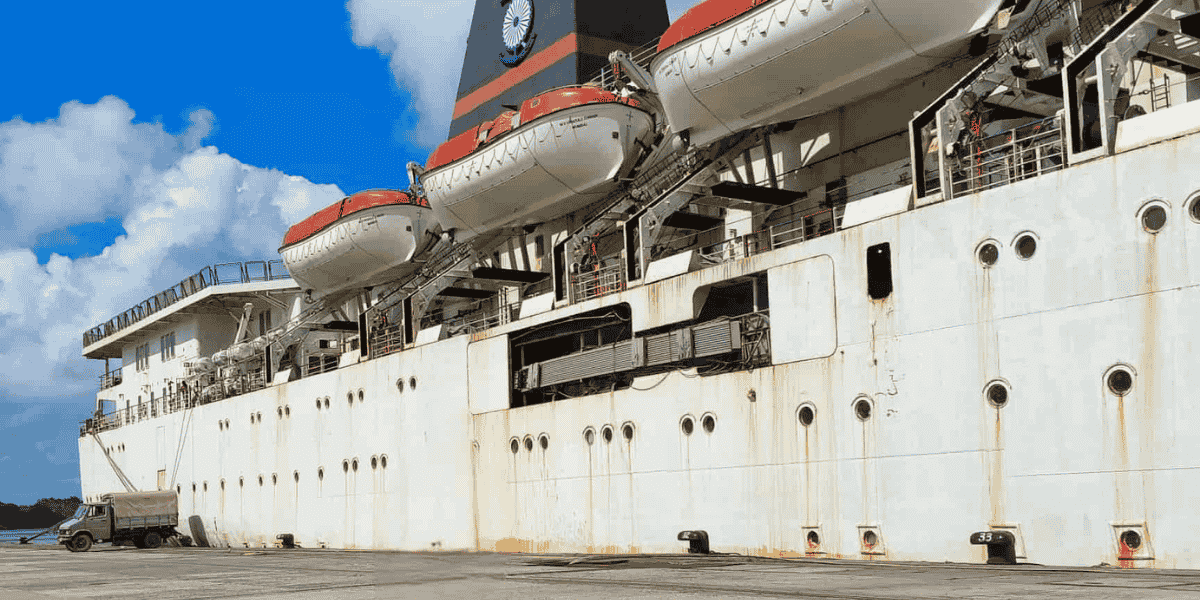
Tourism stakeholders say another factor contributing to the decline has been the gradual deterioration in the overall onboard experience on some of the vessels operating on the route. While sea voyages between the mainland and the Andaman and Nicobar Islands were once regarded as a distinctive and even premium travel experience, concerns over ageing ships, maintenance standards and the quality of passenger services have weakened the appeal of travelling by sea.
Industry observers note that the decline in upkeep and service standards has coincided with the rapid growth of aviation connectivity to the islands, prompting many travellers to opt for faster and more comfortable flights.
Tourism experts, however, believe the sea route still holds significant untapped potential if repositioned appropriately. They argue that vessels operating between the mainland and the islands could be marketed as a leisure cruise experience, offering travellers a unique multi-day maritime journey across the Bay of Bengal rather than being seen merely as a slower transport link.
According to them, if the Shipping Corporation of India and the administration were to invest in upgrading the vessels, improving onboard amenities and repositioning the route as a cruise tourism product, the service could attract travellers looking for a distinctive ocean travel experience.
Despite the decline in passenger numbers, shipping continues to remain critical for the islands’ supply chains.
Responding to queries from journalists, Swami said vessels carrying cargo and passengers to the Andaman and Nicobar Islands continue to receive priority handling at Chennai Port given the islands’ dependence on maritime logistics.
The port authority, he said, makes efforts to minimise delays in vessel turnaround and cargo movement wherever possible.
Weather conditions at sea remain one of the primary reasons for delays in cargo movement to the islands. Rough seas and adverse weather occasionally disrupt sailing schedules, affecting the timely arrival of consignments.
In some cases, logistical issues during shipment operations can also slow down cargo movement. Containers may sometimes be wrongly placed or misidentified by shipping companies during handling and stacking processes at ports, delaying the loading or unloading of consignments meant for the islands.
“These operational issues sometimes slow down the movement of goods, but they are addressed through coordination between shipping lines, port authorities and logistics operators,” Swami said.

He also stated that the Chennai Port Authority has not received any formal proposal from the Andaman and Nicobar administration regarding the development of new port infrastructure in the islands.
Addressing questions related to global geopolitical developments, particularly tensions involving Iran, Israel and the United States, Swami said there is currently no immediate threat to cargo supply to the Andaman and Nicobar Islands arising from the conflict.
According to him, port authorities and government agencies are monitoring the situation and coordinating to manage supply chains.
However, he cautioned that if the conflict were to continue for an extended period, it could potentially affect global shipping routes and cargo movement.
“In such situations, standard operating procedures are reviewed periodically by the port authority and the government to manage possible disruptions,” he said.