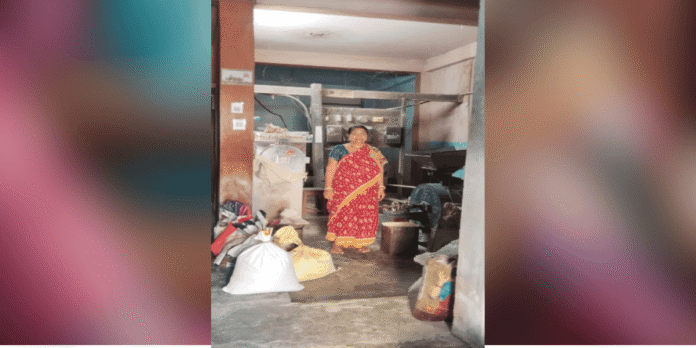
A women-run Self Help Group (SHG) in Little Andaman has emerged as a notable example of grassroots entrepreneurship and sustainable livelihood generation under the National Rural Livelihoods Mission (NRLM), highlighting the impact of targeted financial support and community-based enterprise.
Shyama Self Help Group, located in Little Andaman under South Andaman district, has been working since its establishment in January 2017 to promote sustainable livelihood opportunities for rural women. One of its members, Gouri Rani Mondal, has successfully set up and expanded a small-scale food processing unit that now provides stable income and local employment linkages.
Mondal began her enterprise with a modest flour mill operated using a single milling machine. Initially functioning on a limited scale, the unit catered to local demand for basic food products. Seeking to increase production and strengthen her family’s income, she availed a loan of Rs 50,000 from the Abhinandan Village Organization at Ramkrishna Pur in Little Andaman. The financial assistance enabled her to install an additional flour milling engine, significantly improving the unit’s output capacity.

Following the expansion, the processing unit’s daily production rose to around 50–60 kilograms of flour. Raw materials are sourced directly from local residents and villagers, a practice that has reduced transportation costs while reinforcing community participation and strengthening local economic networks. The enterprise currently processes rice flour, wheat flour and coconut oil, catering primarily to local consumption needs.
Officials associated with the SHG said the enterprise is operating smoothly and has become a dependable source of income for Mondal’s household. The unit now generates an annual income of Rs 1 lakh and above, earning her recognition as a “Lakhpati Didi” — a term used for women who achieve an annual income of at least Rs 1 lakh through self-employment initiatives supported by government livelihood programmes.
The success of the Shyama SHG member underscores the role of small, decentralised enterprises in rural economic development, particularly in geographically isolated regions such as Little Andaman. By sourcing inputs locally and serving nearby markets, the unit has demonstrated a viable model of sustainable production that aligns with community needs and resource availability.

Stakeholders involved in NRLM implementation said the case illustrates how timely access to credit, coupled with institutional guidance and local support systems, can help transform small initiatives into sustainable livelihood ventures. The model is being cited as an example of women-led entrepreneurship, self-reliance and income generation in rural island communities.
The experience of Shyama SHG also reflects broader efforts to strengthen women’s economic participation through collective institutions such as SHGs and village organisations. Such initiatives aim to enhance household income, promote financial inclusion and reduce livelihood vulnerability among rural women.
As livelihood missions continue to focus on income diversification and enterprise development, the success of Gouri Rani Mondal’s food processing unit stands out as evidence of how grassroots entrepreneurship can contribute to local economic stability and women’s empowerment in remote regions like Little Andaman.