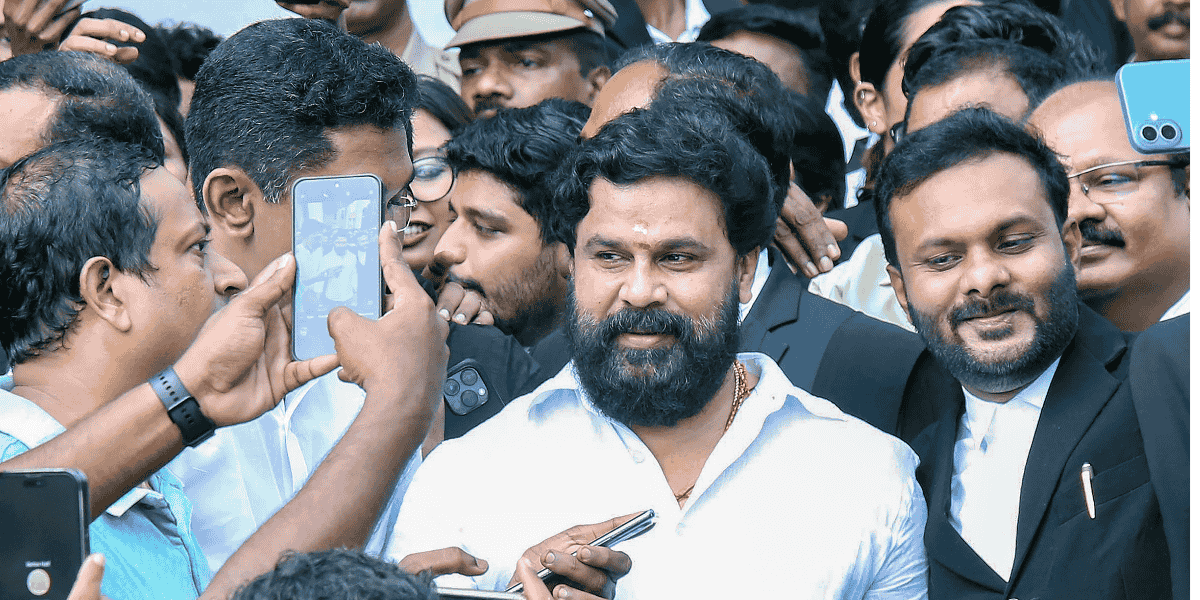
The Kerala prosecution has initiated formal steps to challenge the trial court verdict in the high-profile 2017 actress assault case, signalling its intent to contest the acquittal of actor Dileep and other co-accused. The appeal process is currently underway, with the State examining legal grounds to question the trial court’s findings, particularly its conclusion that the prosecution failed to establish a wider conspiracy behind the crime.
According to official sources, the Special Public Prosecutor has prepared a comprehensive report assessing the feasibility and scope of an appeal. The report, which outlines potential legal infirmities in the verdict, is expected to be submitted to the Director General of Prosecutions later this week. Based on the recommendations, the government has begun drafting the appeal, carefully factoring in the reasoning adopted by the trial court while acquitting Dileep, who was named as the eighth accused in the case.
The move reflects the State’s resolve to challenge what it considers critical shortcomings in the trial court’s assessment of evidence and investigation. The verdict had held that the prosecution failed to prove that the crime was carried out at the behest of Dileep or that there existed a broader criminal conspiracy beyond the direct involvement of the first accused and his associates.

Adding a new dimension to the case, the investigating officer, Baiju Paulose, has reportedly informed the Director General of Police about an anonymous letter alleging that details of the verdict were leaked even before it was officially pronounced. The letter claimed that the judgment, after being written, was shared with a close associate of Dileep and accurately predicted the outcome, the conviction of accused numbers one to six and the acquittal of the remaining accused.
Earlier, the president of the Kerala High Court Advocates’ Association had approached the Chief Justice with a complaint after receiving the anonymous communication. However, the issue led to internal disagreements within the association, and no unified decision was reached on pursuing the matter further. The trial court has not commented on the allegations related to the alleged leak of the judgment.
In its detailed verdict, the trial court observed that the prosecution was unable, at any stage of the proceedings, to substantiate its claim that the crime was orchestrated by Dileep. The court noted that the initial charge sheet alleged that the accused abducted the actress, filmed obscene visuals, and attempted to blackmail her for financial gain, with the accused acting towards a shared objective.

While the first charge sheet had recommended further investigation, the court pointed out that this was largely limited to the recovery of the mobile phone and memory card allegedly used to record the visuals. It found no material in the initial report to suggest a conspiracy extending beyond the first accused, Pulsar Suni, and his associates.
The court also raised questions about whether the investigation against Dileep was initiated solely on the basis of a letter written by Pulsar Suni from prison, an aspect expected to be a key focus of the prosecution’s appeal.
As the State prepares to move the higher judiciary, the case continues to draw public attention due to its legal complexity, the stature of the accused, and broader concerns surrounding investigation standards and judicial transparency.