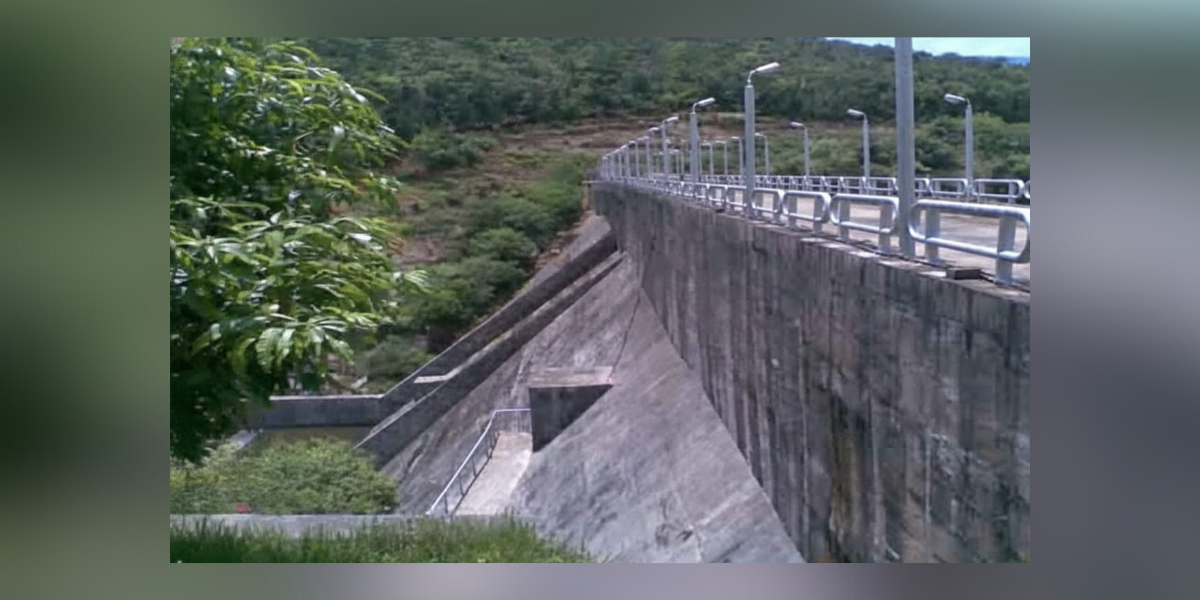
Falling water levels in the Kalpong river, the main surface water source for North and Middle Andaman, have triggered fresh concern over the Andaman and Nicobar Islands’ fragile drinking water system, even as the administration warns of a rainfall shortfall during the ongoing North East Monsoon.
Officials said rainfall in the Kalpong catchment has declined by about 10–20 percent in recent years, sharply reducing river flows into a system that was never designed to meet large-scale potable water demand. The Kalpong river was originally harnessed for hydro-electric power generation and not as a primary drinking water source.
The territory depends on just three major surface water sources, the Dhanikhari and Chouldari reservoirs in South Andaman and the Kalpong river system in North and Middle Andaman. While Dhanikhari supplies most of Sri Vijaya Puram, Kalpong now carries the burden of meeting growing domestic demand across northern districts.
“Even if we extract water from all available wells, it will not be sufficient,” a senior Andaman Public Works Department (APWD) official told The Wave Andaman. “Rainfall in the Kalpong region has reduced by 10 to 20 percent. That has a direct impact on river flow and overall availability.”

The pressure is already visible in South Andaman, where several localities are receiving water on an alternate-day basis. Officials warned that if the situation worsens, the supply cycle could be stretched to once every two or three days.
The warning comes despite the Andaman and Nicobar Islands receiving nearly 3,000 mm of rainfall annually, far above the national average. But steep terrain and fragile geology mean that nearly 75–80 percent of rainwater runs off into the sea rather than being stored or recharging groundwater.
“The soil layer is thin and the rock structure is weak,” the APWD official said. “Only a few areas like Tusnabad, parts of Nicobar and Neil Island reliably yield non-saline water. In most places, the freshwater layer is extremely fragile.”
Seasonal shortages that were once limited to peak summer months have now become routine between January and May, particularly in South Andaman, with households increasingly dependent on tankers, borewells and reduced supply hours.
Rapid population growth, urban expansion and rising tourist inflows have further strained the system. Hotels, resorts and commercial establishments draw large volumes of freshwater, while storage and alternative supply systems have failed to keep pace.
Against this backdrop, the Andaman and Nicobar Administration this week issued an advisory urging strict conservation of drinking water. The administration warned that reduced rainfall during the North East Monsoon could further weaken river flows, reservoir levels and groundwater recharge.

Residents, institutions and businesses have been asked to use potable water only for essential purposes such as drinking, cooking and basic hygiene, and avoid non-essential uses such as washing vehicles and watering gardens. Construction agencies have been directed to make independent water arrangements instead of using piped drinking water meant for households.
“Beyond rivers and reservoirs, there is no real backup,” the APWD official said. “Kalpong was never designed to supply drinking water at this scale. When rainfall drops, the entire system comes under stress.”
While the administration is examining proposals for artificial lakes, ponds and new storage structures in North and Middle Andaman and around Sri Vijaya Puram, officials cautioned that high summer temperatures could result in heavy evaporation losses, limiting how much additional water can realistically be stored.