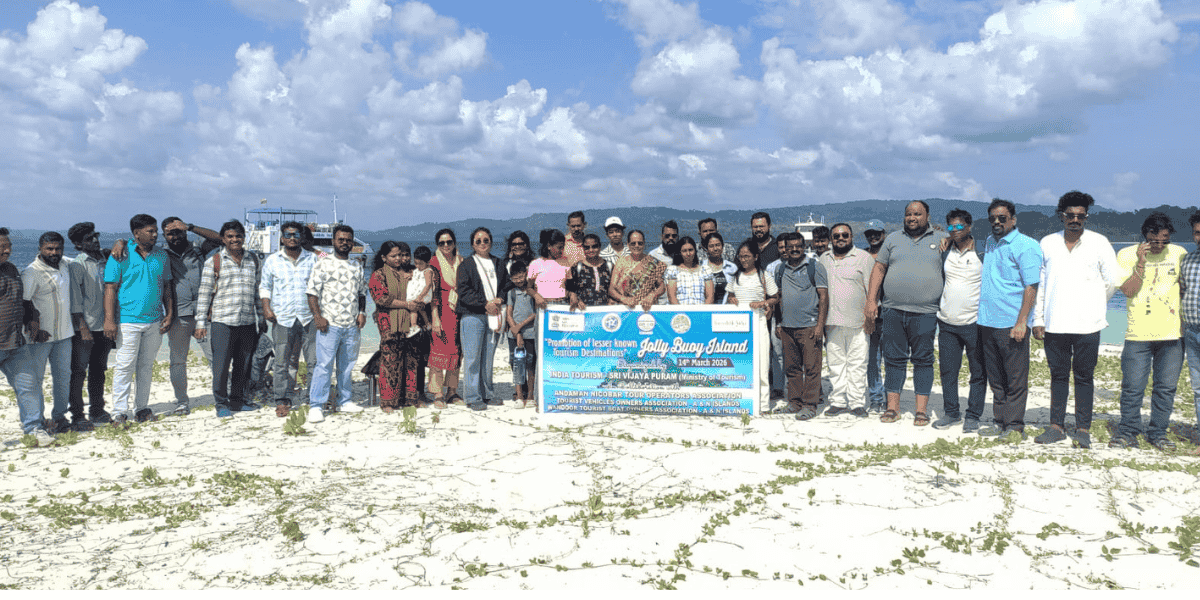
Jolly Buoy Island in the Andaman and Nicobar archipelago was spotlighted during a dedicated tourism promotion program on 14 March, aimed at raising awareness of the island’s natural attractions and encouraging its inclusion in mainstream travel itineraries. Organized by India Tourism Sri Vijaya Puram (Ministry of Tourism), the initiative sought to highlight the island’s pristine beaches, coral reefs, and vibrant marine biodiversity while fostering collaboration among tourism stakeholders.
The event brought together representatives from the Andaman Nicobar Tour Operators Association, Tourist Vehicle Owners Association, and Wandoor Tourist Boat Owners Association. Tourism stakeholders, association leaders, and media representatives participated in discussions on strengthening tourism networks and promoting emerging destinations across the islands.
Addressing the gathering, participants emphasized the significance of collective efforts between tour operators, vehicle owners, boat operators, and government agencies in enhancing tourism infrastructure and accessibility. They stressed that coordinated promotion of Jolly Buoy Island could complement established destinations like Havelock and Neil Island, offering visitors a diverse travel experience within the islands.

Jolly Buoy Island, renowned for its crystal-clear waters and extensive coral reefs, offers eco-tourism opportunities such as snorkeling, marine exploration, and guided observation of protected marine ecosystems. Its location near Port Blair makes it accessible within approximately one hour, positioning the island as a convenient destination for day trips and short visits. Stakeholders highlighted the importance of preserving the island’s environment, noting its status as a plastic-free zone and the need to maintain its vibrant coral ecosystems.
During the program, participants acknowledged the support of the Tourism Ministry and the Forest Department in facilitating sustainable tourism activities at Jolly Buoy Island. Officials noted that continuous collaboration and strategic promotion are essential to enhance visitor experiences and strengthen the region’s reputation as an eco-tourism hub. The initiative also underscored the role of media organizations in promoting awareness of lesser-known destinations and encouraging responsible tourism practices.
Tourism representatives called for the integration of Jolly Buoy Island into standard itineraries offered by tour operators, emphasizing the potential for increased domestic and international visitation. They highlighted that the island’s unique biodiversity, clear waters, and scenic landscapes provide an experience distinct from other destinations in the archipelago.

The program concluded with stakeholders expressing confidence that ongoing promotion, community engagement, and coordinated operational support would elevate Jolly Buoy Island’s profile as a premier eco-tourism destination. They encouraged travelers from across India and abroad to explore the island while adhering to conservation guidelines to ensure the protection of its natural environment.
The initiative reflects a growing focus on diversifying tourist attractions in the Andaman and Nicobar Islands and promoting sustainable travel practices that benefit local communities while safeguarding fragile ecosystems.