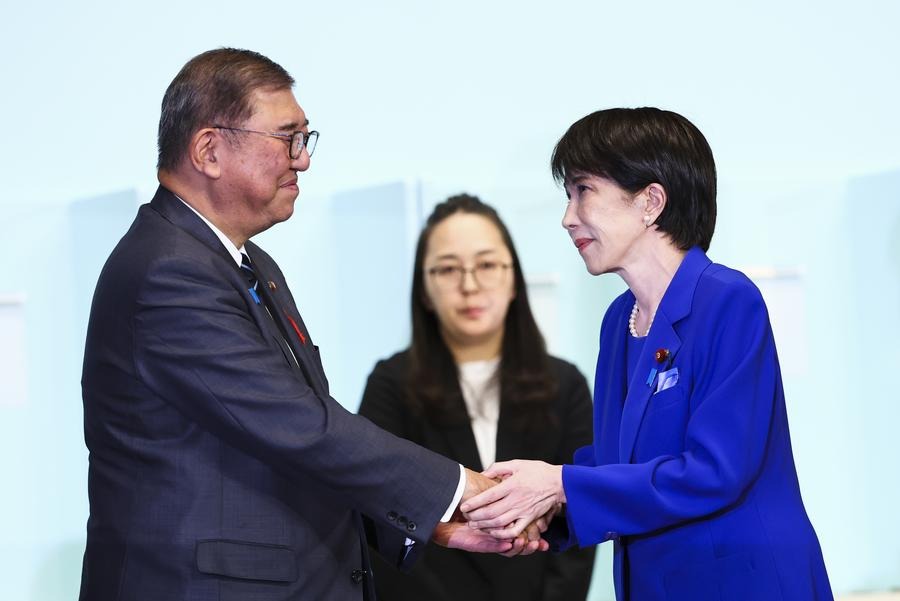
Outgoing Japanese Prime Minister Shigeru Ishiba and his cabinet formally resigned on Tuesday, bringing to an end an administration that took office just over a year ago. The resignation took place during an extraordinary cabinet meeting held shortly before 9 a.m. local time, where ministers submitted their letters of resignation.
Later in the afternoon, both chambers of the Diet are scheduled to convene to elect Japan’s next prime minister. Sanae Takaichi, president of the ruling Liberal Democratic Party (LDP), is widely expected to secure the position, with backing from the Japan Innovation Party, which recently formed a new coalition with the LDP following Komeito’s withdrawal from the alliance.
After the prime ministerial vote, Takaichi is anticipated to finalize her cabinet appointments, with the chief cabinet secretary expected to announce the lineup. She is also likely to hold a press conference upon assuming office to outline her policy direction and explain the rationale behind her key cabinet selections, Xinhua news agency reported.
The process to elect a new prime minister follows an agreement reached last Friday between Japan’s ruling and opposition parties. Both sides agreed to hold a parliamentary vote on October 21, coinciding with the start of an extraordinary session of the Diet, to determine Ishiba’s successor.
The LDP’s tactical alliance with the Osaka-based, right-wing Japan Innovation Party, also known as Ishin no Kai, is expected to ensure Takaichi’s election, largely due to the fragmented state of the opposition. However, the coalition does not hold an outright majority in both houses of parliament. This means Takaichi’s administration will require support from other opposition factions to pass legislation, raising questions about the stability and longevity of her government.

Once elected, 64-year-old Takaichi is expected to form a cabinet composed largely of close allies of Taro Aso, one of the LDP’s most influential figures, along with other party members who supported her during the leadership contest.
Takaichi’s political positions have drawn attention for their conservative stance on social issues. She has consistently opposed progressive reforms, including measures related to gender equality. Takaichi does not support same-sex marriage, advocates for male-only succession in the imperial family, and opposes legal reforms allowing married couples to maintain separate surnames.
The transition marks a significant shift in Japanese politics, as Takaichi prepares to lead a coalition government navigating both a divided opposition and internal party dynamics, with potential implications for the country’s legislative priorities and social policy direction.