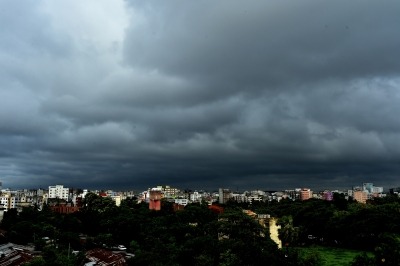
Torrential rainfall has wreaked havoc across Japan’s Hokuriku region, already reeling from the impact of a powerful earthquake earlier this year, triggering widespread flooding, infrastructure damage, and prolonged transport disruptions. The Japan Meteorological Agency (JMA) on Thursday issued fresh alerts for landslides, overflowing rivers, and flash floods, as unstable weather conditions intensified along the Sea of Japan coast.
The Hokuriku Shinkansen bullet train service was suspended for more than five hours between Nagano and Kanazawa after intense rainfall pounded Ishikawa Prefecture, particularly its capital Kanazawa, where a record 148 millimetres of rain was registered in just three hours, ending around 5 am Thursday. The downpour led to localized flooding in at least 19 areas, with waterlogged roads and inundation around homes prompting authorities to open evacuation centres.
The crisis unfolds as the region continues to recover from the devastating New Year’s Day earthquake that struck the Noto Peninsula, killing over 600 people and damaging critical infrastructure. According to the JMA, rain clouds have built up over Kaga in central Ishikawa, one of the worst-hit zones from the January quake, compounding concerns about ground instability and the risk of landslides.
The meteorological agency attributed the intense rainfall to a low-pressure system advancing northeast across the Sea of Japan, causing severe atmospheric instability across a wide area. With warm, moist air feeding into the system, forecasters expect further rainfall and thunderstorms to affect regions from northern to western Japan through Saturday.
The JMA’s forecast predicts up to 150 millimetres of rain in the Tohoku region and northern Kyushu over the 24-hour period through Friday morning. Hokuriku itself is expected to receive an additional 120 millimetres during the same window, raising the likelihood of secondary disasters in already vulnerable communities.
In response, local authorities in Kanazawa and neighbouring districts have partially closed multiple prefectural roads and deployed emergency teams to monitor river levels and inspect weakened slopes. Public safety announcements have urged residents to stay alert for evacuation instructions and to avoid travelling through low-lying areas prone to flash flooding or landslides.
West Japan Railway Company (JR West), which operates the Hokuriku Shinkansen Line, confirmed that services had been suspended as a precautionary measure due to waterlogging and signal system instability. Though services resumed later in the day, delays and cancellations continued to affect passenger movement, particularly in areas closer to Ishikawa and Toyama prefectures.
Images and footage aired by local broadcasters showed streets submerged, parked vehicles partially underwater, and residents using makeshift rafts and elevated walkways to reach safety. Emergency shelters reported steady inflow of evacuees, many of whom had yet to complete home repairs from the January earthquake.
While Japan is accustomed to seasonal rains, the current episode has amplified anxieties in regions still in recovery mode. Disaster management officials are working closely with meteorological teams to issue timely alerts, especially in communities located near riverbanks, hillsides, and known landslide zones.
With the unstable weather system expected to linger for several more days, Japan’s emergency services remain on high alert. Authorities have reiterated calls for early evacuation wherever necessary and advised citizens to monitor official advisories closely. Residents are also being asked to avoid unnecessary travel and to stock emergency supplies as a precaution.
As climate volatility intensifies in the region, the Hokuriku episode underscores the growing challenges of disaster management in vulnerable geographies. For a region still healing from seismic trauma, the renewed threat from nature highlights the critical need for resilient infrastructure and responsive governance.