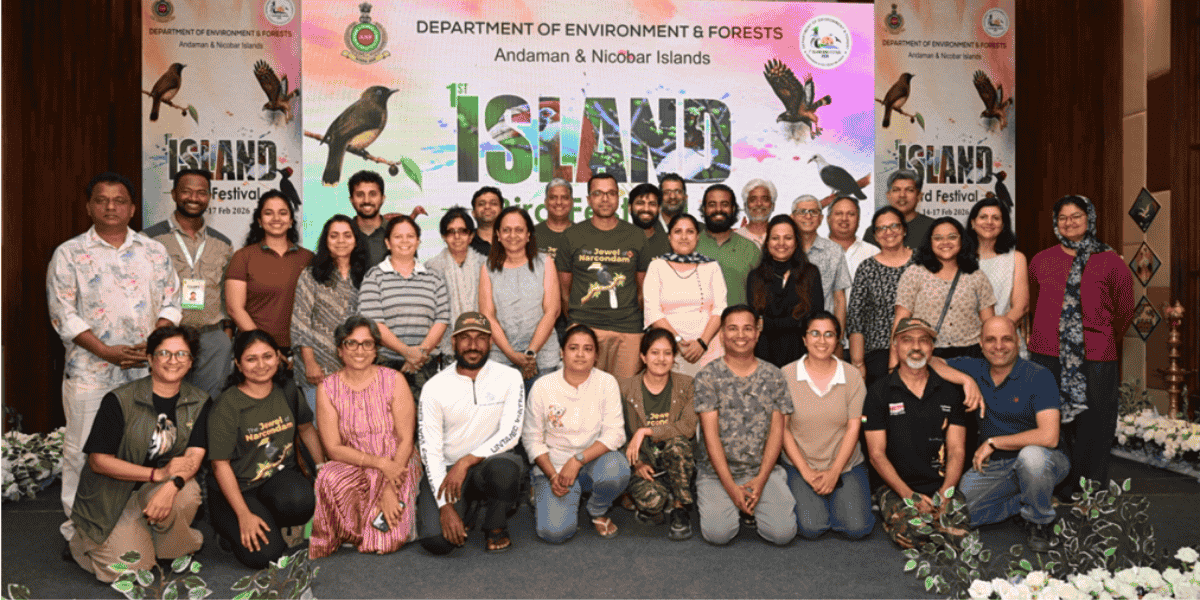
The inaugural Island Bird Festival concluded in the Andaman and Nicobar Islands on February 17, drawing attention to the region’s rich avian biodiversity and its growing potential for sustainable ecotourism. Organised by the Andaman and Nicobar Administration with support from local birding groups, the four-day event brought together birders, researchers and wildlife photographers from across the country.
Held from February 14 to 17, the festival saw participation from 31 delegates representing nine States, along with six participants from the Andaman and Nicobar Islands. The event was designed to showcase the unique birdlife of the archipelago while promoting conservation awareness and responsible nature-based tourism.
The festival was inaugurated at Chidiyatapu, where cultural elements were blended with conservation messaging. Performances including Nicobari dance, a bird-themed dance and a conservation skit by trainees of the Forest Training Institute highlighted the ecological importance of native species, particularly the Edible-nest Swiftlet. The opening set the tone for a programme that combined scientific learning with cultural expression.
Field trails formed the core of the festival, with participants visiting multiple birding hotspots across South Andaman. These included Mahatma Gandhi Marine National Park, Mount Manipur National Park, Stewartgunj wetlands, Kalatang, Chidiyatapu Biological Park, Bada Balu, Ograbraj and Sippighat. The trails yielded extensive sightings, with delegates recording over 130 bird species during the excursions.
Among the sightings were several endemic species that are unique to the islands, including the Andaman Woodpecker, Andaman Bulbul, Andaman Drongo, Andaman Coucal, Andaman Serpent Eagle, Andaman Crake, Andaman Flowerpecker, Andaman Treepie, Andaman Shama, Andaman Cuckooshrike and Andaman Green Pigeon. The Andaman Teal, considered a symbol of island endemism, emerged as one of the most notable highlights for participants. In addition, several migratory and wetland species such as the White-bellied Sea Eagle, Black-winged Stilt, Common Snipe, Grey-headed Lapwing and Eyebrowed Thrush were also recorded.
The festival also featured a series of expert sessions aimed at deepening understanding of bird ecology and conservation. Topics ranged from bird-based ecotourism models and population monitoring techniques to migratory patterns and acoustic communication in birds. These sessions provided participants with scientific perspectives on conservation challenges and opportunities specific to island ecosystems.
A distinctive feature of the event was the introduction of pelagic birding, offering participants the opportunity to observe seabirds and ocean-going species in their natural marine environment. This was complemented by a star-gazing session, expanding the experience beyond avifauna to include appreciation of the islands’ natural environment.
The festival concluded with a valedictory session on February 17, during which participants shared their experiences from the field trails and interactive sessions. Certificates and prizes were distributed to participants and team leaders, marking the close of the first edition of the event.
By combining field-based exploration, expert discussions and cultural elements, the Island Bird Festival positioned itself as a platform linking biodiversity conservation with sustainable tourism. The event set a precedent for future initiatives aimed at promoting the Andaman and Nicobar Islands as a destination for responsible wildlife tourism while reinforcing the importance of habitat protection.