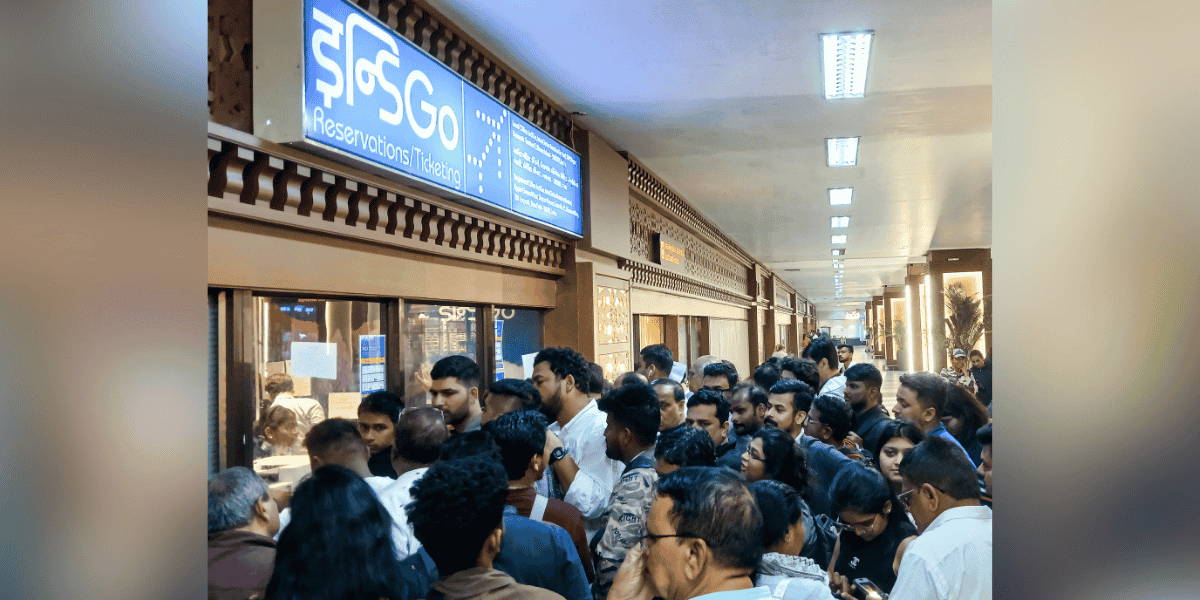
IndiGo’s dominance in India’s domestic aviation market weakened in November, with its market share falling to 63.6 per cent, according to the latest data released by the Directorate General of Civil Aviation (DGCA). The decline comes in the aftermath of a severe operational crisis earlier this month that led to widespread flight cancellations and passenger disruptions across major airports.
The country’s largest airline had held a 65.6 per cent share of the domestic market in October, indicating a drop of two percentage points within a month. The November data reflects the impact of large-scale cancellations and capacity constraints faced by the low-cost carrier.
In contrast, the Air India Group, comprising Air India and Air India Express, recorded a rise in its domestic market share. The group’s share increased to 26.7 per cent in November, up from 25.7 per cent in October, as it absorbed part of the traffic affected by IndiGo’s operational issues.
Akasa Air also witnessed a marginal decline in market presence, with its domestic market share slipping to 4.7 per cent in November from 5.2 per cent in the previous month, the DGCA figures showed.

Despite these airline-specific shifts, overall domestic air travel in India continued to grow. According to the regulator, domestic airlines carried 1,526.35 lakh passengers during the January–November 2025 period, compared to 1,464.02 lakh passengers in the corresponding period last year. This represents an annual growth of 4.26 per cent. On a month-on-month basis, passenger traffic registered a growth of 6.92 per cent in November.
The DGCA data also indicated that the overall cancellation rate of scheduled domestic airlines stood at 1.33 per cent for November 2025.
IndiGo’s market share decline follows a period of significant disruption earlier in December, when the airline cancelled more than 4,000 flights across major hubs including Delhi, Mumbai, Hyderabad and Bengaluru. The cancellations were primarily attributed to acute crew shortages triggered by the implementation of the second phase of the Flight Duty Time Limitation (FDTL) norms. The revised duty norms constrained crew availability, leading to aircraft being grounded and widespread schedule disruptions.
Thousands of passengers were stranded across airports during the crisis, prompting the government to initiate an inquiry into IndiGo’s mass cancellations and the handling of passenger inconvenience. The episode also raised broader concerns about capacity planning and the concentration of market power in the domestic aviation sector.

In the wake of the disruptions, the government granted initial approvals to three new airlines to commence operations. The Ministry of Civil Aviation issued “no-objection certificates” to regional carriers Shankh Air, Al Hind Air and FlyExpress, a move seen as an effort to increase competition and capacity in the domestic market.
The approvals came amid criticism over the operational fallout from IndiGo’s cancellations and allegations of abuse of dominant market position, following the scale of disruption caused by a single carrier’s operational constraints.
While IndiGo continues to retain a commanding share of the domestic market, the November data suggests a temporary erosion of its dominance, with rival airlines gaining incremental ground. The coming months are expected to test how effectively the airline addresses crew shortages and operational resilience under the tightened FDTL framework, even as passenger demand continues to grow.