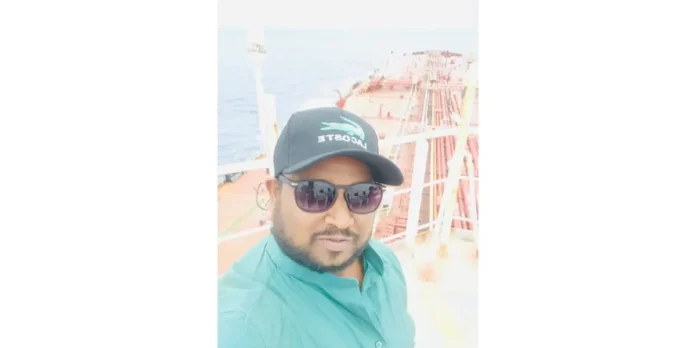
New Delhi, July 1: Serious questions have emerged over the death of an Indian seafarer in Venezuela after his family alleged that multiple vital organs were missing when his body was repatriated to India, prompting the Federation of Seafarers’ Unions of India (FSUI) to demand a comprehensive investigation into the circumstances surrounding the incident.
The allegations relate to 33-year-old Rakesh Chauhan, a resident of Deoria district in Uttar Pradesh, who reportedly died in Venezuela in May after the shipping company informed his family that he had suffered a cardiac arrest. However, the controversy escalated after a re-autopsy conducted in India allegedly found that several internal organs were absent from his body.
According to the family, Chauhan had travelled to Venezuela in November 2025 as a crew member aboard a merchant navy vessel. They stated that the shipping company informed them of his death and assured them that his body would be repatriated within 60 days.

Family members alleged that company officials initially informed them that Chauhan had sustained injuries after falling onboard the vessel and was undergoing treatment. They further claimed that they were later told his condition was critical before the company informed them on the same day that he had died. According to the family, company officials subsequently stated that he had succumbed to injuries sustained in the fall.
The family also alleged that although they were initially told the body would arrive in India within a week, the mortal remains were handed over only on June 4, nearly a month after his death.
According to the Federation of Seafarers’ Unions of India, Chauhan’s body arrived in India without any autopsy report or official documentation from Venezuelan authorities explaining the cause of death. The organisation, in a statement posted on X, claimed that the re-autopsy conducted in India found that the brain, heart, lungs, liver, kidneys, spleen, pancreas, stomach, intestines, thyroid, hyoid bone, larynx and trachea were all missing.
The federation further stated that the body bore extensive surgical stitching extending from the neck to the pubic region and from one ear to the other. It also claimed that the body had remained in deep freeze for nearly a month and that the cause of death could not be determined because the internal organs were absent.
According to an NDTV report, doctors in Deoria initially examined the body in the presence of police personnel but declined to conduct another post-mortem, observing that an autopsy appeared to have already been performed and that a fresh examination required official approval. A re-autopsy was subsequently conducted following directions issued by the District Magistrate.
The post-mortem report prepared in Deoria reportedly documented the absence of multiple organs, including the brain, heart, lungs, thyroid, hyoid bone, larynx, trachea, stomach, intestines, spleen, kidneys, gall bladder, major blood vessels and other internal structures.

Medical experts have noted that certain organs, including the heart, kidneys and gall bladder, may be removed during an autopsy for forensic examination. However, the controversy has intensified because neither the Venezuelan authorities nor the shipping company has provided the family with any official autopsy report or a detailed explanation regarding the circumstances and exact cause of death.
The Federation of Seafarers’ Unions of India has demanded accountability from the Venezuelan authorities, immediate intervention by the Indian Embassy in Venezuela, release of the complete autopsy report, disclosure of the circumstances leading to Chauhan’s death and compensation for the bereaved family.
The family has also sought a thorough investigation, maintaining that the absence of official documentation and the findings of the re-autopsy have raised serious concerns over the handling of the case. The allegations have not been independently verified, and no response from the Venezuelan authorities or the shipping company was available at the time of filing this report.