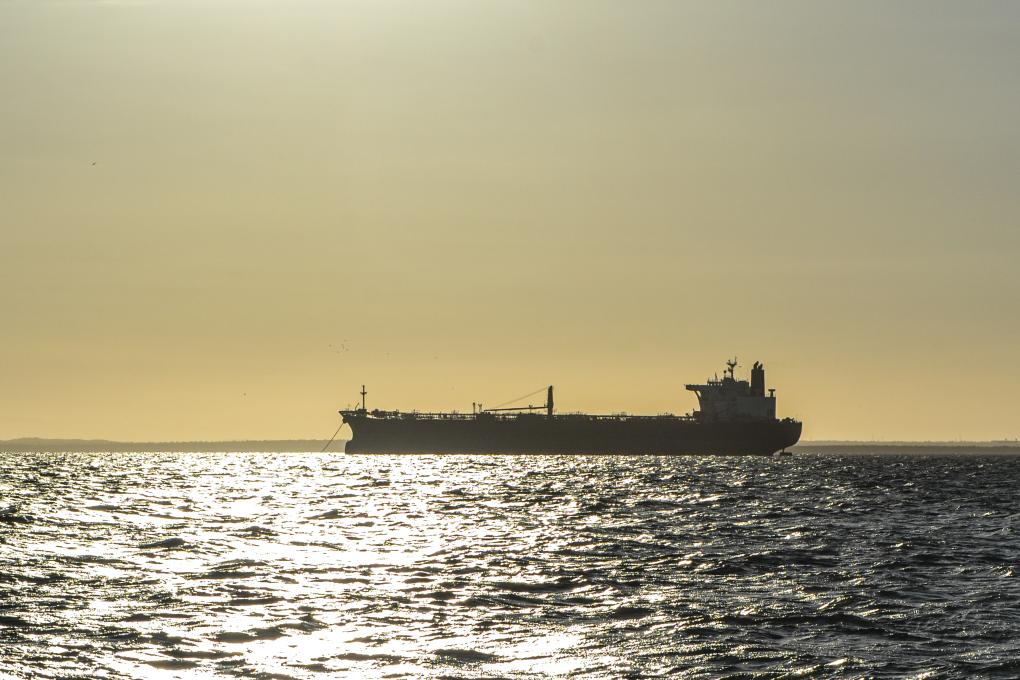
An Indian crew member was killed after a US-owned crude oil tanker came under attack by Iran near Basra in Iraq, as escalating regional tensions continue to disrupt maritime traffic in the Persian Gulf.
The incident occurred when the tanker Safesea Vishnu was targeted in Iraqi territorial waters close to Basra. According to the Embassy of India in Baghdad, the attack resulted in the death of one Indian sailor while the remaining 15 Indian crew members on board were evacuated and moved to a secure location.
The tanker, sailing under the flag of the Marshall Islands and owned by the US-based company Safesea Transport Inc., was reportedly struck during a coordinated assault in the Persian Gulf. Another oil tanker also caught fire after being hit in Iraqi waters during the same incident.

Iran later claimed responsibility for the attack. Reports from the Iranian state broadcaster Islamic Republic of Iran Broadcasting stated that underwater drones were used to strike two oil tankers operating in the Persian Gulf.
The vessels targeted in the operation included the Maltese-flagged tanker Zefyros oil tanker and the Marshall Islands-flagged Safesea Vishnu oil tanker. While Safesea Vishnu is owned by Safesea Transport Inc., the tanker Zefyros is owned by a company based in Greece.
Following the attack, the Indian Embassy in Baghdad confirmed that it is maintaining regular contact with Iraqi authorities and the rescued sailors. In a statement issued on social media, the embassy said the vessel was attacked on March 11 and confirmed the death of one Indian crew member during the incident.
The diplomatic mission stated that the remaining Indian crew members had been safely evacuated from the vessel and relocated to a secure place. It added that officials are closely monitoring the situation and extending all possible assistance to the affected sailors.
The embassy also expressed condolences to the family of the deceased crew member, describing the loss as tragic while assuring that necessary support would be provided to those affected by the incident.
The attack comes at a time of heightened tensions in the region and growing risks to maritime navigation. Iran had earlier warned that it would target ships attempting to pass through the strategic Strait of Hormuz, a vital shipping corridor that carries nearly one-fifth of the world’s oil supply.

Despite the warning, limited shipping traffic continues to move through the strait, though overall maritime activity has declined significantly due to rising security threats.
Amid the escalation, the administration of Donald Trump said American forces had taken steps to counter potential threats in the area and ensure the safety of maritime routes.
The confrontation forms part of the ongoing military confrontation between the United States, Israel and Iran, which has now entered its twelfth day. The intensifying conflict has disrupted shipping operations across the Persian Gulf and raised concerns about global energy supply chains.
Market reactions have already begun to reflect the instability, with global oil prices increasing amid fears that continued hostilities could interrupt oil transport through one of the world’s most critical maritime corridors.