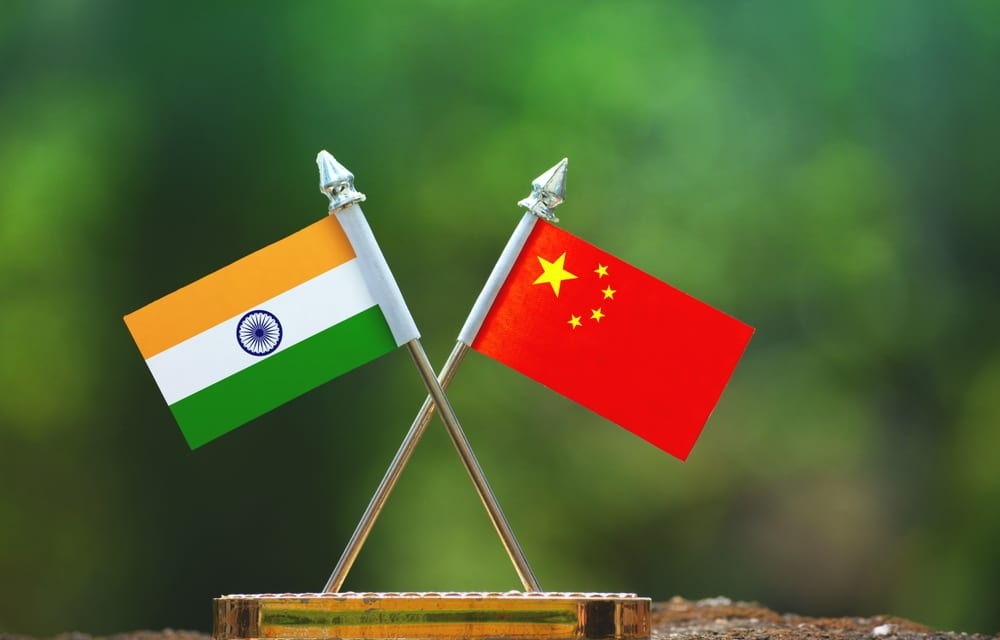
A recent report states that the growing influence of India alongside an economic slowdown in China is reshaping the balance of power across Asia, with increasing strategic attention on the maritime stretch between the Andaman Sea and the Strait of Malacca.
The analysis, published by Eurasia Review, links this shift partly to Prime Minister Narendra Modi’s Act East Policy launched in 2014, which the report says has strengthened India’s position as an Indo-Pacific power with sustained engagement in Southeast Asia’s security and economic stability.
According to the report, deeper economic integration, improved connectivity initiatives and cooperation in regional security have reinforced India’s role as a counterbalancing presence. It states that Southeast Asia has benefited from India’s expanding economic partnerships and security engagement amid evolving geopolitical tensions.

The report highlights the maritime arc stretching from the Andaman Sea to the Strait of Malacca as strategically significant. By re-emphasising this corridor and re-centring the regional grouping ASEAN, India has strengthened its strategic visibility and offered reassurance to countries confronting renewed risks and uncertainties.
It further argues that India’s influence had historically been underestimated in global power calculations. The report states that India’s emergence as a major economic force and balancing actor in the Indo-Pacific has gained importance at a time when China faces prolonged economic deceleration and strategic friction.
For Malaysia and other Southeast Asian countries, the report describes this transformation as tangible rather than theoretical. It identifies India as an increasingly central partner in economic resilience, security cooperation, food and energy stability, technology access and broader strategic flexibility.

The report also notes the strategic significance of Modi’s visit to Malaysia on February 7 and 8. It states that the visit provided Kuala Lumpur an opportunity to move beyond a cautious balancing approach and consider India a long-term strategic partner.
According to the analysis, India’s expanding role coinciding with China’s structural slowdown is altering regional geopolitical equations. It emphasises that regional states face a choice between preparing early for India’s continued rise or adapting later to the shifting landscape.
The report concludes that strengthening ties with India across defence, technology, semiconductors, energy, food security, education and cultural cooperation could shape long-term regional stability and autonomy, while reinforcing economic resilience and security partnerships across Southeast Asia.