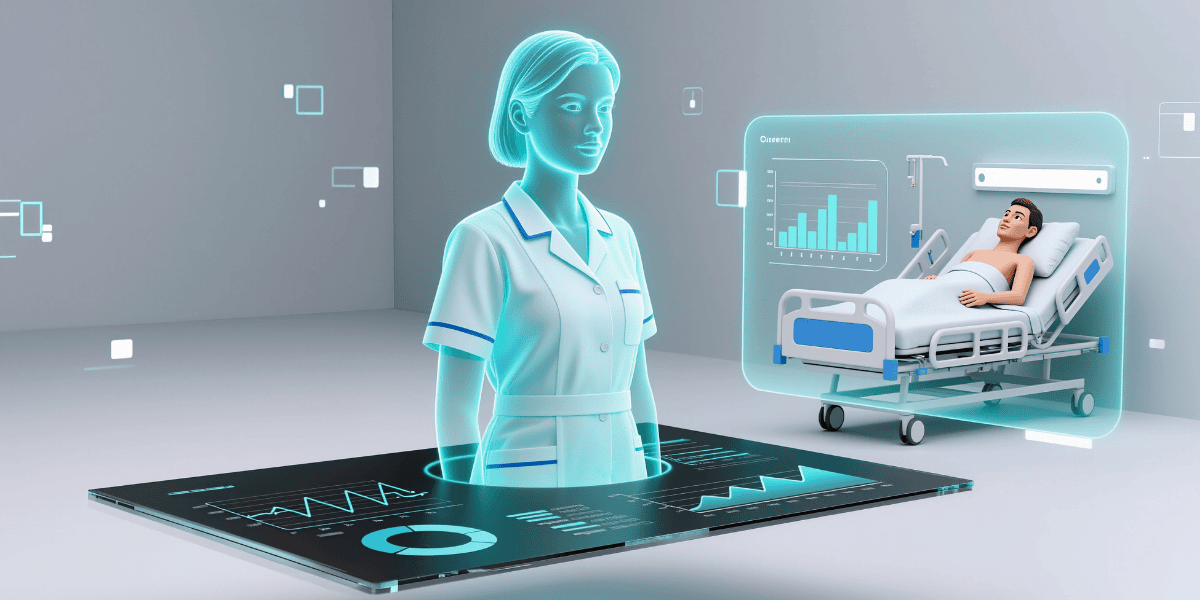
India has launched its first government-run artificial intelligence (AI) clinic at the Government Institute of Medical Sciences (GIMS) in Greater Noida, marking a significant step towards integrating advanced technology into the public healthcare system. The initiative is aimed at strengthening early disease detection, improving diagnostic accuracy, and supporting timely treatment, according to a media report.
The AI clinic is designed to enhance screening and diagnosis of a range of serious conditions, including cancer, heart disease, kidney disorders, and liver ailments. Using AI-driven genetic screening, the facility is expected to enable faster identification of disease risks and improve clinical decision-making. Gulf News reported that the centre will leverage AI tools to analyse blood tests, imaging scans, and other clinical data.
The clinic will assist doctors in interpreting X-rays, ultrasounds, CT scans, MRI reports, and laboratory investigations. By automating data analysis and pattern recognition, AI systems are expected to reduce diagnostic delays and improve precision, particularly in complex cases.

Brigadier (Dr) Rakesh Kumar Gupta, Director of GIMS, said the clinic integrates artificial intelligence with genetic screening to analyse imaging results and diagnostic reports, helping clinicians make more accurate assessments. He noted that the initiative also creates opportunities for healthcare startups to collaborate with public institutions.
AI clinics typically operate using advanced algorithms and automated systems that support doctors in diagnosis, treatment planning, and patient management. These centres can function either as standalone units or as integrated departments within hospitals. At GIMS, AI systems will analyse patient data in real time, supporting clinical decisions and streamlining workflows.
A major advantage of the AI clinic model is its potential to improve access to quality healthcare, particularly in remote and underserved areas where specialist availability is limited. By assisting frontline doctors with advanced diagnostic tools, AI can help bridge gaps in expertise and reduce dependence on referrals to tertiary centres.
While AI-based tools are already in use in select private hospitals and diagnostic laboratories, the Greater Noida facility is the first dedicated AI clinic operated by the government. The report noted that the model could be replicated across government hospitals in other states, expanding the reach of technology-driven healthcare.
AI has already demonstrated its value in several areas of healthcare, especially in laboratories, radiology, and cancer screening. In pathology, AI can analyse tissue samples and detect abnormalities that may be overlooked by the human eye, reducing processing time and improving diagnostic accuracy.

In oncology, AI systems have shown promise in identifying early signs of cancers such as breast and lung cancer by reducing false positives and false negatives. Early diagnosis, enabled by such tools, is closely linked to improved survival rates and better treatment outcomes.
AI is also increasingly used to process large genomic datasets to identify disease-linked biomarkers and predict patient responses to treatment. By analysing medical history, lifestyle factors, and genetic information, AI can support precision therapy, including customised drug dosages and lifestyle recommendations.
With the launch of the AI clinic at GIMS, India takes a significant step towards institutionalising artificial intelligence in public healthcare, with the potential to improve diagnostic efficiency, expand access, and strengthen outcomes across the health system.