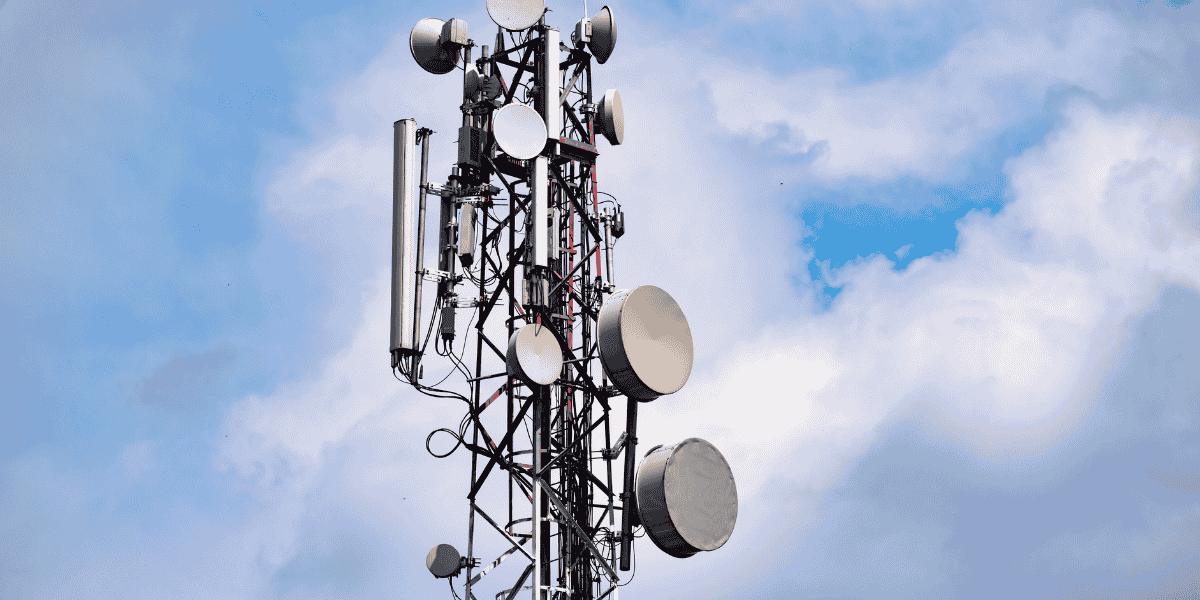
India has witnessed substantial growth in its digital and telecom infrastructure over the past seven years, with optical fibre networks, mobile towers, broadband users and data consumption registering significant increases, Parliament was informed on Wednesday.
In a written reply to the Lok Sabha, Union Minister of State for Communications and Rural Development Dr Pemmasani Chandra Sekhar said the length of optical fibre cable (OFC) in the country expanded from 17.5 lakh kilometres in March 2018 to 42.36 lakh kilometres by September 2025. During the same period, the number of Base Transceiver Stations (BTS) rose from 17.3 lakh in March 2018 to 31.4 lakh as of October 2025.
The expanded infrastructure has translated into wider mobile connectivity across the country. As of October 2025, mobile services were available in 6,34,019 out of India’s 6,44,131 villages. Of these, 6,30,676 villages had access to 4G services, reflecting near-saturation of high-speed mobile connectivity in rural areas.

Broadband usage has also seen a sharp rise. The number of broadband subscriptions increased from 48 crore in September 2018 to 98 crore by June 2025, underscoring the rapid adoption of internet services across households and businesses. In addition, 3.80 lakh PM-WANI Wi-Fi hotspots had been installed nationwide as of October 31, 2025, aimed at providing affordable public internet access, particularly in rural and semi-urban areas.
Data consumption trends indicate a marked shift in user behaviour. Average monthly data usage per subscriber increased threefold, rising from 8.32 GB in September 2018 to 25.24 GB by September 2025. At the same time, the average wireless data tariff declined from Rs 10.91 per GB to Rs 8.27, making data services more affordable for consumers.

To ensure equitable digital access, particularly in remote and underserved regions, the government is implementing connectivity initiatives under the Digital Bharat Nidhi. These include 4G saturation projects and the Amended BharatNet Programme, both aimed at expanding high-speed internet infrastructure in rural and difficult-to-reach areas.
The minister also outlined a series of structural reforms undertaken to strengthen the telecom sector. These include rationalisation of adjusted gross revenue, bank guarantees and interest rates, removal of penalties, and easing of spectrum-related norms. Measures such as allowing spectrum surrender after 10 years, removal of Spectrum Usage Charges for auctions held after September 15, 2021, and permitting 100 per cent foreign direct investment under the automatic route have further improved the sector’s investment climate.
According to the government, these policy interventions have played a key role in driving sustained growth in India’s telecom and digital ecosystem.