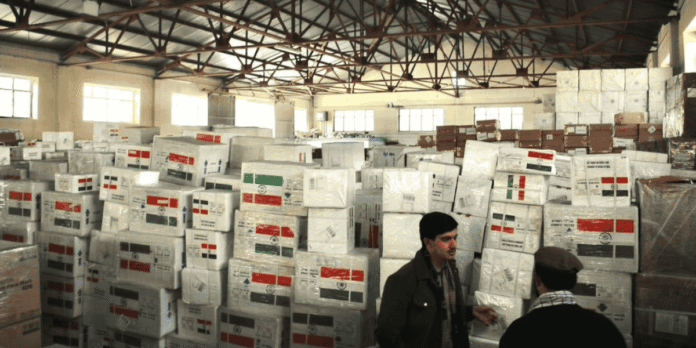
India on Thursday delivered 7.5 tonnes of life-saving cancer medicines to Kabul, reinforcing its humanitarian assistance to Afghanistan and addressing the urgent needs of cancer patients in the country.
The Ministry of External Affairs said the consignment was sent as part of India’s continued commitment to supporting the Afghan people. MEA spokesperson Randhir Jaiswal stated that the medicines were delivered to meet the immediate requirements of cancer patients, underlining India’s sustained engagement with Afghanistan in the health sector.
The latest delivery follows high-level discussions held in New Delhi last month between Afghanistan’s Minister of Public Health Mawlawi Noor Jalal Jalali and India’s Minister of Health and Family Welfare Jagat Prakash Nadda. The meeting focused on strengthening bilateral cooperation in healthcare, including capacity-building of Afghan health workers, exchange of medical expertise and ensuring a steady supply of quality medicines.

According to Afghanistan’s Ministry of Public Health, the talks also covered cancer treatment, facilitation of medical visas for Afghan patients seeking treatment in India, and continued support for Afghan health facilities. Jalali expressed appreciation for India’s ongoing assistance and highlighted additional requirements to improve healthcare services across Afghanistan.
During the meeting, Nadda reiterated India’s commitment to providing humanitarian and medical support to Afghanistan. He confirmed that a CT scan machine, along with medicines and vaccines, would be sent to a children’s hospital in Kabul in the near future. India also assured steps to ease access to medical treatment for Afghan patients and indicated readiness to extend further assistance based on emerging needs.
In a separate statement, Nadda said India had symbolically handed over cancer medicines and vaccines, while a larger consignment, including a 128-slice CT scanner, medicines and vaccines, was being dispatched. He noted that India has supplied a total of 327 tonnes of medicines and vaccines to Afghanistan over the past four years. Proposals submitted by the Afghan side for a radiotherapy machine and additional medical supplies are currently under consideration.
Healthcare cooperation was further discussed during Jalali’s meeting with Minister for AYUSH Prataprao Jadhav. The discussions focused on expanding collaboration in traditional systems of medicine, including the establishment of a traditional medicine institute and research centre in Kabul, training of practitioners and the signing of a bilateral cooperation agreement.

The Afghan Ministry of Public Health said Jalali emphasised the importance of standardising traditional medicine practices and noted that Afghanistan had begun regulating the sector. He added that India’s experience in traditional medicine systems would be particularly valuable in strengthening Afghanistan’s regulatory and institutional framework.
Jadhav assured support for setting up research centres, developing academic curricula and expanding future cooperation in traditional medicine and homoeopathy. He said the discussions were aimed at enhancing bilateral healthcare engagement for mutual benefit.
India’s latest medical assistance comes amid ongoing humanitarian challenges in Afghanistan and reflects New Delhi’s continued focus on health cooperation, medical infrastructure support and long-term capacity-building for the Afghan healthcare system.