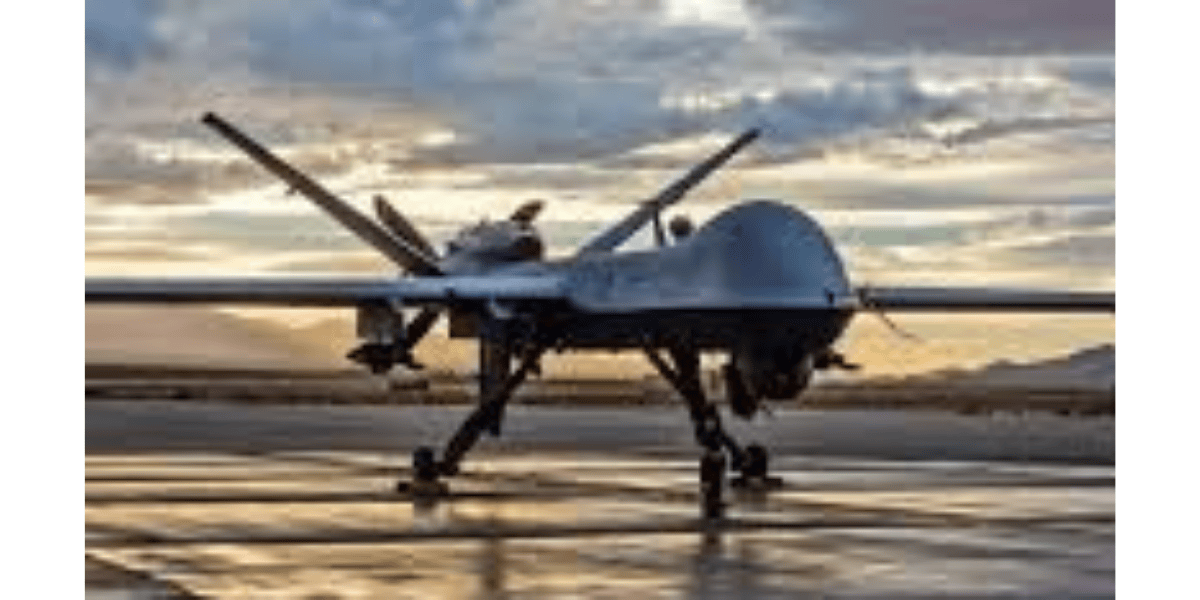
India has approved the lease of two additional MQ-9 high-altitude, long-endurance unmanned aircraft for the Indian Navy, a move expected to significantly strengthen the country’s intelligence, surveillance and reconnaissance (ISR) capabilities across its maritime and border regions.
The decision was cleared by the Defence Acquisition Council (DAC), chaired by Defence Minister Rajnath Singh, and comes amid steadily deepening defence cooperation between India and the United States. Defence officials see the approval as a key step in enhancing India’s maritime domain awareness, particularly in the strategically sensitive Indian Ocean Region.
The MQ-9 unmanned aircraft, manufactured by US-based General Atomics, is regarded by defence experts as one of the most advanced unmanned aerial systems in service globally. Capable of high-altitude, long-endurance operations, the platform is widely used for persistent surveillance and real-time intelligence gathering.

India first leased two MQ-9 aircraft from General Atomics in 2020. Since their induction, the platforms have played a critical role in supporting India’s ISR requirements, particularly for maritime surveillance and border security missions. Officials say the additional aircraft are expected to further expand the Navy’s operational reach and monitoring capabilities over vast sea lanes.
The latest approval also reflects the emphasis placed this year by Prime Minister Narendra Modi and US President Donald Trump on expanding defence cooperation as a central pillar of the India–US strategic partnership. Defence ties between the two countries have steadily grown, marked by increasing interoperability and collaboration in advanced military technologies.
A key figure associated with the expansion of defence trade between India and the United States is Vivek Lall, Chief Executive of General Atomics Global Corporation. A US-based aerospace scientist, Lall has been involved for over two decades in advancing defence industrial cooperation between the two countries, officials said.
In his earlier role as a senior executive at Lockheed Martin, Lall played a major role in advancing negotiations for the acquisition of 24 MH-60R multi-role helicopters for the Indian Navy. That deal was finalised during President Trump’s first-term visit to India and is considered one of the landmark defence agreements between the two countries.

According to officials, Lall has also contributed to several major defence procurements that have strengthened India’s military capabilities while supporting US defence industry employment. These include the planned acquisition of 31 MQ-9B unmanned aircraft for the Indian Navy, Indian Air Force and Indian Army; procurement of MH-60R helicopters; Boeing P-8I maritime patrol aircraft for the Navy; anti-ship Harpoon missiles; AH-64E Apache attack helicopters; CH-47 Chinook heavy-lift helicopters; and C-17 Globemaster III transport aircraft.
Officials said these defence collaborations have benefited more than 100 public and private companies across India’s defence supply chain, helping integrate domestic firms into global manufacturing networks and strengthening indigenous industrial capacity.
The MQ-9 platform is operated extensively by the US military and allied nations for intelligence gathering and maritime surveillance. Its expanded induction into Indian service underscores New Delhi’s increasing reliance on unmanned systems to safeguard its land borders and maritime frontiers amid evolving regional security challenges.