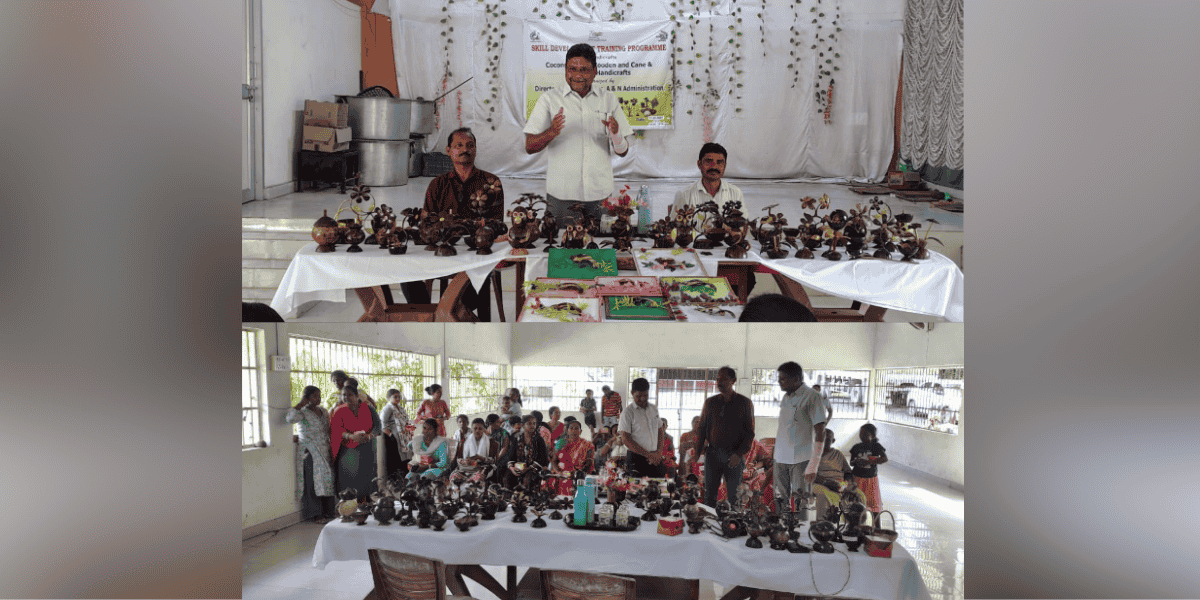
The Directorate of Industries, Andaman and Nicobar Administration, successfully concluded a 15-day short-term skill development training program on “Handicrafts (Coconut Shell, Wooden, and Cane & Bamboo Products)” at Guptapara Gram Panchayat, South Andaman. The program ran from December 23, 2025, to January 9, 2026, aiming to enhance local craftsmanship, promote self-employment, and strengthen the rural economy.
The valedictory function was held in the presence of PRI members, with Durlab Das, Pradhan of Gram Panchayat Guptapara, as the chief guest. A total of 22 trainees participated in the program, acquiring hands-on skills and technical know-how in creating handicraft items using locally available resources such as coconut shells, wood, and cane and bamboo materials.
During the ceremony, Mohammed Ishaque, Deputy Director of the Directorate of Industries, highlighted various departmental schemes supporting skill development, MSME promotion, and local employment generation. He emphasized that such training programs are aligned with the Administration’s efforts to empower rural communities and strengthen traditional craft industries across the islands.

Durlab Das commended the Directorate of Industries for organizing the program, stating that the training aligns with the local resource potential and market demand. He encouraged participants to utilize their newly acquired skills to pursue self-employment opportunities, enhance their livelihoods, and contribute to sustainable community development.
The program was designed not only to teach technical skills but also to sensitize trainees to market trends, product quality, and entrepreneurial practices, ensuring that participants can effectively leverage their craftsmanship for income generation. By focusing on indigenous handicrafts, the training also aimed to preserve traditional art forms while promoting economic self-reliance among island communities.

Officials from the Directorate of Industries noted that skill development initiatives like this are part of the Administration’s larger strategy to support rural livelihoods, create employment opportunities, and develop micro and small enterprises in the region. Similar programs have been conducted in other parts of the Andaman and Nicobar Islands to build capacity in sectors such as handicrafts, fisheries, and agro-based products.
Trainees expressed appreciation for the hands-on training, highlighting the opportunity to learn new techniques, gain practical knowledge, and explore avenues for self-employment. Many participants indicated plans to start small-scale handicraft ventures using local raw materials, thereby contributing to the local economy and promoting sustainable livelihoods.
The completion of this program reinforces the Andaman and Nicobar Administration’s commitment to skill development, rural empowerment, and economic self-sufficiency. By investing in traditional crafts and hands-on training, the Administration seeks to equip island communities with the tools and knowledge required for sustainable development and entrepreneurship.