New Delhi, April 4:
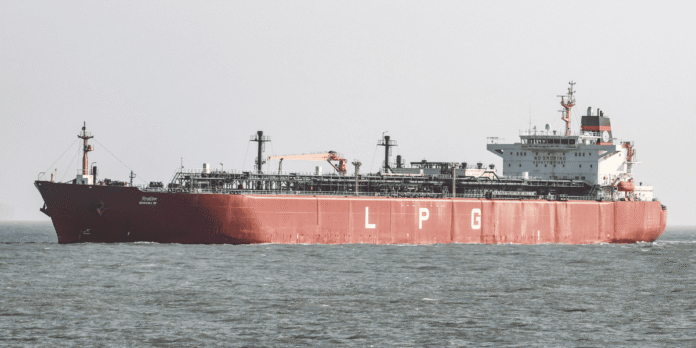
Amid heightened tensions in West Asia, an India-flagged liquefied petroleum gas (LPG) tanker, Green Sanvi, has safely crossed the strategically crucial Strait of Hormuz, underscoring continued efforts to maintain energy supply lines despite disruptions in the region.
According to ship tracking data, the vessel transited east of the narrow waterway using a designated corridor through Iran’s territorial waters. The passage marks the seventh India-flagged merchant vessel to successfully navigate the chokepoint since the onset of the ongoing West Asia conflict, with all seven being LPG carriers.
The tanker is estimated to be carrying around 44,000 tonnes of LPG, roughly equivalent to half a day’s domestic consumption in India prior to the conflict. Industry observers say the safe transit is critical as India continues to rely on maritime routes for its energy imports.
Two more India-flagged LPG tankers, Green Asha and Jag Vikram, are expected to follow in the coming days, further reinforcing the steady flow of supplies.
Shipping data indicates that there are currently 17 India-flagged vessels operating east of the Strait in the Persian Gulf region. These include multiple categories of ships such as LPG tankers, crude oil carriers, an LNG tanker, chemical carriers, container ships, and bulk carriers, along with vessels undergoing routine maintenance.
The safe passage of Indian vessels comes amid active diplomatic engagement between New Delhi and Tehran. India has been coordinating closely with Iranian authorities to ensure secure transit through the Strait, which remains one of the world’s most critical energy corridors linking the Persian Gulf to the Arabian Sea.
Iran has recently clarified that while vessel movement is restricted due to the conflict, ships from countries not directly involved, such as India, are being allowed to pass in coordination with its authorities. Iranian Foreign Minister Abbas Araghchi stated that the waterway remains operational for nations considered friendly, including India, China, Russia, Iraq, and Pakistan.
During its transit, Green Sanvi reportedly signalled its Indian identity and that of its crew, a practice increasingly adopted by vessels to ensure smooth coordination and avoid misidentification in sensitive waters.
The Persian Gulf region continues to witness heightened geopolitical strain, making the security of commercial shipping routes a top priority for energy-importing nations. The Strait of Hormuz alone accounts for a significant portion of global oil and gas flows, and any disruption can have widespread economic implications.
The successful navigation of Green Sanvi highlights India’s calibrated approach, combining diplomacy, maritime coordination, and operational caution, to safeguard its energy lifelines. With more vessels expected to follow, maintaining uninterrupted passage through the Strait remains crucial in the days ahead.