Chief executives of global technology and business firms attending the India AI Impact Summit 2026 in New Delhi on Thursday underlined the importance of autonomy, infrastructure and mass empowerment in shaping the future of the artificial intelligence ecosystem. The discussions reflected a growing consensus that the next phase of AI development must prioritise ownership, accessibility and large-scale societal impact rather than narrow technological dominance.
During keynote sessions on the sidelines of the summit, industry leaders examined how artificial intelligence is influencing national sovereignty, global commerce, infrastructure resilience and access to essential services. The speakers included Arthur Mensch, CEO and co-founder of Mistral AI; Jeet Adani, Director of Adani Digital Labs; Rajesh Subramaniam, CEO of FedEx; and Vinod Khosla, Founder of Khosla Ventures.
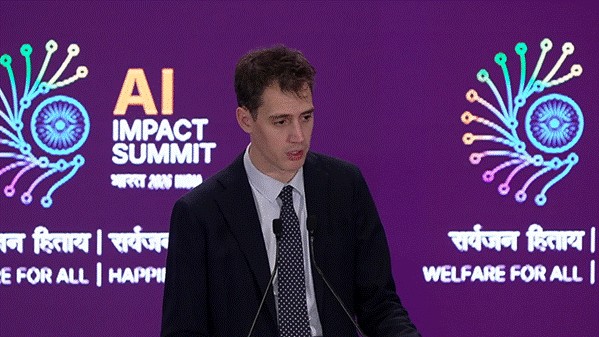
Arthur Mensch argued strongly for AI autonomy and open innovation, warning against excessive concentration of power in the hands of a few global players. He emphasised decentralisation and digital self-reliance, stating that countries and regions must have ownership over their AI systems to preserve autonomy in the digital age. He cautioned that an AI ecosystem dominated by a small number of corporations could undermine broader innovation and democratic access to intelligence.
Jeet Adani framed artificial intelligence as a matter of national capability and strategic sovereignty. He outlined energy, compute and services sovereignty as key pillars for any country seeking leadership in AI. Stressing the link between physical infrastructure and digital intelligence, he pointed to the need for resilient energy systems to support large-scale AI deployment. He also highlighted investments being made in green and sovereign AI infrastructure, positioning India as an active architect rather than a passive participant in the evolving AI landscape.
Rajesh Subramaniam described AI as foundational infrastructure for the next industrial era, particularly in global supply chains and commerce. He said artificial intelligence has moved beyond being a trend to becoming an essential system that underpins modern trade and logistics. He noted that the ability to orchestrate intelligence, by predicting disruptions, optimising flows and building resilient supply chains, would define competitive advantage in the decades ahead.
Vinod Khosla shifted the focus to immediate, large-scale applications of AI with direct societal impact. He highlighted the potential of AI-powered tutors, doctors and agronomy services to expand access to education, healthcare and expertise. Emphasising inclusivity, he said the true impact of AI would only be realised if its benefits reached the bottom half of the population. He also noted that advances in technology have significantly reduced the cost of deploying AI solutions at scale.
Across sessions, speakers shared the view that AI’s next phase must be guided not only by technological sophistication but also by equitable deployment and public value. The emphasis ranged from open-source autonomy and sovereign infrastructure to intelligent supply chains and universal digital services.
The discussions underscored that India stands at a critical inflection point, with the opportunity to shape AI systems that are inclusive, resilient and globally influential, while ensuring that technological progress translates into broad-based economic and social gains.