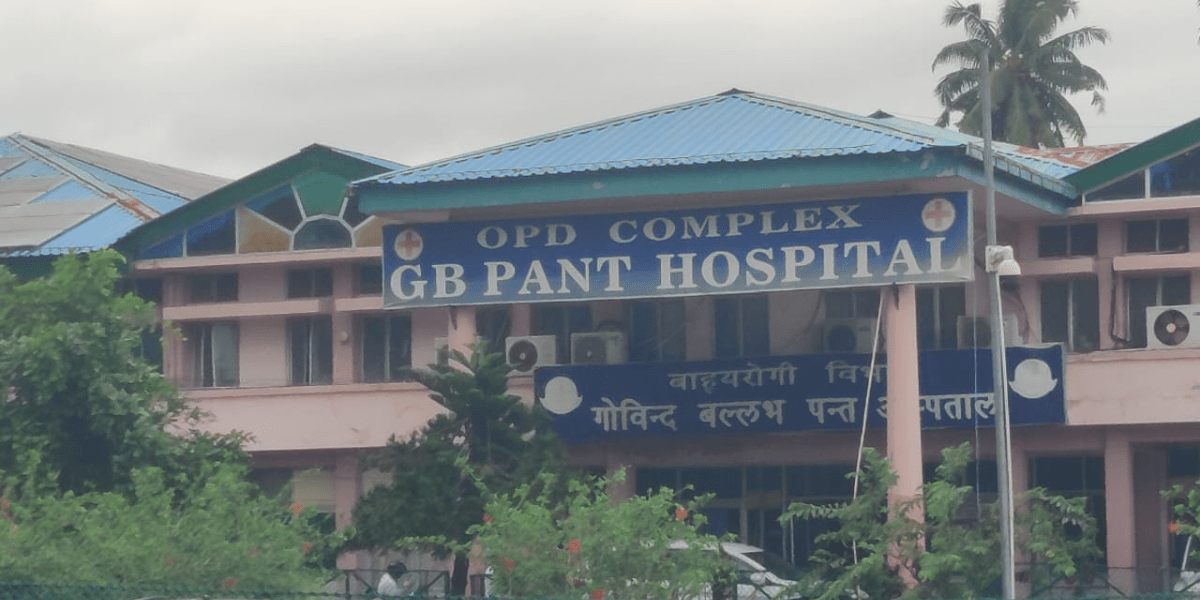
A video shared by a member of the public has once again brought attention to the deteriorating and unhygienic condition of GB Pant Hospital, the only major government hospital in the Andaman and Nicobar Islands. The visuals capture a stark contradiction within the hospital premises, a prominently displayed “Do Not Spit” sign board standing against a background where the ground and surrounding areas are stained red with tobacco spit.
The video highlights not just isolated spots but multiple corners of the hospital premises marked by tobacco stains, foul odour and visible neglect, raising serious questions about dignity, hygiene and basic civic responsibility at a public healthcare institution meant to serve thousands of patients daily. For many viewers, the imagery underscores a troubling paradox: rules displayed in public spaces appear to have little meaning when enforcement and compliance are virtually absent.

Residents reacting to the video have questioned why patients, attendants and visitors are forced to navigate such conditions in a hospital setting. The issue has also reignited debate over the larger problem of civic sense, or the lack of it, in public spaces. A society that often takes pride in the pristine natural beauty of the Andaman and Nicobar Islands, many argue, seems to be steadily neglecting its own shared spaces, including critical institutions like hospitals.
Notably, the concerns raised through the video are not new to anyone who has visited GB Pant Hospital. The presence of tobacco stains, unhygienic corners and poor upkeep has been a recurring complaint over the years. However, what appears to trouble citizens most is the gradual normalisation of such conditions, a sense that repeated exposure has led society to quietly accept what should never have been acceptable in the first place.

Alongside public behaviour, questions are also being raised about administrative responsibility. Observers have pointed to the apparent lack of strict enforcement of anti-spitting norms, inadequate monitoring and insufficient deterrence against such uncivil conduct within the hospital premises. In a healthcare facility, where cleanliness is directly linked to patient safety and public health, such lapses carry far-reaching implications.
The video has prompted renewed calls for collective accountability, from stricter action by the hospital administration and authorities to a conscious change in public attitude. Many residents believe that preserving the dignity and hygiene of shared spaces is not just an administrative duty but a social obligation that requires consistent effort from all sections of society.
As the video hopes to draw attention, it has once again forced an uncomfortable but necessary question into public discourse: have repeated failures and familiarity made society indifferent to conditions that should have demanded immediate correction long ago?
The Wave Andaman has reached out to the hospital administration and the health department seeking their response on the issues raised by the video and the measures, if any, being taken to curb spitting and improve hygiene within the premises. Their response is awaited.
Audience discretion requested