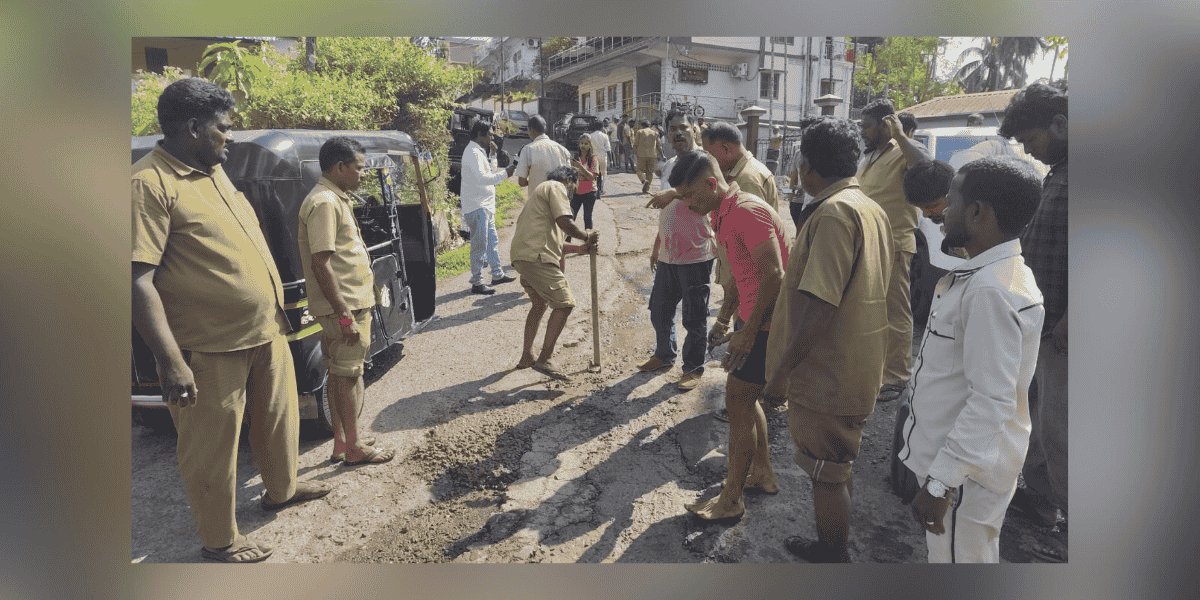
Frustrated by years of government inaction and worsening road conditions, auto-rickshaw drivers and local residents of Garacharma have stepped in to repair the badly damaged TTI Road on their own, turning a routine civic failure into a pointed act of public protest.
The stretch, riddled with deep potholes and crumbling patches, has long been a cause of concern for daily commuters, particularly schoolchildren, two-wheeler riders and auto drivers who rely on the road for their livelihood. Despite repeated complaints submitted to the Public Works Department (PWD) and local administration, residents allege that no concrete action has been taken, even as official estimates for repairs reportedly crossed ₹6 crore over the years.
With vehicle maintenance costs mounting and accident risks increasing, the community decided to act. Auto-rickshaw drivers pooled money, procured basic materials and, along with local residents, organised a voluntary labour drive to fill potholes and level dangerous sections of the road. The initiative, carried out without any government support, was described by participants as both a necessity and a statement.

“Every day we risk accidents, damage to our vehicles, and the safety of passengers. Waiting endlessly for files to move is no longer an option,” said one of the auto drivers involved in the effort. Residents echoed the sentiment, pointing out that children walking or cycling to nearby schools are among the most vulnerable users of the road.
Local community leaders said the condition of TTI Road is emblematic of a broader pattern of bureaucratic neglect. According to them, while funds have been sanctioned on paper multiple times, execution has remained stalled due to inter-departmental blame-shifting. PWD, municipal bodies and other concerned departments, they alleged, routinely pass responsibility among themselves, citing technical approvals, jurisdictional issues or pending fund releases.
“This road has seen inspections, estimates and assurances, but no real work. Files move, potholes don’t,” a local organiser remarked, adding that the community had lost faith in verbal commitments. The voluntary repairs, they stressed, were not meant to permanently replace government work but to highlight the urgency of the situation.
Residents were careful to describe the initiative as a peaceful and constructive protest rather than a confrontation. No slogans or demonstrations accompanied the repair work, but the message, they said, was clear: basic infrastructure cannot be held hostage to administrative delays.

The effort has drawn attention on social media and within nearby localities, with many questioning why citizens are forced to spend from their own pockets for what is considered a core government responsibility. Observers note that while such community actions showcase civic spirit, they also underline a worrying normalisation of state withdrawal from essential services.
Organisers of the Garacharma initiative have vowed to continue self-funded, stop-gap repairs if conditions worsen, but insist that this is not a sustainable solution. They have renewed their demand for immediate, permanent resurfacing of TTI Road and called upon elected representatives to intervene and ensure accountability.
“As citizens, we pay taxes and follow the rules. Safe roads are not a favour, they are our right,” said one resident. Until that responsibility is fulfilled, the people of Garacharma say they will continue to fix what the system has failed to.