The Education Department has initiated a dual set of academic activities aimed at improving examination preparedness and enhancing foundational learning standards across the Andaman and Nicobar Islands. Two major programmes, Pariksha Pe Charcha (PPC) 2026 and a dedicated workshop for the Foundational Learning Study (FLS) 2026, have been launched, signalling a wider push toward stress-free examinations and improved learning assessments. While PPC focuses on easing exam pressures through national-level interaction, the FLS workshop is centred on building robust academic tools to measure learning outcomes in literacy and numeracy.
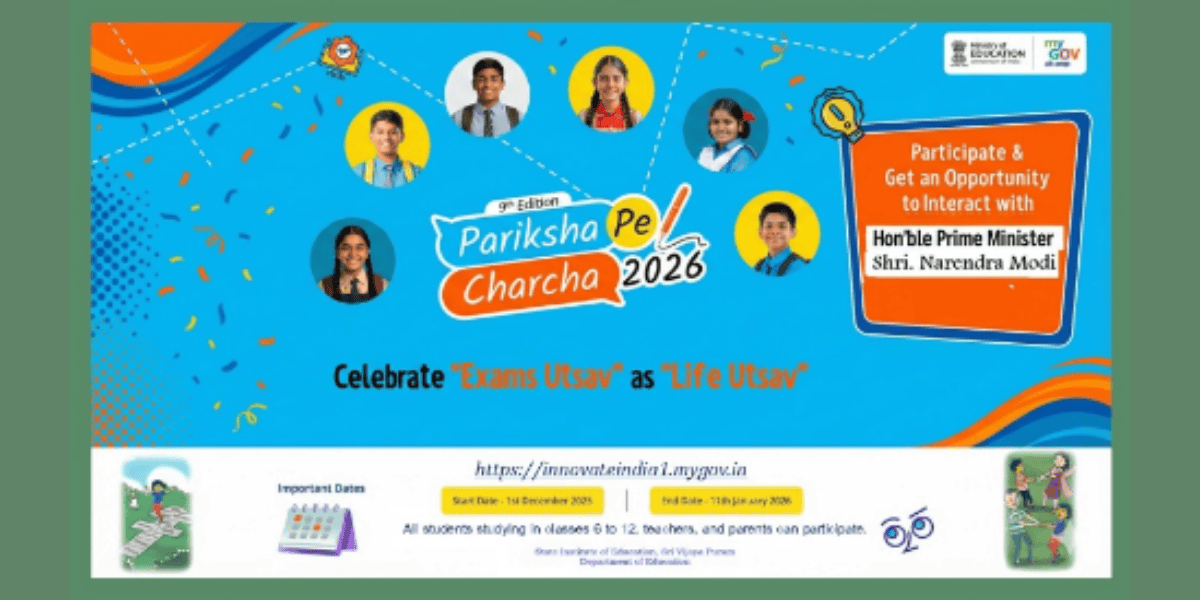
The Ministry of Education has announced the ninth edition of PPC, the interactive annual event led by the Prime Minister. The session is tentatively scheduled for January 2026, continuing the tradition of engaging students, teachers and parents in discussions on exam stress management and holistic learning approaches. In line with this, the Education Department of the islands has encouraged broad participation in the PPC 2026 online MCQ competition hosted on the MyGov platform. The competition is open from December 1, 2025 to January 11, 2026, allowing schools, parents and students to attempt the quiz, receive digital certificates and potentially gain visibility on MyGov’s digital platforms.
The Department’s announcement places emphasis on treating examinations as an enjoyable learning journey rather than a stressful milestone. Stakeholders have been urged to participate in the campaign termed as an “Utsav of Examinations,” which promotes the idea of viewing learning as a celebration. By inviting communities across the islands to join in large numbers, the administration aims to cultivate an environment where examinations are approached with confidence, curiosity and emotional resilience.

Parallel to the PPC activity, the State Institute of Education has launched a five-day capacity-building workshop to develop competency-based assessment tools for FLS 2026. This national study aims to evaluate foundational literacy and numeracy levels among early-grade learners, making the workshop a crucial component of the preparatory roadmap. Tool-setters from various academic backgrounds have gathered to design sample question papers and academic instruments that will be used to measure learning achievements reliably and accurately.
The workshop focuses on developing items that align with competency-based learning standards mandated under the national education framework. Participants are working on question formats designed to capture comprehension, problem-solving abilities and conceptual clarity among early learners. The outcomes of this workshop are expected to contribute directly to the nationwide study, which plays a key role in identifying gaps in learning and providing evidence-based direction to curriculum interventions.
During interactions with participants, the SIE Principal highlighted the need for precision and academic rigour in designing assessment tools. The message reinforced the idea that credible evaluation depends not only on content knowledge but also on technically sound assessment design. As literacy and numeracy form the foundation for all higher learning, the effectiveness of these tools will influence how the education system responds to student needs in the coming years.

Both PPC 2026 and the FLS tool development workshop reflect the administration’s intention to improve academic support systems at multiple levels, from easing exam stress among older students to strengthening early-grade learning measurement. The initiatives run parallel but serve complementary roles: one nurtures emotional and academic preparedness, while the other strengthens the technical framework used to evaluate learning outcomes.
By merging national initiatives with local execution, the Education Department aims to ensure that students across the islands receive exposure, support and scientifically designed assessments that align with national academic priorities. With participation underway for PPC and the ongoing tool-setting process for FLS, the department’s efforts mark a significant step in improving both learning experiences and evaluative standards for students in the Union Territory.