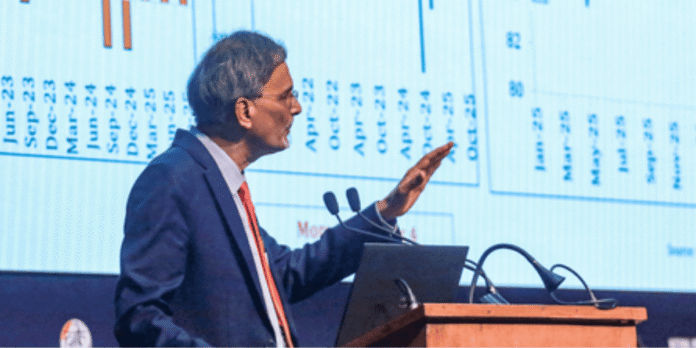
The tabling of the Economic Survey 2025–26 in Parliament on Friday triggered sharp and contrasting political reactions, with leaders across party lines offering divergent views on India’s economic direction, growth projections, and sectoral performance.
The survey, presented a day after the commencement of the Budget Session of Parliament, outlines the government’s official assessment of the economy and provides an outlook for the upcoming fiscal year. While ruling party leaders described the document as encouraging and reflective of sustained reforms, opposition leaders raised concerns over agriculture, state finances, and structural challenges.
Welcoming the findings, Uttar Pradesh Minister Anil Rajbhar said India’s economic rise amid global challenges reflected strong governance and policy direction. Referring to the country’s economic expansion during and after the Covid-19 period, Rajbhar said India had emerged as the world’s fourth-largest economy and remained the fastest-growing major economy globally. He added that steady progress towards the goal of a developed India was evident in the survey’s broader assessment.

However, opposition leaders expressed reservations over the survey’s optimism. Biju Janata Dal MP Sasmit Patra said that while the projected GDP growth figures appeared promising, their realisation would depend heavily on the performance of agriculture and allied sectors. He pointed to issues related to market access, procurement, and fertiliser availability, stating that these challenges could affect growth outcomes on the ground.
Defending the government’s economic strategy, Shiv Sena leader Shaina NC said the survey highlighted India’s focus on reforms and macroeconomic stability. She said the Economic Survey 2025–26 underscored resilient growth, strong fundamentals, and continuity in policy direction under the current government.
BJP spokesperson Pratul Shah Deo also termed the survey encouraging, saying it reflected the impact of consistent policy measures. He noted that the growth forecast for the next year had been revised upward from 6.8 per cent to 7.2 per cent, calling it a positive signal for the economy and an indication that policy initiatives were yielding results.

In contrast, Congress leader Vijay Namdevrao Wadettiwar raised concerns about Maharashtra’s financial condition as highlighted in the survey. He said the findings indicated potential difficulties for the state in executing future development projects and accessing credit, adding that the state’s fiscal health had been under strain for the past two years.
The Economic Survey 2025–26 has been prepared by the Economic Division of the Department of Economic Affairs under the supervision of Chief Economic Adviser V. Anantha Nageswaran. As in previous years, the document examines key aspects of the economy, including growth drivers, inflation trends, employment conditions, fiscal and external sector stability, and the progress of structural reforms.
The survey sets the context for the Union Budget, which is scheduled to be presented next, and is expected to inform policy priorities and fiscal planning for the coming financial year.