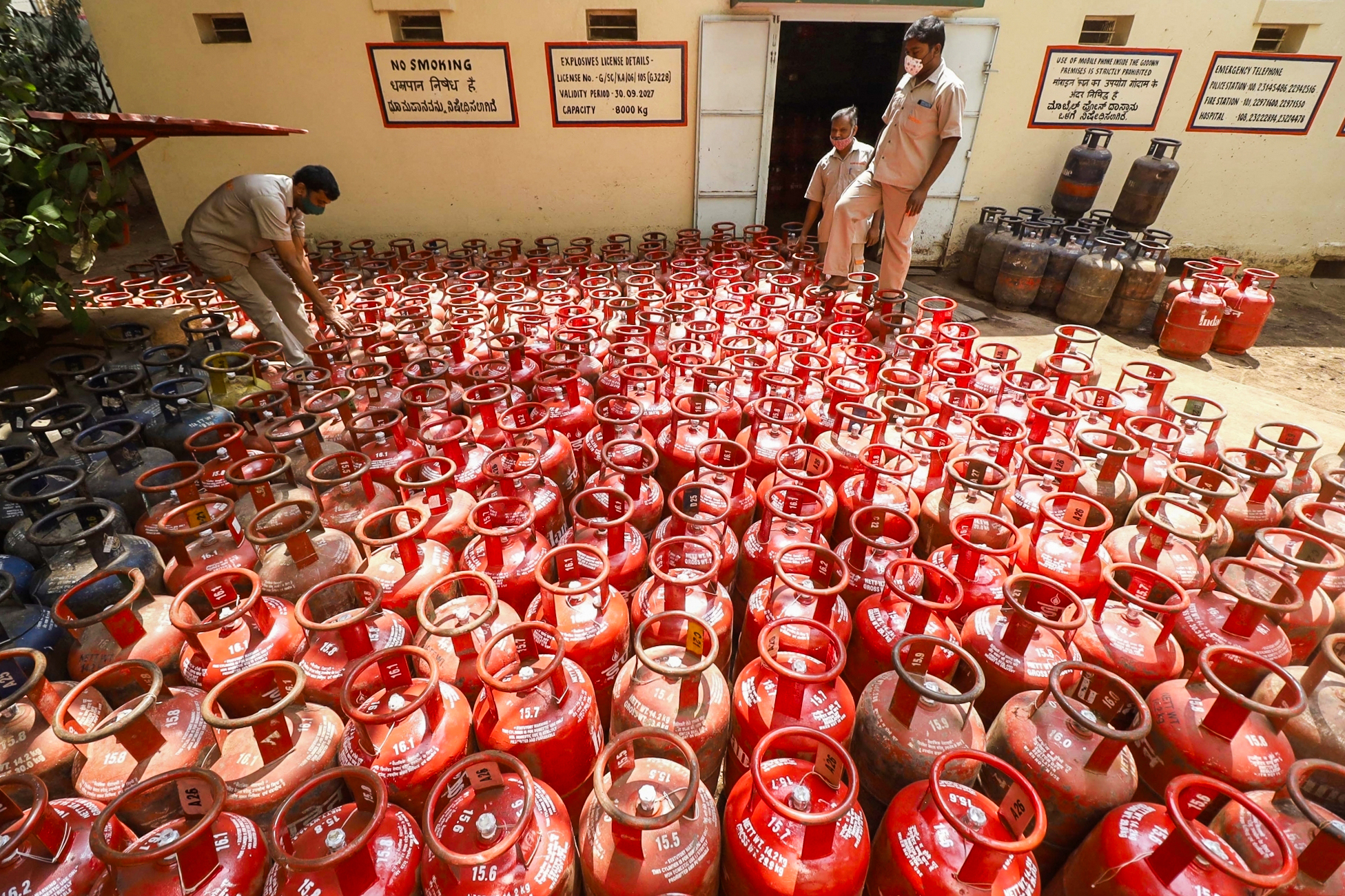
The government has invoked the Essential Commodities Act to ensure uninterrupted supply of domestic cooking gas across the country after hotels and restaurants reported shortages of commercial LPG and demand surged due to panic buying.
The move directs refineries and petrochemical facilities to maximise the production of LPG and divert key hydrocarbon streams to the domestic LPG pool to increase availability for household consumption.
The decision comes amid heightened demand triggered by market uncertainty linked to the ongoing conflict in the Middle East. Officials reported that LPG demand has increased by 15 to 20 per cent as consumers rushed to book refills fearing possible supply disruptions.
To manage the situation and prevent hoarding, the government has increased the minimum waiting period for booking a domestic LPG refill from 21 days to 25 days. The measure aims to regulate booking patterns and maintain stable inventory levels across distribution networks.

Officials clarified that the country currently has adequate LPG stocks and that the revised booking interval is intended to manage demand rather than respond to an actual shortage of supply.
Alongside the EC Act intervention, the government has also issued the Natural Gas (Supply Regulation) Order 2026 to regulate the production and sector-wise allocation of natural gas, including liquefied natural gas (LNG) and re-gasified LNG.
Under the order, priority allocation of natural gas will be given to critical sectors. These include domestic piped natural gas (PNG) supply, compressed natural gas (CNG) used in transport, LPG production, pipeline compressor fuel requirements, fertiliser plants, tea industries and other essential industrial consumers.
The government has tasked GAIL to implement the natural gas supply regulation in coordination with the Petroleum Planning and Analysis Cell. The agencies will monitor supply flows and ensure adherence to the sector-wise allocation framework.
Officials said the measures aim to maintain stable energy supply chains while prioritising household consumption and critical industries during a period of heightened demand.
The surge in bookings has been attributed to consumer concerns that the escalating conflict involving Iran and regional actors could disrupt global energy supply routes. Authorities indicated that fears of supply interruptions led to panic booking in several parts of the country.
Energy officials pointed out that average households in India typically consume seven to eight cylinders of 14.2 kg LPG annually. Under normal circumstances, a household would not require a refill in less than six weeks.
In parallel, the government has also clarified that retail prices of petrol and diesel will remain unchanged for the time being despite volatility in global crude oil markets.

State-run oil marketing companies, Indian Oil Corporation, Bharat Petroleum and Hindustan Petroleum, are expected to absorb current cost pressures temporarily.
Officials said the government is closely monitoring developments in international energy markets but has no immediate plans to raise retail fuel prices.
Parliament was also informed that India currently maintains crude oil and petroleum product storage capacity sufficient for 74 days of consumption. The reserves are intended to help the country manage supply disruptions arising from geopolitical tensions or other emergencies.
The government indicated that the combination of regulatory measures, controlled distribution and existing strategic reserves is expected to maintain stable energy supplies and prevent disruptions to household cooking gas availability.