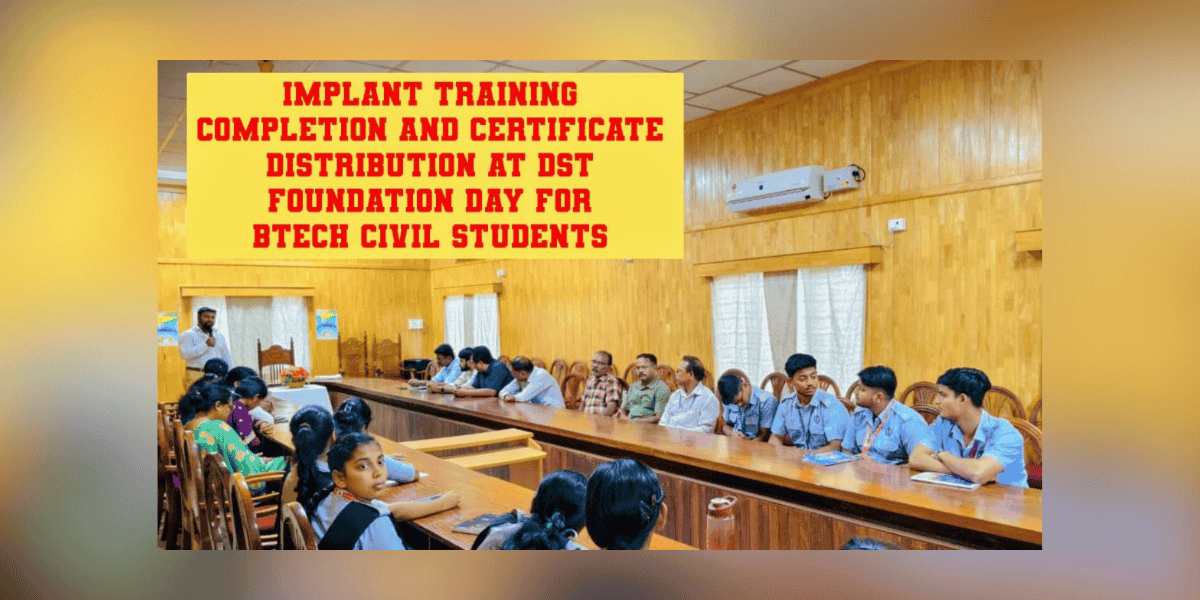
The Department of Science and Technology (DST), in collaboration with the Andaman and Nicobar Pollution Control Committee (ANPCC), conducted a 15-day implant training programme for first and second year BTech Civil Engineering students of Dr B.R. Ambedkar Institute of Technology (DBRAIT), focusing on key aspects of environmental engineering.
The training was designed to bridge classroom learning with field-level exposure, aligning civil engineering education with contemporary challenges in science, technology and environmental management. The programme covered a wide range of topics including water quality testing, air pollution and monitoring, solid waste management and disposal, plastic waste handling, National Green Tribunal (NGT) cases as applicable under ANPCC, and environmental protection laws along with their implementation.

As part of the hands-on component, students were taken to multiple locations for water sample collection. These samples were later subjected to laboratory testing, allowing students to understand standard testing protocols, parameters, and interpretation of results. For air quality monitoring, students recorded the Air Quality Index (AQI) at various locations across Sri Vijaya Puram, gaining practical exposure to ambient air monitoring techniques and data assessment.
The programme also included site inspections related to plastic and other solid waste. During these visits, students assessed waste accumulation points and interacted with sources of pollution to sensitise them on proper waste segregation and disposal practices. This component aimed to instil both technical understanding and social responsibility among the students.
Faculty members noted that the training emphasized the interlinkage between engineering practices and environmental safeguards, an area of growing importance in infrastructure development and urban planning. The exposure to regulatory frameworks, including NGT cases and environmental laws, was intended to familiarise students with compliance requirements and legal responsibilities associated with civil engineering projects.

All training activities were closely monitored by the experienced staff of the Department of Science and Technology, ensuring adherence to safety protocols and learning outcomes. The initiative was appreciated for providing early-stage engineering students with practical insights into environmental monitoring and pollution control mechanisms relevant to the islands.
The implant training programme is expected to strengthen students’ foundational understanding of environmental engineering while preparing them for future academic and professional engagement in sustainable development practices across the Andaman and Nicobar Islands.